This May I finished the North Downs Way 50, and I didn’t.
The last time I crossed the finish line at a Centurion race was September 2017, at the Chiltern Wonderland 50. A month later at the fourth and final race of that year’s 50 Mile Grand Slam, I had one ten mile lap of the Wendover Woods 50 left between me and the dinner plate sized Grand Slam medal I’d been working for basically all year. And just like that, my body gave up.
Since then I’ve had a fair few DNS’s – they’re so much worse than a DNF but you have to know when it’s not right to put yourself and others at unreasonable risk – and one timeout at the South Downs Way 50 a couple of years ago. I was so ready for redemption.
Working with the marvellous Eddie Sutton I’ve been gradually building up my endurance with the aim of getting that elusive 100 mile finish. Of course, to even get a 100 mile START I would need to have completed a 50+ mile qualifying race, and I finally got that in September 2024 with the Norman 100km, bidding a fond goodbye to SVN in the process. (More on that another day). I was so proud, even though it took me the best part of 24 hours and involved a lot of lying flat on the floor to quell my overwhelming nausea. It gave me the confidence that, with enough time, I could finish the distance. And more importantly, I could problem solve, deal with the dark, battle on, not give up.
Now, I had to get a bit quicker. I needed a Centurion challenge. And I needed another crack at a finisher’s medal.
In the run up to this year’s North Downs Way 50 I had picked up a sub 6-hour 50k at Queen of the Suburbs in March – one of my strongest performances to date and over 2 hours faster than 2024 – logged a couple more off road marathons to keep the volume ticking over, and I was feeling good. Like, almost old me again. I found the two products that my stomach can just about cope with, I had a pacing plan and a fuelling plan I knew I could stick to, and ten years of experience under my belt. Most of all, I had the fire back. I REALLY WANTED this finish.
In a very first-day-of-school moment Andy dropped me off at the leisure centre in Farnham, let me wipe my snotty nose on his shoulder, and wished me good luck. Centurion head honcho James Elson gave me a hug just before the briefing to show appreciation for my lucky QPR shirt – I promised myself I’d wear it if the Under 23’s won their cup final game – and I trotted towards the starting line with the rest of wave 2. All my nerves, all my anxiety just melted. I was going to do this.
But.
Right from the off I was battling constant nausea. I mean constant. Knowing that I had to had to HAD TO keep fuel going in every twenty minutes and trigger another wave or risk crashing out altogether, I realised early on that this was going to be about grit and discipline. Circular breathing and Veloforte chews. Don’t think about how long was left.
All I could focus on was
breathe in get to the next checkpoint puff out
over and over
If that sounds melodramatic, let me explain emetophobia to you. It’s irrational, obviously. The roiling tornado in my stomach is more than discomfort; it spins me off kilter, like vertigo. Rationally I know that being sick is no big deal but that doesn’t stop me from feeling like I’m going to die. Compound that with the fact that nausea greets me every morning and rears its head at the worst possible moments. So all things considered, running 50 hilly miles in the heat is kind of a stupid idea.
At least I have the experience to know that nausea sucks but underfuelling is ten times worse. As torturous as it was I stuck to the fuelling plan, 60g carbs an hour spread over 20 minute gaps. All my calories were in my vest, so there was no reason to risk eating something that would make things worse and no reason to dither at the checkpoints. The gamble paid off for a while – by the time I approached the Stepping Stones checkpoint at mile 24 I was in a rhythm, my stomach had settled, and I got to see the ray of sunshine that is supervolunteer Laure.
The next eight miles were all about climbing and all in the high heat of the day. Box Hill, Colley Hill, Reigate Hill. The worst climb of the day was behind me but the nausea wasn’t – with about a mile to go to the next checkpoint, getting dizzy and with the sun beating down, I couldn’t hold back any longer. One thing I have learned is that yes it’s gross and terrifying and no you don’t die and yes it’s always absolutely fine afterwards, as long as you do the one thing that seems entirely counterintuitive and immediately eat. The glamour of trail running. Puke and rally. Keep going.
A hug from Jem at the 32 mile checkpoint and a quick refill of my water bottles and I was straight back on the trail. At this point I had just under an hour in hand over the cutoffs, but by the time I reached Caterham six miles later that cushion was down to half an hour and at the final checkpoint at Botley Hill I got in with just ten minutes to spare. Fitness, fatigue, speed – none of those were a problem. It was simply that every time I tried to run my stomach turned into a washing machine. And yet… I was having a blast.
My trail angel Cat and her trusty companion Mabeldog had dropped by partway through the stretch to wish me luck and reassure me on my timings – there’s a reason I call her a trail angel – but I knew that if I wanted to get that medal I was going to have to keep going as fast as I could possibly manage, and that meant dealing with my nausea demons for two more hours. I could keep them at bay when I walked, but when I walked I was wasting valuable minutes, possibly seconds – so no walking if I could help it. James had just arrived as I left Botley Hill, ready to sweep the final leg of the course, and shortly afterwards both he and Frank caught me up.
Frank’s story was even more woeful than mine. He’d taken a bad tumble before Caterham and was hobbling, walking poles for legs. But he was moving with purpose. It turned out that he had been on the verge of dropping at Botley Hill when James persuaded him he still had time to make it. I had a companion for the death march to the end. And that’s when the magic happened.
I’ve made this sound awful I know – and I can’t pretend the experience wasn’t attritional, because it obviously was. What made the day was the Centurion team and volunteers: their passion, their encouragement, their professionalism even, and when you spend an hour in James’ company you can see why that ethos runs through everything that Centurion do. We chatted for ages about our mutual love of a wonky little club from West London, about having both had season tickets in R Block, about awaydays, about Stan Bowles in the Springbok pub. About ex-Ranger Eze scoring the winner for Palace in the FA Cup Final just minutes before. James couldn’t help or pace us, but he encouraged us every step of the way, called out the times as we went, kept us going. Both Frank and moved as quickly as possible but once we got past the last steep climb it was clear that we were cutting it fine.
And then we got to the endless, soul destroying fields section. I remembered these from my last run here in 2017; they are deceptively slow because despite being flat they’re heavily rutted and a real energy drainer. James‘ timechecks came through with increasing urgency: you’ve got 2 miles left and 24 minutes to do it in, you need to run, you can do this. The last half mile would be on a road and downhill. After that point I was vaguely aware of James’ voice behind us but I didn’t know what he was saying. All I could think was – MOVE.
As soon as we got to the road I put the afterburners on and dropped an 8:59 pace for the last half mile. There would be seconds in it. Seconds only matter when they’re the wrong side of the cutoff, I thought. Moved into intervals pace. Drove forward from my knees. Turned left into the playing fields. Up the grass hill. Saw the finish arch. Saw people cheering us in. Heard people cheering us in. Felt the breath dragged out of my lungs as I sprinted for the line.
saw the clock
saw a thirteen
saw that I was just over
found myself saying no no no
went for it anyway
a finish line is a finish line
BIG LEAP
done.
Almost straight into Nici Griffin’s arms. Frank right behind me. Twenty seconds over the cutoff.
If anyone came close to breaking my heart that day it was Nici – she approached us with dread, started to explain that she was sorry, it was the worst part of her job, she had to tell us that… and I said I know, it’s fine. Please don’t be sorry. Finally let myself drop to the floor. Just like that: no more nausea. No more attrition. Nothing more to do.
Of course I was disappointed – I am, still – but I remember nothing but gratitude and pride from that moment. It may have been a DNF but I felt like an Olympian. This is why the trail running community is so special. I felt no compunction about being twenty seconds from a medal – even if I’d been offered one I’d have refused it, I knew the breaks when I signed up. The challenge was to finish in 13 hours and I didn’t. That’s what makes it worth it.
Only once I got home, scrolling through Instagram, did I realise that James had been filming the last ten minutes of the race. My husband couldn’t bear to watch. I couldn’t tear my eyes away.
The main reason I’m not upset is that this isn’t an end for me. In many ways it’s a much bigger confidence boost even than the 100km I finished just 8 months before – this was never about just getting to the end, but getting there with purpose. The North Downs Way 50 2025 was one more step towards getting back to ultra fitness on a journey that arguably started back at the end of 2017. You could even say it started with my first NDW100 DNF in 2015. That journey will finish when I finally get that 100 mile buckle. And I will, even if it takes me 100 tries.
What’s more, that lucky QPR shirt will be with me when I do.
I can’t thank James, Nici, Drew and the Centurion team enough for a brilliant day. If you want to know what you’re made of, do a Centurion race. I promise you, you’ll not regret it.
After my South Downs Way 50 DNF in May 2023 I found myself looking down the barrel of an entry to the Autumn 100, my third attempt at the distance, and about to pull the trigger on my backup qualifier. Race to the Stones: 100k along the beloved and familiar Ridgeway in the height of summer with a generous cut off and few excuses. This was going to come down sheer bloody determination, and to courage.
Which brings to my mum.
As I’ve got older and wiser I have become increasingly aware of how courageous my livewire of a mum actually is. Baby Jaz, age 20, thought she was a billy big bollox for flying alone to a Morrissey concert in Dublin with £9.50 in her bank account and the address of a hostel written on her hand; baby mum did sort of the same thing, except it was a casino in North Cyprus, two bob and tuppence, and she ended up living there for 6 years. While I fretted about keeping my running streak through lockdown, at the same age mum had uprooted a young family, leaving behind her 3 bed semi and her Laura Ashley wallpaper and her Sky dish to live the Good Life in a whitewashed cottage with a mother in law with dementia and 8 hours of electricity a day. At age 39 I was beating myself up for failing to finish yet another Centurion race; when my mum was the same age a business dispute involved a guy taking a baseball bat to her head, whereupon she turned right around and gave it back to him. It is not easy to scare my mum.
But my mum’s Achilles heel is driving at night and/or in bad weather; she is terrified of it. I knew this as I rang her from the Race to the Stones race HQ at 2am to ask for a lift home – a 4 hour round trip on a grim and stormy moonless night. I thought about the way she didn’t even flinch when I asked her for help. And I thought long and hard about what a failure I was for registering myself a DNF with the race officials – a race I still had 12 fucking hours to finish – all because my nerve had abandoned me.
As I prepped my bag the night before – in a Travelodge inexplicably located on a roundabout like a JG Ballard nightmare – I mentally walked through my plan for the race, trying not to let panic overwhelm me. This would be the longest race attempt for a number of years; still though, I had a fighting chance this time. I had supercoach Eddie Sutton in my corner, I had a nutrition plan, I had a very generous cutoff, and I had a little printout of the course elevation, aid station locations, and photos of the cats.
Ah. I had no coffee. Bloody cheapskate Travelodge.
Like many others I came out of lockdown physically unscathed but with a fragile few threads of confidence; compared with how fearlessly I used to throw myself into ultra races and adventure challenges I now doubted I could hobble/hike a distance I regularly used to cover on a route I adored, and the lack of coffee sounded an ominous twang as another thread of confidence snapped. And that’s the frame of mind I started with: a bit excited, mostly terrified. You should be respectfully nervous at the start line of an ultra – as much as I talk about normalising the effort it’s still a bit insane to travel that far on foot – but in retrospect the balance of respect and terror was way off and that should have been a warning sign. Nonetheless, I took off through the starting arch at Lewknor with the 07:10 wave, my GPS route set for Avebury, and immediately felt my legs go stone dead.
My plan had been to run 3 miles and walk 1, and eat in the walk breaks – something I’d practiced but never executed in a race before. Fairly quickly I fell in with a good group of people and was chatting away happily, getting to the root of a good conversation the way you only can when you’re side by side on a trail, when my watch buzzed to tell me I was three miles in. Haunted by idea of blowing up early like I did on the South Downs Way 50 I let them go on, and with them the chance of companionship and distraction. It would turn out to be a terrible call, and a good example of why having a plan is important on an ultra, but being able to adapt much more so.
So yeah. Quelle surprise, alone and not focusing, I took a wrong turn within the hour and earned myself a bonus mile. Not a disaster or even unusual – and yet I almost burst into tears. This was attritional already and I wasn’t even in double digits yet. The ombre sky and the summer morning haze were picturesque but difficult to enjoy while my mind ran through all the ways in which I hated everything. Common race experiences were presenting as catastrophes, energy wasted on panic. This is not what it’s meant to be about.
My first coffee of the day at pit stop 1 brought a brief boost – more than likely just restoring the proper ratio of coffee to blood, I am Turkish Cypriot after all – and shortly afterwards I fell in step with another first time runner doing the 100k straight through. As we chatted about life, the universe and everything another 20 miles slipped by. No fear, no panic, only fleeting pangs of doubt as the temperature continued to soar and the power of companionship. Although I had by now let a couple of nutrition reminders pass unheeded, we kept moving steadily together as far as halfway. Settling into the rest area, we planned on a maximum 30 minute pitstop to recharge phones, bellies and supplies. I admired my jacket potato and thought about how nice it would be if I could have eaten it.
And this is where my second biggest mistake of the day came in. Not having arranged where to meet at the end of the break and not feeling confident enough to go back out by myself, I waited for her at the restart banner for another half hour, in vain. I want to say I don’t know why I, a runner of ten years’ ultra experience, did this, but the truth is I know exactly why. My walk-run plan had collapsed. My eating schedule had collapsed. My self-belief had collapsed. In preparation for endurance sports you need to train not just your body but your mind as well, and in that moment I realised I had neglected my already most-neglected body part.
By the time I reached the pitstop just before 60k a humdinger of a storm landed, and with a woeful lack of calories to compensate my body temperature plummeted and I nearly fainted. No amount of forcing ready salted crisps against my numb mouth would help. This again. This insanity again. I know that if I eat I’ll be able to move; and yet nothing is more horrifying than the thought of eating once you’ve reached that point. I sat in the medical tent for almost an hour wrapped in a foil blanket and watching wild pigs hoover up crumbs. The DNF bus swung by and gave us exactly one chance to decide whether or not to get on board. As I dithered the driver, correctly judging that I would be physically able to carry on if I got some food in me, remarked that there was still almost a day left before the cutoff. Which was completely true, and kind of obvious when put that way. I’m so grateful that they didn’t make it easy to pull out just then; there was no second call. I HAD to keep trying.
As is often the case in ultra races, some angels appeared just when they were most needed. These ones were from Flyers Southend, as cheerful and kind a bunch of people you will ever bump into who readily agreed to let me join them for the next 8 miles. As the storm cleared a heavy dusk drew in and out came the headtorches. After braving the heat, the nausea, the cold and the hail, my next challenge was the dark; in preparation for this I’d done a nighttime marathon the month before, knowing that it was far from my favourite conditions to run in. The question was, would my nerve hold out now?
As the miles passed with no hope of food getting past my lips I focused purely on getting to the pit stop. No thinking of the 30km still to go after that, or the hours on feet, or the hills. My legs were jelly at this point, my stomach turning somersaults and my brain long since checked out of the race. When I finally landed in a plastic chair one of the aid station volunteers made me a crisp sandwich (salt, carbs, texture – trust me) and reassured me that I could take as long as I wanted. I cuddled it for ten minutes.
And then I broke out in sobs. Big, messy, childlike sobs. I wanted my mum. I wanted out.
In retrospect – and knowing that the next section was long, exposed and remote – it was probably the right call not to continue; you have to know when you’re putting others at risk as well as yourself. If I hadn’t been so familiar with the route would I have carried on and, having no other choice, somehow made it to the final stop? Possibly, if I had trained my fortitude as much as my legs or been able to eat that sandwich instead of clutching it like a dead pet. At the time though I knew my bravery had long since deserted me, if it had made it to the start line at all. Then again, I thought, Everest is littered with the remains of the brave.
So there I am, back at the beginning of this tale, curled up in a barn at the finish line while my mum battles her perfect storm of intense darkness, country roads and awful weather to rescue me. She will say that when her children (I’m 40 but I’m still her child) needs her then fear becomes irrelevant. I say that fortitude comes with practice.
I’m not telling you this story to put you off ultrarunning or any sort of endurance adventure; far from it, I strongly believe that the more you experience getting into and out of challenging situations the more prepared you’ll be for, well, life. It’s deeply satisfying to look back on an elevation chart, or pace splits, or even backwards at the expanse of terrain already covered, and think “I did that. What else can I do?” just as it is deeply satisfying to crack a tough problem at work, or master Through the Fire and Flames on guitar. But to get to “I did that” you usually start with “Can I do that?”. You plot the steps between the two, what you need to do to reach each one, what tiny hop of faith carries you between them. And that was the one crucial element I missed: faith in myself.
If I can take one positive from this experience, is that the best possible post-ultra recovery for those who can afford it is an all-inclusive week by a swimming pool on the south coast of Turkey. I ate my body weight in buffet food, floated from one swim-up bar to the next, and read a book a day.
And when I got home, I pulled out of the Autumn 100 with absolutely no compunction. Eddie had worked miracles with my physical state, but the mental fitness still had a long way to go. We would practice the scary things. We would practice the uncomfortable things. We would practice the attritional things. That’s what my mum would do.
I scrolled through my phone to find the entry labelled “Centurion RD”. I knew it would be there because I checked before the race start; I also knew because it had been there since 2015, when I first lined up for one of James Elson’s races. That day started quite a bit like today. Nervy. Optimistic. Blisteringly hot. (Early). It ended much the same as this one would too – with a DNF. But a very different outlook.
Describing where I guessed I was, I even apologized for bothering him. “I’m fine, don’t worry, I know I’ve timed out. Please tell the sweeper to wait for me.” But I didn’t feel especially emotional. The truth was, I’d known for a few miles that I wasn’t going to make it, and I knew why. It wasn’t that I didn’t care; after all, this was more than a race to me, it was my qualifier for the Autumn 100. I needed this finish to be allowed to run in October, and I needed it to reassure myself that I’m up to the task. I should have been crying, or angry, or disappointed. Remembering back to that first Centurion race when I sulked for the 2 hour drive home, chin on my knuckles staring out of the window. I’m eight years older now though. That brings its own demons, but it also means I’m eight years more experienced. So instead of sulking, I started running through the race step by step, in a bid to work out what went wrong.
The Start
The month leading up to the South Downs 50 was… suboptimal. Oh, is she getting her excuses in early? What a surprise. In all seriousness, after the disaster that was Kingston Breakfast Run I hit one of my worst patches of period pain so far and it showed in my mileage. For those of you who can’t relate – and I’m genuinely glad you can’t – I don’t just mean grab a hot water bottle and an ibuprofen. Pain, relentless chronic pain, is exhausting. A key feature of these bad patches is having to sleep 10+ hours plus naps during the day, and surviving on codeine while awake. Chronic pain even makes a hazard out of holding a cup of tea. It was deeply frustrating to be back in this cycle when there was so much at stake, so I tried to make the most of the enforced rest and hope the pain would subside by the race. A very unnerving taper.
If I was nervous, there were plenty of little touches on race day to make me feel optimistic. A lift to the start from Andy made all the difference to my lacklustre logistics. The Centurion shop, where (if you’re me) you inevitably stop to buy missing snacks and pretty hats. The ladies-only loos with a shorter queue, chintzy curtains and a toilet roll dolly (I guess you’ll just have to sign up next year to know if I’m joking). The reassuring presences of James and Nici and an army of volunteers. Optimism. That’ll start things off well.
So obviously I went out for the first couple of miles at a pace I had no business trying to run, chatting away to another lone runner who heaven help him probably wanted to focus on the uphill start and conserving breath. That should have been a clue. Never mind; I actually love the rolling ups and downs on this course, for whatever goes up is about to come back down. Dropping a sub 9 minute mile on the first descent, I carried on with my no-business pace.
The Middle
My plan had been to run to a pace around an hour inside the cut offs, and thanks to my hot start I was well within that. For someone with as much experience as I have, there were red flags and in my haste, I missed them. They said things like “if you go faster now you’ll bank time for later”, “hammer this downhill, it’s fun” and “save time at the aid station, your bottles don’t need refilling yet”. Saying that, recapturing the fun of trail running is pretty fundamental to recapturing my old self – so it’s seemed perfectly intuitive at the time to lean into that. This last year has been a process of accepting the fact that I’m functionally a newbie again, and that’s both a blessing and a curse. Being new to the sport you get the thrill of discovery (or to put it another way, the bliss of ignorance) but the price is the pitfalls that a new ultra runner can so easily fall into, and are usually on the lookout for. My experience should have made me less wary of those pitfalls but more wise to them – and it didn’t. So off I went, throwing my undrunk Tailwind and untrained quads all over the Downs like a demented pixie.
Rampaging into the first aid station at Botolphs, I was in a disgustingly good mood and comfortably ahead of schedule. It was warm but not blistering, although in retrospect I underestimated how dehydrated I really was. The next station at Saddlescombe Farm is only 5 miles on, and immediately followed by some more punchy climbs, so calories were the order of the day. I got a good little picnic spread going, topped up my water and got moving.
The rolling Downs are just one of the best places to be on a warm spring day. Trotting on ahead of my target pace, enjoying the views and appreciating my ability to move. It was liberating not to be in pain for once – sore, sure, but it’s a blessed relief from the alternative – even though I felt the heaviness in my legs weigh further and further down. As I reached the marathon mark on my watch, that weight landed hard. I realised at that point that, where there was usually pain, there was now the creeping threat of nausea. In all likelihood my rule of thumb estimates for calories were wildly off, from the days when I could cover 10 miles in two hours and not three, and my “hydration” was no more than a good score in Scrabble. And it was too late to do much about it. I tried bringing food up to my mouth – no dice. My pace slowed; still well within my target, but obviously coming to a halt. Thankfully, I was moments away from Housedean Farm.
And better still, the sunny smile of Laure from Fulham RC – a stalwart of Centurion races and a bloody lovely human. She had been looking out for me, gave me a massive hug and boost of joy, and helped me fill up on Tailwind and snacks. I didn’t want to admit that I was already on the struggle bus, so I took what I could and got right back on the trail. The next section is high and exposed – enough for me to need my jacket despite the heat – and although stunning, a real slog for my underfuelled body. I cheered myself up with video messages to my football friends and a bootstraps call to Andy while I pushed food against my unwilling mouth, trying to get my mindset and calories back on track. And watching my pace slip further and further away.
A miserable theme for the next seven miles. I wanted so badly to be doing better; but by this point, I also wanted not to feel sick any more. It’s a horrible Catch-22 situation: you can’t fix the hunger pangs without food; you can’t get food anywhere near you without vomming; you can’t vom because there’s nothing there. I want to say that determination dragged me through – seasoned ultra runners are no stranger to battling on for hours without calories. In reality, I’d left determination somewhere around Ditchling Beacon with my pace and my common sense. By the time I trotted across the bridge towards Southease Aid Station I was mathematically, physicaly, mentally DONE.
(Here is a cautionary tale for you all – I got into the sweeper bus at peace with my DNF and ready to be reunited with my kit bag and my journey home. By the time we actually made it to the track, having waited to sweep the handful of non-finishers from the next two aid stations, I was wearing all my kit including the spare layers, two foil blankets and a borrowed DryRobe, and even as I was curled up in a heated van I was shivering hard enough not to be able to speak. That’s how dehydrated and calorie deficient I’d got. Do not skimp on your mandatory kit, people. It may save your life.)
The End, and then some
So what went wrong?
To truly understand that, I’d have to go a bit further back than the start of the race.
Increasing speed work had been the right call – I ran a faster, hillier 35 miles that day than the 33 on Pilgrim’s day 1 in February. And to bring a little light into the story, seeing my fitness progress was a plus even if it ended in disaster. On the other hand, there still wasn’t enough structure or discipline in my self made plan, let alone enough mileage. Reflecting on my HR data, I spent a quarter of the race in Zone 5 and nearly 40% above Zone 3, which speaks to how hard I was working relative to pace – in other words, I just wasn’t fit enough. It’s all very well pointing to the inability to eat, the nausea, the dehydration; but not having enough fitness likely meant that I had no buffer to deal with the other setbacks.
In short, I didn’t respect the distance and it disrespected me back.
But there was something deeper to look into as well. I’d been struggling with lethargy alongside pain for months, and in the periods when it lifted I avoided training too hard in fear of wearing myself out. Not that that was the wrong thing to do, but it was addressing the symptoms more than the cause. And it’s not like lack of motivation was the problem – I wanted this SO badly. So. Think. Examine. Solve.
That’s when I decided to look up coaching; something I’ve toyed with for a while but considered to be too expensive. I figured that the monthly cost wasn’t much more than a day in the pub with QPR and investing in myself is a bit more responsible than investing in pale ale and pad thai. So I got in touch with a few ultra specialist coaches, explaining that I had a 100 miler to finish and no real idea how to do it, explaining that I needed someone who would understand and be flexible, but make me accountable to my goals. One of those phonecalls was with Eddie Sutton, and I came away feeling like I was talking to someone I’d known for years. It was a no brainer.
Taking charge not just of my training but a holistic understanding of my health, Eddie pointed out something she noticed in my Strava feed that I hadn’t: just how often I complain of fatigue. And she did this before we even had our first official call – an example of how the price you pay for isn’t just the hour’s consultation but the years of experience that back it up. Some small but significant steps, including changing my contraceptive, taking iron supplements and adding more walking (I’m completely serious) got me on the right track. And that was before I even had a training plan.
I won’t go into all the boring details here, but I will point out something I think was key to improving my fitness: we didn’t start with a plan. We started with giving me the best chance of following one.
I’m not a fucking idiot: I can Google; I have Hal Koerner and Krissy Moehl and Sarah Lavender Hall and P&D in my library; I know about the 80/20 split and time on feet and cross training and all that. My problem was, how do you jump into a 6 mile tempo when you can barely lift your feet? The answer was to break the problem down, step by step, and restart with the basics. You don’t grow a tree by sticking a twig in the ground and hoping for the best. You start with a seed.
Growth – in this context – looked like moving from despair, from feeling a total lack of control over my body, to actually listening to it and letting it take the lead. Growth looked like multiple mornings looking forward to the day instead of dreading it. Growth looked like starting off with one push up and eventually making it to six. And honestly, at times I was so overwhelmed with relief I cried. What a twat.
Fast forward
Next up – attempt number two at my Autumn 100 qualifier. I had a deferred entry to Race to the Stones in my pocket, something you have to enter a lottery for these days, and I was determined to make it count. A familiar trail, a generous cutoff, a well-organised race. This would be the best chance I’d have for a long time.
My mind is a swaying tower built from the bricks of habit. Little rituals that start, proceed and end exactly the same way every time; sometimes we call them ‘pings’. We’ll be sitting in the pub before a QPR home game and I’ll turn to Andy and ask if Tess (our cat) is OK, and he says, in a very matter of fact way, yes she is. And I say what’s she’s doing and he’ll answer without missing a beat, she’s curled up on the sofa, or she’s watching pigeons from the study windowsill. We are miles away, and have been for a whole morning. He doesn’t have a security camera, or a telepathic link; I know he doesn’t know for sure. But he answers me as if it’s the most natural question in the world and then we get on with our pints and complaining about Keith Stroud’s godawful refereeing.
This is one type of brick; there are many others like it, stacked and restacked daily. The foundation that my 2022 London Marathon training was built on is a bit different though. The preparation for a weekend long run starts 30 to 60 minutes in advance, packing and repacking my vest, insisting I’m not hungry and then eating a piece of Nutella toast at the last minute, checking weather, feeling nauseous, tying shoelaces two or three times, staring at the front door.
Andy, I’m nervous. I don’t know if I can do this.
You have to understand what an infinitely patient man Andy is. This is not my first rodeo. At this point I have run 53 official marathons and ultras, and probably 20 more marathon plus distances on top of that. I have run London twice before. He would have every right to dismiss my fears, or at least show some frustration; after all, he answered this EXACT comment seven days ago, and seven days before that; not so much travelling through time as trapped in a small pocket of it. But he doesn’t. It is a test of his kindness, and it’s a test that he passes every single time.
And for some reason, hearing his confident response is enough to make me believe I can do it, and off I go.
As you’ve probably heard before, the hard work of a marathon is done getting to the start line. Whatever happens out there on the course, it’s those training miles that often decide whether or not you’re going to finish, or hit your goal time, or (frankly) enjoy yourself. So it’s not much of an exaggeration to say that having Andy boot my arse out of the door every week was the single biggest factor to me getting to the end of this race. But why WAS it such a tall order, when I’ve done more than fifty of them before? Well, that story starts at the end of 2019.
So what happened was: I used to run a lot – then I worked a lot – then a pandemic landed – then –
*white noise*
And here we are now.
I don’t know if anyone else has experienced this, but my sense of time is completely screwed since 23rd March 2020. Like, I still think 2019 was last year. So was 2022. So was 2012. 1998 was maybe a decade ago. I spent a whole year – look at me, a WHOLE YEAR – thinking I was a year older than I was; even wrote job applications and race entries with the wrong damn age. And then I spent a year at that age thinking, nah, I’ve done 38 once already haven’t I? All because lockdown landed the day before my birthday and stopped time.
As a result, it’s taken me quite a while to really understand that I’m not in the shape I think I’m in. The mental gymnastics involved in believing I’m still a 35 year old who last ran a marathon a month ago contorted me into signing THAT Jaz up for races, writing cheques that 38 year old Jaz has to cash… but without the fitness to match it. Beating myself up because I can’t understand why my pace is so slow, why my fitness is suddenly on the floor. Not realising that I’m living with a sort of conscious amnesia, clouding the memories of two years of bad news and grief and stress and surviving on crisps and not much running.
Then I quit my dream job with no prospects to look forward to and barely enough savings to last me half a month. I gave myself the human equivalent of holding the button down on a PC to force a reboot and hoping it switches back on. Sure, all the unsaved work in the last two years was lost, but it worked. I did a bit of sleeping. I saw my dad for the first time in three years. I relearned the days of the week. I woke up.
And then I found myself with a handful of deferred race entries to use. Well, why not?
Which brings us back to the start of this story.
London Marathon 2022
It was October 2022. I had finally recieved one of the unicorns that is a ballot place (yes, they exist) just before the pandemic – having told anyone who’d listen and many who did not that I’d never run London again – and deferred it for the autumn, reasoning that I’d either be fit enough to go for it or I’d be stubbornly dragging my heels around, but I would never again take it for granted. And training started off pretty optimistically. Well it would do, wouldn’t it? Training through the summer, running in daylight, not having to carry two kilos worth of warm kit – lovely stuff. I even kept a run streak going from January to June, recapturing the time I felt most like me; like a runner who had a job instead of the other way around.
Of course fate isn’t that kind – a forced break from running for two months intervened just as I was getting into my stride. Pre-pandemic Jaz probably wouldn’t have given a second thought to rawdogging a marathon but I have to admit, I was back to beginner status at this point and I had no idea how long a marathon would take me to finish. And like a beginner, one of the first things I had to do was work on my ‘why’ – which is weird for me, because in any other context marathon and ultramarathon running IS my why. I figured it was as simple as getting back on track for the 100 Marathon Club (I was up to 53 at this point) and indulging in something I enjoy.
Which in a lot of ways was true, and in many more ways didn’t begin to tell the story of why. I’ve run a lot of marathons for the very simple reason that I enjoy doing them and they’re my favourite thing ever and I want to get to 100 of them as soon as humanly possible and then ideally 1000. But as it turned out, I rediscovered a completely different ‘why’; the cruellest one the pandemic took from us, a community.
Community like Sutton Striders, a new club close to my home that I had started training with. I missed my Clapham Chasers clubmates but life logistics just didn’t allow for me to be part of the everyday goings on any more; and although I figured I could train by myself no problem, I forgot what an impact the encouragement of fellow runners could have. That was until chairman Bryn put up a series of social media posts featuring the Striders running London, with a photo and a Q&A and a club logo. And there I was, among those posts. Part of a team. It was a small gesture on his part but it made me feel validated as a runner, in a way that solo loops around the block can’t. (That gesture meant so much, so unexpectedly, I later decided to join the committee even though I know the square root of fuck all about being on a committee).
Community like my gaggle of football hooligans, who nod warily over their pints every time they hear I’m doing another marathon, but who nonetheless turned up at the north end of Tower Bridge with a QPR scarf. Like one hooligan in particular who found time between being a barrister and a bestselling author to train for her first marathon. Enter low-key hero and glutton for punishment, Harriet. We bumbled around the race village together, we queued for loos together, we did a lot of Instagram twattery together, so when we worked out that she was only two start pens ahead of me I thought it would be a piece of cake to simply sprint the first mile, maybe two, and catch her up. The first two WERE pieces of cake; miles three and four at something close to my current parkrun pace were not, but I got there eventually and we ran, hobbled and grumbled the other twenty two miles together. And honestly it made my day to share those miles with her.
Community like Diana, who was thrust into our path at mile 18 by one of the volunteers. She’d been running with her husband but forced to stop for medical attention for agonising cramps – cramps which by rights should have taken her out of the race altogether. It took about six seconds to work out this isn’t a lady who understands the word “can’t”. Raising money in memory of her late daughter while undergoing chemotherapy herself, our grumblefest turned into a keep-Diana-going-fest, turned into a Diana-taking-care-of-us-fest, turned into a parade of her dozens of supporters who seems to be at every corner. At some point in that last eight miles we all took turns having a bit of a sob while the other two did the comforting, until we got to the last 400 metres where we met Diana’s husband who had waited, unwilling to cross the line without her – then the floodgates opened for us all. Crossing the line as a group of four ranks as one of my favourite running memories ever. (This one’s for Daisy.)
Community like my mum who was manning the water station at mile 5, who abandoned her duties long enough to give me a massive hug and then spent the rest of the day tirelessly singing and handing out drinks and probably hugging everyone who looked like they needed it. Community like the Anthony Nolan charity volunteers who cheered Harriet every time her black and green shirt approached. Community like my husband and his sister who, fifteen years on, still treat London like more than a marathon; who always remind me that it is.
And that’s just the start.
Autumn Ranscombe Challenge 2022
It’s November 2022, barely a month later.
Rachel and Tills haven’t see me in over two years but there is no hesitation whatsoever when they greet me at the start/finish pen of the Ranscombe Challenge, remembering my predilection for skull skirts and giant Galaxy chocolate bars. It’s one of the SVN trademark lap challenges and I’m here to see how far I can get, only a month after London. Of course I want another marathon finish; but I need to be able to drive myself home afterwards and I have no idea what my little legs have in them. So I take it a lap at a time.
As I’m out on the course, taking in the scenery while tiptoeing around the mud, my mind is already a dozen races ahead. At nine o- clock today the Centurion Autumn 100 2023 entries go on sale, and given how popular that race is I don’t want to miss the opportunity to bag a place for attempt number three at the distance. Trouble is, I’m not going to be back at my laptop until sundown, and I have no idea if that’s too later or not. So, as the hour ticks over at the start of my second lap, I trot along a rutted road with my face in my smartphone, trying not to stumble as I go through the sign up process and hoping the signal holds out. Totally normal behaviour.
It is stunning, and as the name suggests, challenging. The loop takes in part of the North Downs and involves a lot of crunchy climbs. My legs are absolutely not in skipping-like-an-ibex shape; I’m mostly hiking by the fourth lap, but I’m happy. I call Andy to get his advice on whether or not it’s worth grinding out two more for the marathon distance.
“Well, you didn’t drive all the way to bumfuck nowhere in Kent not to get a marathon finish.”
Yup.
And I do. And it’s very firmly type 1 fun, not type 2 fun. That’s what’s different for me at the moment – being so far off the pace, still suffering with chronic lethargy and general heaviness of self, it’s not so much that I can’t run fast as I can’t try to run fast. My body simply won’t answer the call to push beyond its limits because it’s already there. Every bit of rest I take feels like cheating; until I remember, this is as much as you’ve got right now. Remember that. This is 2022 Jaz, not 2019 Jaz or 2015 Jaz. The tradeoff is… it’s all fun. I’m having a lovely old day pottering about in some woods, catching up with old friends and being at peace.
Fast forward to a few months’ time: this will be the groundwork for the Jaz I want to be.
What I feel, picking up the medal, is less euphoria and more quiet satisfaction. I have a bit of a chat, queue up for a coffee, run my thumb pleasingly over the ridges of the medal. Examine the puzzle shape, which I love but which makes me a bit sad to think I’m missing the other three pieces. I should do the whole four race series next year, I think. A nice fuzzy feeling.
That feeling accompanies me on the drive home like a warm blanket, but is eventually jostled out by a nagging thought. Remember, Jaz. Did I leave some kit behind? Forget to pay the Dartford Bridge toll?
Ah, I remember. I officially have a 100 miler to train for.
SHIT.
Pilgrims Challenge 2023
It’s February 2023.
I’ve done the most natural thing I could think of – signed up for the XNRG Pilgrims Challenge. It’s 66 miles over two days along the North Downs; basically, run from Farnham to Redhill, stay overnight in a school hall, run back the next day. If you want a proper run down of the race look up my previous blogs from 2015 and 2018. There’s a reason I choose this race: because it’s familiar ground, safe ground. With their policy of no cut offs, I figure that it would be the perfect way to start this crash course in 100 mile race fitness: prove your endurance, then work on your speed.
There is one other factor I still need to work on: my mental strength. I’ve got enough experience behind me now to know I can slog out a finish if I want to; it’s the wanting to that I worry will let me down. I’m going to be away from home for a whole weekend, which means being away from Andy and our (now) two cats – one of which is a recently adopted elderly curmudgeon named Bay. He’s come down with a stomach bug a couple of days before the race, and although he’s got all the meds and fuss he could possibly need, I still feel immense guilt at taking the car for a whole weekend. What if he needs another emergency trip to the vets. What if Tess runs away. What if Andy trips over a cat and falls down the stairs. The line between being completely present for this race weekend and wanting to rush home to safety is wisp thin.
And that, more than almost anything else, brings home the sharp reality that the person running this race is present day Jaz. The bricks of habit that make up my tower apparently have less mortar holding them together than I realise.
But then; standing under the starting arch, marvelling at the lack of snow (I’ve never seen Pilgrims without it), I feel my shoulders climb down from around my ears. This is what I’m here for.
The next day and a half passes in bliss, for the most part. My progress is slow but determined. It’s not all bad news, being this new Jaz: I half run half hike the first day and it takes me almost ten hours, compared with my first ever finish at around six and a half – and I don’t mind. I’m not beating myself up for being slow like I did last time. In fact, the gentle pace means that I can post Instagram stories of my progress whenever signal allows, diarising the race in real time, not just recording in retrospect. I ring Andy at regular intervals, just to hear his reassuring voice. Partway through the second day I am blindsided by excruciating period cramps – which often make me black out with pain, or simply root me to bed – and I tramp on, wearing a grimace for a smile but knowing that all I have to do is move. In videos I describe the nostalgia I feel running this trail after so many years, a trail I used to train on once a month or more, but it feels more like going back in time. For a few joyful miles Cat is running along the North Downs with me, and it’s not deja vu, she’s really there.
Not that that stops me taking a wrong turn just as dusk starts to creep over the treetops. I’m so engrossed in a call to Andy (the cats are fine, the house is fine, he’s fine) that I gain myself some bonus mileage taking an adjacent trail into the lower woods outside Guildford and having to turn back. No big deal, not even this late in the day. I laugh it off with him, tell him I’ll call once I’m through the final checkpoint. And when I get there, cramming cookies into my race vest that I’m long past being able to eat, a wintry gloom is decidedly settled over Surrey.
That’s when I learn how close to meltdown I really am. Up to that last checkpoint I still believe that no matter how long it takes I’ll get to the end, that there’s nothing to worry about. I’m so proud of myself for getting through the weekend just trusting that everything would be fine, and my regular check ins with Andy contribute to that little echo chamber of optimism. So with a paltry 5 miles to go (maybe an hour and a half?) I call him for what I intended to be the last time. No answer, so I try once more just in case he’s in the middle of Apex Legends. Still, nope.
That’s ok. Give it ten and try again. Watch nervously as the trail ahead plunges into a thicker canopy, crowding out the light and the phone signal. Consider waiting in the open until he calls back, decide that’s daft, carry on. Feel the panic bubbling up. Try again and again for 30 minutes or more. Keep moving.
By this point my train of thought had taken me into a dark place. Bay could be hurt, but I’ve got the car so Andy can’t do anything about it. Andy could be hurt and nobody can get to him. Do I call our next door neighbour to get her to check? No, wait – she’s out for the weekend. What about my mum? She’s an hour’s drive away and she’s probably at work. Try again, try again, swallow down the panic. The last inhabited building before the trail disappeared into the darkness again almost tempted me to pull out of the race so at least I wouldn’t be exposed while I waited for him to call.
I carry on, dry sobbing and yelping to myself. The trail eventually opens out into a path between two of the Puttenham golf course greens – which means the clubhouse would be nearby too. I think, I’ll get shelter there while I figure out how to get home, tell the race director to come and pick me up – I’m pulling out of the race with three miles to go because my husband is potentially dead. Just try one more time.
And then he picks up.
Sounding very much not dead, but perhaps a little sleepy, Andy asks how I was getting on. And I, overwhelmed with relief, go into full on middle eastern woman of grief mode. Wailing, sobbing, hiccuping grotesquely, as a pair of gentleman golfers chasing the last rays of dusk looks on with confusion. From Andy’s perspective he was woken up from a thirty minute nap – something he’d been unable to do all day – to hear me crying unintelligibly down the phone at him from some woods in Surrey. He is alive, so are the cats and fish. Panic over.
No, there’s no Instagram story of that bit.
Therein lies one of the many lessons I later take away from that day: deal with your catastrophising anxiety, because nothing will bring it out faster than an overnight stretch of trail with no end in sight. Easier said than done; I’ve spent years triple checking the oven to make sure the cats aren’t hiding in there (they never are) and going home to lock a front door that is already locked (I almost made my friend miss parkrun doing that) and tapping Andy’s arm three times to make sure everything will be alright (it usually is). Making sure those bricks are neatly stacked. And waiting for earthquakes.
Outside the pub
It’s April 2023.
The day before the South Downs 50 2023, my qualifier for the Autumn 100. I have made it to the pub for QPR’s home game against Preston. Well, nearly; I’ve made it to the front door of the pub. People are milling about in the sunshine, gesticulating with pint glasses and probably complaining about Keith Stroud’s godawful referring. Andy comes out to meet me.
My tower has toppled.
As usual he soothes my rises anxiety, ruefully suggests I go back home. A football stadium is not a great place to be right now, and I need sleep before tomorrow’s early start. As I retrace my steps to the tube, I play time forwards 24 hours to imagine the race, how I’m going to manage my pace and fuelling strategy, begin to restack those bricks. One foot in front of the other.
Why am I nervous? I’ve done this before!
The next day is a story for another day.
To all those lucky enough/brave enough/daft enough to be toeing the line at London Marathon this Sunday: run well, run happy and be really fucking proud xxx
*taps microphone* Is this thing on? I mean, still on?
Well it’s nice of you to come back (thank you two people). To say I’ve been wallowing in a mudbath of self-pity is… a bit of an understatement. As I scoop the gloop from my eyes I notice that my last post was 9 whole months ago. Standard jokes about I could have had a kid in that time blah blah – fuck it, you’d have known all about it if I had.
No, nothing so productive as that I’m afraid.
I have at least changed jobs, started a degree, switched my Twitter handle to @medalmagpie (WHY have I not done that before?) and been to the bottom of a well and back. That’s a story for another day – for the meantime I’m still here and still alive and still very much looks for all that glitters.
Why I’m writing now is simply to overcome inertia; to rev the car a couple of times before releasing the handbrake. But I have been sitting in the driver’s seat for months. Plucking up the courage to go.
Usually when I line up at the start of a trail race, I look like something out of the Salomon bargain basement catalogue. Shoes, race vest, belt pack, shorts, sunglasses, running jacket, bottles, knickers, all plastered with Salomon branding. So when our club offered places on a Salomon sponsored trail running workshop with a Salomon athlete, I was quite careful to moderate my outfit and not look like a total fangirl.
Since I reserve my Fellraisers for the claggiest of clag mud and mostly wear Altras in the summer, the Timps were the obvious choice for a hot dry day with enough texture underfoot to need some grip. In fact the only Salomon thing I ended up taking was my race vest and that has lasted me four years and counting; it is basically irreplaceable (jinx). Although when we got to the Box Hill car park we did get the chance to try out some of the new season light trail and racing shoes and the latest version of the S-Lab vest, which takes the existing awesome design and adds the only feature it was missing, front pockets for easy access food and maps. It was useful to have a chance to test kit – as much as my little duck feet love their Altras, I had harboured hopes of picking up some Salomon Sense Rides for road to trail and mixed terrain running, but my size 5.5s could barely fit into the size 7s on offer. I love my feet, but they’re really not shoe shaped.
Who’s Who
The group was made up of runners from both Clapham Chasers and Advent Running, and it was great to mix with another club in a sociable setting – especially one that like ours is based in the city but has a small core of trail fanatics. Our coach for the day was Matt Buck, a personal trainer, trail runner and Salomon sponsored athlete, and the plan was to learn a bit about trail running techniques, have a leisurely trot around the Downs and get lots and lots of photos. Matt had already run one session that morning before ours was due to start at lunchtime, and I caught up with the first lot of Chasers at the cafe – a short run but a surprisingly tough one, they said. I’ll be honest, when I heard the word “short” I pre-empted a bit of a sulk.
Warmup
We started off by running half a mile through the more densely wooded areas where I got to chatting with one of Matt’s glamorous assistants for the day, a client of his and fellow trail runner called Neil, who was ostensibly there to help corral runners but mainly for the same reason we all were – because why not. Any excuse really, if I was in his position I’d volunteer for every damn opportunity to run up Box Hill. The shade of the trees was perfect, brushing the heat from our skin and lighting up the air with a warm green glow. Bliss.
Back to basics
We found a clearing where Matt talked a little about the importance of looking ahead, which is the first time I realised a) just how back to basics we were going to go today and b) just how much we needed to. The group being a fairly eclectic mix, I assumed that I would be one of the more experienced trail runners out there, and on paper I was – but apparently one with some awful bad habits and probably the most to learn. Looking ten paces in front and not straight down is not just harder than it sounds, it’s downright counter-intuitive to begin with. We were reminded many times to keep our heads up and that reminder rings in my ears to this day. Eventually though it became clear how valuable that was – not only for being able to see but being able to breathe too.
The other key bit of advice was about footwork – namely taking small steps and keeping high knees. Being as undisciplined a runner as it’s possible to be, I’ve only ever done knee drills as part of the team before cross country races and that’s because I’m terrified of defying the team captains. Retraining my knees to stay high became even more important once we got the hang of looking ahead, but it also had the pleasant side effect of making me feel lighter and faster as I ran. Which is sort of the point.
Down we go
We then moved on to my favourite subject – downhill running. Another thing I basically considered myself to be god of, until I learned just how wrong I do it. I mean, wrong isn’t exactly bad, but the older I get the more my kamikaze technique (or lack of one) is likely to stitch me up – at least knowing how to do it correctly I can choose to be kamikaze, instead of being one by default. The key was taking small lights steps, landing on our toes and balls of our feet, and if that sounds like a mad thing to do going downhill, well, it felt it too. But it was surprisingly easy to get used to once I loosened my shoulders, and definitely less shredding on the old quads. We did three reps going down towards the junction with the lower trail, where a family of four tried to enjoy their picnic and pretended not to notice the 12 or so screeching lunatics barrelling towards them with no apparent control. Happy weekend guys.
What goes down must come up
The final lesson was the one I was most looking forward to. We started by climbing partway up the smooth slope of Box Hill (no steps for us today) and the combination of the hill, the heat and my lack of fitness nearly knocked me out cold. Huddled in a rare spot of shade Matt reiterated the importance of high knees and good posture, even more crucial for uphill climbs than for level running, simply because being hunched over dramatically reduces lung capacity and can cause you to run out of breath sooner. Again it was common sense more than revelation, but to someone like me with ingrained bad habits it was easier said than done. Between photo ops we tried a couple of short burst runs up the rest of the hill, hopping from tree to tree to allow for rests in the shade.
The most valuable technique I learned that day was to bounce on the balls of my feet going uphill just the same way as we had done downhill, and use the springiness of my legs rather than allowing heavy landings to drain my energy. It was tiring to begin with of course, but it made such a huge and immediate difference to my climbs. And to my state of mind, actually. You’d be surprised how much less gruelling a hill can look when you’re staring at the sky and not the ground. This was why he’d been so strict about looking ten paces ahead before, because you really can’t keep your head up if you don’t know where your feet are about to land. As I gasped for breath at the top all those lessons started to fall into place.
Home sweet home
We wound our way back to the car park via the trails less travelled, routes around the North Downs I didn’t even know were there let alone tried running on. Tiptoeing through the tree cover was glorious but bloody hell was I ready for a break – I’ve rarely got to the end of a run so thoroughly exhausted. Whether it was the terrain, the heat or the fact that we’d been outside for so long, if you’d asked me to say how far we’d run without looking at my watch I’d have guessed at least 10k. When we reached the viewpoint for our last photo op however, we had barely scraped three miles. Three miles?! How could three slow moving miles possibly be so hard? And how did Matt manage to do three or four of these sessions in a day?
It was bloody worth it though. Worth it to learn real techniques from a real professional trail runner. Worth it to discover new ways to enjoy an old trail. Worth it to meet new friends, from a club with a lot in common with our own. Worth it to experience trail running as a new sport again. And just three days later I ran one of the easiest, most enjoyable and most satisfying marathons of my career, all thanks to the techniques we were taught that day.
The all-Salomon wardrobe will be back out soon…
Thanks to Neil Williams of Advent Running for all the photos, including the cover image – how he managed to get so many pictures while we ran is a miracle!
When I finished the North Downs Way 50 – just – back in May of last year, I swore the whole way round that I was DONE with the much-loved national trail which had been the backdrop for much of my trail running career. I’ve run this route so many times, in so many circumstances, and although I’d had my fair share of happy memories it had chewed me up so much that a return would be tantamount to masochism.
As soon as I finished my volunteering stint on Druids at the end of November, the first thing I did was sign up for Pilgrims again. Glutton for punishment.
I first ran the Pilgrims Challenge in 2015 at the start of a year that became my most prolific and most successful so far. When I took to the start line of the 2-day, 66 mile event run by Extreme Energy it was the first time I’d run two back to back marathons, and the thing I was most worried about was how the overnight camping no-home-comforts bit would work. As it turned out, thanks to the incredible support of Neil Thubron and his team, I needn’t have given it a thought. Although I have learned the value of taking a couple of clip hangers for drying out a race vest overnight and a bundle of newspaper for stuffing shoes.
This time all I wanted to do was finish, however slowly. And I knew it would be slow. I believed in my adjusted expectations instead of still vaguely hoping a sub-6 hour finish could be on the cards. And thank goodness I did, because nothing about the terrain and conditions suggested optimism.
My trouble with the North Downs Way, I realise, is that it’s just too familiar – it beats me because it knows me so well. It knows how to lure me into a false sense of security, how to make me believe that I can push through a runnable section and straightaway knock me down, how to use reverse psychology to its most brutal effect by tempting and then taunting me. I’ve mentioned before that this route – which I know so well, have run so many times – seems to distort and rearrange itself when I’m racing. Whole tracks pop up between hills that before I could have sworn were back to back.
And the worst parts of it aren’t the hills at all. You’d be surprised how much of the trail has little or no elevation change; the demon of it is that the ground yields so easily it’s like running through sand – well, sometimes it actually IS sand. So you beat yourself up for not being able to run the “fast” bits, and wear yourself out before the real test begins. All this is what makes it surprisingly effective training for the Marathon des Sables, which is exactly what many of the runners this weekend were preparing for.
My aim really was just to finish it – I’m not humblebragging here, genuinely I’d have been happy to get to the end, given how much fitness I’ve lost. I had taken for granted my ability to grind through these distances, having been successful at it in the past, that I’d actually forgotten how to suck it up and get to the end on the tougher races. And I’d started a worrying trend of DNFs that were close to outweighing the Fs. So, get to the end, by any means necessary. There would be a lot of hiking.
I nabbed a fairly jammy parking spot close to race HQ (tent), swapped my bag for a number and a timing tag, and huddled up with the second wave of starters. It was so cold – find me a synonym for cold, somebody, that word is gonna get WORN OUT – that RD Neil decided to hold our briefing inside the tent, having braved the bitter chill on the first wave and nearly lost his loudhailer. There was a wonderful little touch when the owner of the farm we were on blew the horn to start the race then joined us as far as the first checkpoint; just before we started he told us how, nine years ago and no kind of runner, he watched the Pilgrims competitors leave the start line for the very first time and was motivated to give this running lark a go himself.
Normally I’m quite sociable on races like this, but I knew this weekend I could be out there on my own for a very long time; this would be more meditative than conversational. I loaded up the iPod shuffle with hours and hours of podcasts – I’m a bit obsessed with Astonishing Legends at the moment – and zoned out. That’s not to say I was planning to shut myself off from the experience; I just planned to be cautious, considering how naively I’ve been diving into races recently without any real respect for the challenge. Never take a race for granted.
This last year has been like learning how to run all over again. This race was no different. I felt comfortable through the first checkpoint nearly 9 miles in, having passed the familiar ground of Guildford and the bridge over the River Wey (where on Centurion races you will usually find Allan and his bacon butty barge), but I’d be taking it really easy. It was a long old stretch to the next checkpoint at 19 miles which included the climb to St Martha’s Church and the sandy downhill after it, but as usual it was a glorious opportunity for aeroplane arms. I wasn’t pushing the pace, but I was still conscious of it, running on my own and in my own head for a change. Deja vu – this is almost exactly the runner I was when I attempted this race the first time three years ago, too nervous to engage with anyone else. Well, maybe two of her.
By the time I got to Denbies, around 20 miles, I was feeling perfectly capable of forward momentum but there wasn’t any kind of pace in my legs. That’s fine, I thought, just keep one foot in front of the other. The downhill towards the dual carriageway is usually where I open up a bit and scoot about like a kid, but this time I was on a leisurely old lady jog at best. Nonetheless with the eerie canopy of evergreen trees, the biting chill of the clear winter weather and the soundtrack of a horror story podcast, this leg of the journey scored 10/10 for atmosphere. In fact it came as a bit of a shock to pop out onto the relative banality of the dual carriageway before Box Hill.
Being close to freezing for most of the previous week (month) there hadn’t been much rainfall, but I still figured they wouldn’t risk sending us across the Stepping Stones. Those things are my arch-nemesis, regardless of the season. I don’t care how deep the river is or how safe they are to stand on, I still get knocked sideways with vertigo when I step on them. But no – to my horror, I watched as the snake of runners in front of me skipped deftly across them instead of diverting left to the stone bridge. It took me a good five minutes to cross – first letting the people directly behind me pass first, knowing they wouldn’t want to be held up, then giving myself a ten count and a pep talk to jump onto each one, terrified that my feet would slip on take off or landing and I’d end up a pile of bones on the riverbed. Thankfully the runners around me were very sympathetic – outwardly at least – and I got across without incident. Of course, if I’d bothered checking the route card in advance I’d have known that we were actively requested not to use them anyway. Ahem.
As unlikely as it sounds, Box Hill is probably my favourite bit. Sure it’s slow, but it does at least give my muscles a chance to swap shifts and even that change of pace can make you feel fresh again – for a few steps anyway. By this point though I was sliding beyond 7 hour finishing pace and only getting slower; not that it mattered in the long run, but I started to pile up on food to prepare myself for the energy needed just to stay warm out there. That turned out to be one small win; I never exerted myself enough to be unable to eat, which made me realise just how low that threshold really is for me. Having spent so long wondering why I struggle with food, the penny finally dropped: the reason I’m no good at it is that I’ve not been training properly for it. And it turns out, when you eat you can run for longer…
Drifting away with the fourth episode of my podcast, I pretty much trotted through the rest of the NDW section, even Colley Hill and Reigate Hill which normally reduce me to swears and tears. And again, I noticed how much easier they felt when I wasn’t running on a deficit. When I thought about it afterwards, I realised that I’d been confusing my perceived effort with my perceived pace for years. Every time I’ve done this section I’ve assumed that slowing down “a bit” would be enough to cope – certainly on previous runs I’ve been more concerned with time than I was today – but this was the first time I’d slowed enough to see a real difference in my heart rate and it shocked me just how slow I had to go to bring it down. But it also shocked me to see how much better I felt when it was under a steady limit. I’m sure if I can bring this threshold up a bit I can do that hill – that series of three hills, actually – without being overcome by nausea, either through effort or inability to eat. Have my past mistakes really been as simple as that?
And having reached the fort, although I was puttering along like a steamboat, I was still moving consistently. My Strava data won’t show that since the data seems to have gone a bit haywire, but my watch readout shows an average pace of 14:42 minutes per mile, which is much better than I could have hoped for. I certainly didn’t have any bursts of speed to call on, but by the same token I wasn’t really getting out of shape. I negotiated the instructions for the diversion to our overnight stopoff, skipped across the timing mat, and that was that.
My “efforts” that day had bagged me just over seven and a half hour finish – an hour slower than the first year and with one less mile to cover thanks to a course change. It was comparatively slow, but since all I had to do was get to the end I managed that with effort to spare. No massage needed, a cursory bit of stretching, the main thing I had to concentrate on was warming up. I got into my duck onesie – something I’d often considered bringing but never had the courage to until Druids last year – and curled up with my podcasts.
The next day my legs were… still fine. Still absolutely fine. I’d had a tiny bit of cramp overnight where my lackadaisical stretching routine had missed a spot, but other than that I could have believed we were still on day 1. So another thing to be thankful for – I might not be winning any prizes for speed at the moment, but I’m using the resources I have and right now that’s experience and momentum. I don’t think it’s complacent to readjust expectations and goals as long as you recognise it works both ways. But I still had another 32 miles to go, and I still didn’t want to take anything for granted.
The previous day I’d got through a series of episodes about Black Eyed Kids – a supernatural phenomenon about hollow eyed children who demand help from strangers and curse people who give in – so naturally I was seeing them in every tree knot and dark patch of woodland. I decided to go for some more historical than ethereal and started a series on the Nazi Bell, an alleged superweapon developed during WWII that could have changed the course of European history. Being confident in the route – because that’s never stitched me up before – I let myself drift off while I put my feet back on autopilot.
The weather on the second day was colder but clearer, and there were breaks in the clouds for the sun to shine through every now and again. The engine was as sturdy as the day before, if a little lower on power. That didn’t matter – all it had to do was last the distance. Touch wood I still hadn’t had any real injuries or even niggles to worry about or nutrition to consider. In fact I still planned to drive home from Farnham, so there was no room for heroics.
That day was about juggling three things – my ability to use the foot pedals on the way home, my ability to stay warm enough to get there, and my ability to stay conscious. Only by keeping a light touch on the tiller would I keep all three in balance – trying too hard to manage one would only jeopardise the others. If I hurried too much to get out of the cold I would either risk a tumble or shut down my digestive system, and subsequently everything else. If I stopped to eat too much I’d take vital blood flow away from my muscles. And if I went too slow and too gingerly I’d likely freeze to death out there. Somehow, keeping all these things in mind kept me going.
It was a slow day though, for sure. Not leisurely, just slow. It wasn’t helped by the fact that my arrogance got the better of me once more and I took a wrong turning at Newlands Corner, an area I’ve been to more than any other on the NDW, forcing me to double back in the claggiest and heaviest mud on the whole route. As the day wore on I became more and more alone, watching first the elites pass me, then all the one dayers, then most of my start group. I think there might even have been a walker or two overtaking me by the end. But, I remembered, my ego wasn’t going to get me home today. My feet were, and they would do it on their own terms.
As the farm at Farnham drew into sight I called on my sprint finish… and found it wasn’t there. In fact, having hiked more than half the day I still had to walk quite a bit of the last 100 metres. But neither that nor the total absence of other people could stop me from belting over the line. I must have been one of the last people home, but I’ve rarely been happier to finish a race. Eight hours, forty seven minutes and change – nearly two hours slower than 2015.
What I took away from this race though wasn’t a result but a fresh start, a new perspective. After spending the last three years trying to help new runners I realised I was one of them again. There’s no point comparing myself to the person who finished 16 marathons or ultras in a year, the person who ran a 3:41 marathon or the person who came third in her first ever 50. Right now, I’m a person who takes two weeks to recover from a late finish at work, who sleeps up to ten hours a day and still aches in every single muscle. That said, I’m also someone with experience of running ultras, and if I’ve learned anything it’s that low points never stay low, You always bounce back eventually.
Every now and again I look back over my old posts and see if, with the benefit of hindsight, I spot any patterns or consequences that I hadn’t noticed at the time. Probably I account for half of my own hits doing this, but there you go.
In 2015 I ran every day of the year and also covered 16 marathons, finishing at least one every calendar month. It was my best running year in almost every respect. I got PBs in pretty much every distance which stand to this day, ran the highest number of miles with the least amount of injury or illness – seriously, I didn’t get a single cold that year – enjoyed the fastest recovery times I’ve ever had, and above all had the most fun. I didn’t think there was any discipline involved, really. And the only “plan” I had was to keep up the streak and keep enjoying myself.
A change in professional circumstances meant that I reluctantly quit the daily run streak, especially as it was getting harder and harder to fit it in. Within a couple of months a daily run streak had dwindled to barely three times a week to injury knocking me out for weeks at a time. My running career got 2016’d, in short. I’ve reflected on this many times to work out what went wrong, exactly. Was it quitting the run streak? Do I need to run a little bit every day just to keep up my fitness, not to mention my motivation? Was it coincidence; did I just happen to get injured after I quit the streak? Was it the delayed effects of a streak catching up with me six weeks later? I definitely didn’t want to believe that last one but I eventually devoted some time to finding precedents for this situation, and happily found none. In fact I found plenty of reports of run streakers out-running injury and illness for years. But could that simply have been confirmation bias?
So I tried to analyse each elements that changed for me at the turn of the year and work out which one was the culprit.
Work-life balance: New job, more erratic hours, more stressful and less time to run and alleviate that stress. Yes, definitely sounds like a prime suspect. There’s just something that niggles about this hypothesis though; increased stress can absolutely be to blame for illness and there’s no doubt that the injury started a downward spiral of “I’m injured so I can’t run, I can’t run so I’m miserable, I’m miserable so I overeat, now I’m too heavy to run…” But can being more stressed at work really have a direct link to the injury? I mean it was only a wee one; bog standard runner’s knee, sorted within a month and even then only because I was too stubborn to rest it. I can believe that there’s a chain reaction, but I think there’s a chain link missing.
Lack of fitness: Definitely another possibility. But you don’t lose fitness just like that; not in the timescale we’re talking. I didn’t lose a damn leg. And although it felt at the time like I was never going to run again, I was still managing a couple of easy runs a week and spent no more than a fortnight without running at all. Proportionally to my expectations of myself I wasn’t doing well, but I imagine that’s what most runners call their off-season. It should have been possible for me to regain it.
Lack of motivation: Honestly? Nope. I mean there were days I felt like being lazy or avoided a session and felt guilty about it afterwards, but I still missed running, I just couldn’t do as much as I wanted. I was miserable, but not unmotivated.
Overtraining: Yes, that was a thing. That was definitely a thing – in 2017. I’m talking about a year before. It could well be the root of the issues I had later, in that I pushed myself too hard to make up for missed runs, but when I quit the run streak I didn’t feel the slightest hint of what I now know to be classic OTS symptoms. I didn’t quit because I was exhausted, I quit because I thought I should while I was ahead.
And finally, the fringiest and most superstitious of reasons, 2016: Because everything that was cool died in 2016. I’m not seriously considering this as a genuine cause, but I’m leaving it there anyway because fuck 2016.
I’ve written about all these hypotheses at one point or another, but none of them have ticked all the boxes for me, none of them present as a wholly satisfactory explanation for my loss of form. And then I read a reply to a Facebook post on the Ultrarunning Community asking how long the longest run should be in preparation for a 100 mile race. The reply was written by Tracey Watson, as far as I know the only person to have done the Centurion Double Grand Slam in two consecutive years – or at all – which means officially finishing four 100 mile races and four 50 mile races in a single year, between April and November. Now if she’s not qualified to answer this question, who is?
Her answer? She never does longer than 30 miles on a training run, not even for the 100s; the 50 milers pretty much act as training for those anyway. The key to training, she said, was consistency.
That very obvious and often-cited piece of advice made something suddenly click for me. Not that I hadn’t heard it before, but I hadn’t really made the connection. The missing link in the chain, the one thing that could explain the difference between 2015 and 2016, that even contributed to the later onset of OTS, was consistency.
I looked again at 2015. Instead of seeing my daily run as a benefit in and of itself, perhaps I was actually reaping the benefit of consistent training. The other major feature of that year was that I had relatively standard working hours and trained in pretty much the same pattern across each week, with a marathon every fourth week on average. Apart from a notable exception, each month’s running total was only around 10% more or less than the average, which includes the numbers skewed by Druids and a failed attempt at the NDW100. For the first time it occurred to me that the routine, rather than the volume, could have been the key.
Then I looked at the start of 2016. That’s not just when I quit the streak and therefore the training pattern I had been used to. Work-wise, that’s also when my hours went completely topsy turvy and when I started having to miss or rearrange races. Then I started missing sessions, and trying to make up for them by going harder and longer when the opportunity arose, not knowing when I’d get the next chance. Unsurprisingly, by February I was nursing a classic runner’s knee, and in April I was forcing myself around the London Marathon course at an effort that oscillated between suicide and sloth. After that, I didn’t finish another race until the end of August. I didn’t just lose consistency, I forgot what it meant altogether.
Between then and Wendover Woods this past November my fitness slipped gradually away and I couldn’t work out why. It felt like I was trying to hold onto sand as it passed between my fingers; I’d grasp and stretch my hands out to catch as much as possible and simply lose it all the faster. Understanding the importance of consistency felt like remembering I needed to cup my hands together. So I turned to something that hasn’t really worked for me before, but might just be able to re-establish a routine. I picked up a training plan.
I’ve never got on with them in the past either because I’d not found a plan that suited my preferred effort-based philosophy, or because I’m simply not disciplined enough to follow a plan. I much prefer the “see how you feel” approach and it doesn’t tend to let me down because I never see running as a chore, as something I have to do because the plan says so. However, the P&D plan I’d tried once before, only to discover that I had started it way too late, seemed worth a try even if I had to adjust it a bit. Each day’s session is much the same as the previous week’s, with either the addition of effort or a mile or so in distance.
Six weeks in and already my body has got used to resting on a Monday – usually the day after a long run and a day which fits my work schedule – then doing 9 or 10 miles aerobic pace on a Tuesday (i.e. run home from work), recovery or rest on Wednesday and Friday, tempo on Thursday, hard effort parkrun on Saturday (OK I do bend the rules there) and a long run on Sunday. The fact that I can remember this without looking at the plan tells me that the consistency is working. Or to put it another way, the routine. I’m in the next phase now which means upping the effort levels and the distances a bit, but I’m building on solid foundations. At least, that’s the theory.
The thing is I’m still much much slower (and heavier) than I was three years ago, but I’m feeling more in control than I have for a long time, which means I’m enjoying myself more. All because of the comfort of knowing what my week looks like. And I won’t hit all the targets of the plan itself bang on, but you know what? That’s fine. I’m still moving in the right direction, at a steady pace, nice and consistent. If that’s the best I can hope for, it’s enough.
The last couple of years have been tough, but I don’t think I’d have made this connection and started to fix my approach if I hadn’t hit rock bottom. For my signoff today, I’m going to hand over to Truth Potato:
My last post was all a bit doom and gloom, wasn’t it? Not even any pictures. Sorry about that.
It spent a long time in the drafts folder, to be fair – a long time waiting for me to tie all the strands together, even though it did turn out to be like a loosely made pom pom: one weak central point and fluff scattered everywhere. But as I mentioned, it wasn’t easy to write. Time to look forward.
This one should be easier for both you and me – as I type I’m at the end of a week off from work with no particular agenda other than to rest, write and run. It came about after a gentle but firm reminder from HR to everyone who had ten or more days of annual leave: take it or lose it. As odd as it sounds taking holiday right after Christmas, the festive season isn’t exactly restful or relaxing and the first two weeks of January turned out not to be that busy, so it made perfect sense to take the time off. Andy’s already used his holiday days waiting for Thames Water to fix our sewer and we’ve neither the money nor the inclination to go abroad, so I treated myself to a staycation on my own. A whole week of wearing yoga pants and not talking to people.
The plan – because even on my day off there’s always a plan – was to use the mornings for running and the afternoons for writing and life admin; the longer game was to try and reset my routine altogether, hopefully making a few good habits that I could carry forward. Although a bit of rest (otherwise known as binge watching Fortitude on the sofa) would also be key, there wouldn’t be much point in getting used to a life of leisure only to suffer a massive culture shock on Monday. I didn’t just want to recuperate, I wanted a fresh start for a fresh new year.
So after moaning for eighteen solid months about never having time, what exactly have I been doing with my precious time off?
Running
Obviously. Getting into a training pattern of any kind is often an exercise in creating a good habit more than it is about the training itself. In my experience, a good habit can help in two key ways: normalising an activity, making its absence more notable than its presence, removes the conscious decision whether or not to do something out of my comfort zone and the risk that I’ll avoid it; and establishing a routine provides a reassuring constant which strengthens my defence against anxiety and doubt. It’s not just helpful for those who suffer with anxiety though; a good habit is crucial for succeeding at any new challenge. When it’s a one off, or if it doesn’t have a place in your schedule, there’ll always be more reasons not to do a new activity than there will be to go for it. It’s sort of why I get so into streaks, I suppose. And, to me at least, there’s something very comforting about having milestones to look out for in my day.
This week’s target on my training plan is 42 miles, mostly at a general aerobic effort or recovery pace, meaning that my effort shouldn’t ever really exceed the ability to hold a conversation. I’m used to that being somewhere in the 8:30 – 9:30 minute mile bracket but my fitness and my health are so far below where they used to be I’m barely going faster than 10:00mm, even when I bust a gut. It’s a fairly depressing place to start, but the only way to improve it is to persevere. So I found a neat little way to fit the miles in without doing circles around my house all the time; driving Andy to work and following up with a run around Richmond Park, with the added bonus of parakeets to play with. It’s been slow, but utterly joyful.
Word of the day, biophilia, has often popped up in my discussions with trail runners about motivation: a hypothesis that being surrounded by nature and living systems can help reduce stress and promote well-being. Spending time in woodland and on open hills, soft ground underfoot and fresh air in my lungs, never fails to improve my state of mind. And another effect of going off-road is a drastic reduction in the perception of effort; I can tootle along the North Downs Way for hours and barely feel it. But when I haven’t got time to play tombola with the Southern trains timetable (“Will the 8:30 to Epsom Downs turn up? Roll the barrel and take your chances!”) there are still plenty of green spaces for me to explore in the city within reach of a tube or my bike: besides Richmond Park, Wimbledon, Tooting and Clapham Common are all regular haunts, as is the Vanguard Way.
Having done my run I’ve been getting back home mid morning full of pep, usually around the time I’d be getting into a meeting if I was at work and resigning myself to no achievements. That pep has been put to good use giving the house a bit of a spruce – cleaning is loads easier when you don’t leave it for weeks at a time – which means a much nicer space to work in. Having done that I’ve been trying to get in at least 20 or 30 minutes of yoga, again something I’ve neglected horribly. Once I’ve unfolded myself out of “corkscrew” and popped my joints back in place the rest of the morning is reserved for correspondence (that sounds more romantic and Jane Austen-y than “checking emails”) or any other odd errands.
Resting
There needs to be some rest in there, I am a lady of leisure after all. I got through both series of Fortitude in four days – now of course anxiety dreams are replaced by nightmares about rabid polar bears – while balancing lunch on my belly. It’s Friday as I write this, and time for a change of mood, so I’m watching Dinnerladies from the start. I don’t think it’s possible to overstate how brilliant Dinnerladies was. I don’t think it’s possible to overstate how brilliant Victoria Wood was. Victoria Wood taught me about humanity and about comedy, which are always the same thing, and had a massive influence on my sense of humour (when I have one). It seems appropriate to take inspiration from her when retraining myself to be human.
Writing
Then from three o’clock onwards I’ve been taking my laptop and a cup of coffee down to the summer house to write. I was lucky enough to get on the shortlist of Penguin’s WriteNow project, a scheme offering mentorship to unpublished authors from under-represented backgrounds, but my third of a novel with no discernible narrative written in a tense that made the editor wince didn’t make the final ten, surprisingly. However the WriteNow team gave us so much valuable support and advice that I’ve decided to finish the damn thing and try my luck the old fashioned way. I’m still not changing the tense though.
The novel is a folly for which the optimistically named “summer house” is a perfect setting. The summer house is really just a cabin at the bottom of the garden which seemed to have been used for storing catkins and spiderwebs when we first moved in, but we’ve since furnished it as a bedsit for when my brother stays and now it’s basically the biggest and nicest room in the house. My aim was to try and get around 1000 words down a day, and the cabin is just far enough away from the house that the wi-fi is useless without a booster, which is handy for avoiding distractions. With the help of a new carpet and insulation, an electric heater and a hand knitted draught excluder, it’s actually super cosy down there now. In fact it’s almost as well equipped as Roald Dahl’s hut – all I’m missing is the Thermos flask. I manage a couple of hours without fresh coffee then it’s suppertime.
Recharging
As we do every January Andy and I have committed to cut down on stodge and make healthier suppers – not that we’re ready meal addicts, but anything requiring more imagination than a diced onion doesn’t get a look in on worknights. Since I’ve been home this week we’ve treated ourselves to square meals that have multiple vegetables and more than one colour in them, and again I find myself surprised (perhaps naively) at the effect proper food can have on mood. I know it’s pretty obvious, but it’s hard to be hangry when you’ve had your five a day. As with all these good habits, it tends to feed itself – you just have to get going in the first place. Or rather, you have to want to get it going. That, I think, is the biggest shift for me – after just one week of R&R I’ve started to care enough about my body to want to feed it decent things, not just to pay lip service to better living.
So I have to admit our HR department were on to something by insisting that people actually take their annual leave. This is usually where someone throws around the term “work-life balance” but as someone whose work patterns have traditionally been of the feast or famine model I’ve never been able to define what that means at all, let alone for me. Now I know what it doesn’t mean: pushing through fourteen months without a proper break, piling exhaustion upon sleep deficit, burning out and going mad. All feast and no famine. I could keep up that kind of pressure in my previous job because I knew there would be fallow months, but it’s taken me some time to adjust to this new, consistently busy schedule, one which requires me to take responsibility for my own health and rest even when we’re busy. It’s going to take time for me not to feel guilty about that.
Although I can’t keep up this lady of leisure act beyond Sunday it’s been just enough to taste what a properly structured life could look like. Work shouldn’t stop me from fitting in an hour of running and an hour of writing a day, or allow for the occasional lazy evening doing nothing of worth except rest – and to be fair it doesn’t, I do. In exposing myself to a routine I’d like to live by, in defining that for myself, I’ve given myself something to look forward to. I haven’t looked forward to anything for over a year now – I’ve been too tired to appreciate it or too afraid of making myself that vulnerable.
If you find yourself in this position, try to find time to take stock – OK you might not have a whole week going spare, but even one day or an hour every morning for a week is better than putting off your recovery over and over until it’s too late. It’s a bit like cleaning your house: if you do twenty minutes every day nothing gets too far out of hand. If you ignore it for months, you’re eventually going to have to call in the professionals.
It’s my favourite event of the year. Well, no – Eurovision is my favourite of all events, but Druids is top as far as races go. It’s not even the running bit that makes it, although the Ridgeway trail traces my heart like my own veins; it’s the camping overnight in school halls, eating Anna’s mum’s homemade cake, drinking endless cups of instant coffee and sleeping on an army cot in the frozen depths of November that I can’t wait for. File it in the Venn diagram of “things that make me feel like a kid”/”things only trail runners do”/”happy things”.
I ran it in 2015 and 2016, but had to hold off this year due to the fourth Centurion Grand Slam, the Wendover Woods 50, being only two weeks later. Honestly I’m not sure what upset me more: missing Druids or missing out on the suicide challenge of doing both, just for lols. Nonetheless, paranoid that the slightest intervention would scupper my chances of finishing the grand slam (spoiler alert) I opted to wrap myself in cotton wool, and just volunteer instead. Easy peasy.
The race covers almost the entire Ridgeway National Trail over three days: 29 miles on Friday, 27 on Saturday and 28 on Sunday. I couldn’t get the time off on Friday for the first leg from Ivinghoe Beacon to the school at Watlington so I missed out on the first night’s camping as well; on the other hand it had been a big week at work and a solid night’s sleep in my own damn bed was more of a novelty than camping, so I banked it. Car packed, I drove up to my first post at checkpoint two at the crack of dawn on Saturday, ready for action.
Being a production manager by trade, I had printed out every last scrap of information I could find, calculated how long it would take me to get to the checkpoint, gave myself a good margin of error and then set off slightly earlier than that. The instructions told me I was needed at the checkpoint an hour in advance of the runner expected to pass first, and that was half past nine, so there I was, at 08:27 (including a detour for a coffee and a loo stop so as not to seem too eager). And I waited.
And I waited.
I could be relatively certain that I was in the right place – I mean it’s probably the most memorable checkpoint in the whole three days – and my satnav wasn’t disagreeing. But the checkpoint chief, Edward, was nowhere to be seen. Tussling with the fear of posting a stupid question on the group Whatsapp I tried sending messages to both Edward and to Rich the volunteer coordinator, with no luck and no signal. By half past nine I was vacillating between panic that a hundred hungry runners were about to overwhelm me and certainty that it must be me that was wrong; after all, there were at least three other people that were meant to be there and still weren’t. Just as I was about to get my trail shoes on and start running backwards along the route, wondering if the checkpoint had moved, a car drove down the muddy lane to the water’s edge that obviously had nothing to do with fishermen or dog walking.
Out of Edward’s modest estate car a whole checkpoint unfolded – I mean this is Mary Poppin’s carpet bag territory. Two fold out tables, four barrels full of water, eight or nine boxes of food and supplies (including the all-important hand sanitiser), the timing kits, the ubiquitous XNRG feather banner and various other bits of signage. Joined by fellow volunteer Laura and her son we set up as quickly as possible and started doing the clock arithmetic for when we expected the first person to pass, proving once and for all that my calculations were way out. I offered to tick off race numbers and make sure all the runners checked their wristbands against the timer, thinking at least I couldn’t get that wrong.
As is customary for day 2 of the Druids, especially the second stretch along the Thames, it was soggy. I tried to wipe my phone screen on my trousers to dry it off enough to use, and all that happened was that my phone screen got a different kind of wet on it. My numbers sheet actually got soaked while we were setting up and had to be laid across the car’s heating vents to dry off before we even got started; by the time we were halfway through the field I was marking fat splodges on papier mache with a mashed felt tip, literally counting down the chart to get the right number. It was like playing bingo in wet clay.
Considering the job involved standing outside in the rain without shelter for a number of hours (including the bonus ones I awarded myself) the time passed surprisingly quickly. Having to concentrate on the path and catch the runners before they took off up the road was definitely harder than being the runner concentrating on the path, something I know from previous experience on that course. I’ve given up on enough of my own races to know how annoying it is to let yourself down, but the thought of letting down another runner was really nerve-wracking. Meanwhile, a lone fisherman who was surprised to find us pitched up on the bank before him settled in at the rivers edge with his wolf (he claimed it was a dog) and patiently waited for the fish that our neon coloured, mud-thumping, giggling and panting runners were presumably scaring away. We learned an awful lot about riverside politics between rowers and kayakers, longboaters and swimmers, like a live-action version of The Wind In The Willows.
The runners came through in various states of undress and humour; most notably a first time ultrarunner who came in wearing just one shoe, having lost the other in the mud (which wasn’t surprising as they turned out to be three sizes too small for him in the first place); the man who found a neat solution to our lack of sandwiches (two jaffa cakes with a slice of cheddar in the middle); and Marie-Claude, a lady who stumbled into the aid station in a bin bag and floods of tears, having optimistically followed the weather forecast and not the basic tenet of Druids which is that day two is always wet. Bless her, she was miserable. Her waterproofs were, helpfully, in her bag back at base. Her ankles were weighed down with a pair of hand knitted leg warmers, by now waterlogged and hefty with mud, and she was pining for her sturdy walking boots. She sobbed uncontrollably as we helped her into a chair and out of the leg warmers, and Edward managed to produce both hot water and a hot chocolate sachet from nowhere. It seemed like she was destined to pull out.
Those of you that know XNRG’s multi-day challenges probably know regular face Elaine, often patiently hiking each leg in twice the time of the frontrunners and always with a smile and good humour. We knew to look out for her as the last person expected through, making Marie-Claude the second from last according to the scraps of my sheet. After a last minute bit of foot dressing by Dr Laura and the lend of a waterproof jacket, it seemed that all that Marie was short of was the will to carry on – she was in perfectly good health otherwise. We managed to convince her that if she kept going she would eventually have company from Elaine, and since there were no cut-offs she had nothing but time. To her credit as soon as she was up on her feet she got straight on with it – a lesson in the power of appropriate kit and a bit of positive thinking. We all sympathised with her low moment, but we all know those moments pass much faster than the disappointment of a DNF. Not long afterward came Elaine, as smiling and beatific as ever. We had a bit of a chat with her as she loaded up on jaffa cakes and some of Laura’s homemade flapjacks, and off went the last of our intrepid explorers.
My next shift was back at the school manning the tea and cake stand. Yeah I know, what a hardship. Handing out tea and cake to people 56 miles in to the Ridgeway is a very gratifying job anyway – I mean, nobody’s exactly turning their nose up at free cake – but to ultra geeks like me it’s also a front row seat to the best show on earth, watching the likes of Edwina Sutton and Justin Montague do what they do best and barely break sweat in the process. And because I’m my mother’s daughter I had great fun buzzing around like a busybody and forcing tea into chilly hands.
And then the hard work began.
While Susie Chan and Rory Coleman delivered their after-supper presentations, we had to clear the canteen and set up for breakfast the following morning, as well as keep the hot drinks and cake flowing and the jerrycans full of water. I sort of knew, from previous experience, that the job would involve making sure these vital things were available as long as everyone was awake, but I hadn’t quite appreciated just how much 300 runners and walkers could get through – I don’t think I stopped moving until past 11pm, an hour after lights out. Straight into event mode, I fell into my cot bed feeling wonderfully weary and stared at the ceiling for five hours, too buzzed to sleep.
My alarm went off at half 5 just as I’d started to drift off, and by the time I got to the canteen the early risers on the first wave were already tucking in. The walkers were due to start at 7am but would need to be on the shuttle bus by half 6 in order to be taken to the restart point, on the exposed top of East Hendred Down. The well-oiled machine that is XNRG splits up the runners into groups according to their finishing times from day 2, which is crucial in making sure that there are enough seats on the shuttle buses to get everyone to the top – and naturally, everyone bargains to go in the middle group. Once again I saw the wider context of my selfish runner’s needs; if 5 percent of the field ask to be the “one change” to the grouping, they’d need to hire a whole extra bus to accommodate. Considering that I’ve always felt very well looked after at XNRG’s races, I saw firsthand how it’s not abundance of resources but Anna and Neil’s military precision that fulfils our every need; at the same time, it’s clear to see how quickly what profits they do turn could be swallowed up for the want of a bit of forward planning.
By the time we’d seen all three groups breakfasted and on the buses – not to mention their luggage – I was already jumping into the car for my next job: manning station 2 at Hinton Parva, this time under the guidance of checkpoint chief Wendi. Even more wobbly than the soggy ground we set up on on Saturday, this time the table was on a thirty degree slope and the Haribo were in even more danger of flying away than of being snaffled. Following the classic Druid’s schedule, day 3 was a clear, crisp day, dry and bright but absolutely fucking freezing. FREEZING. So, almost as good weather to be standing out in for hours as incessant rain.
God it was fun though. Wendi, a stalwart of XNRG races, is like your friend’s hilarious mum who you sort of wish was your mum. We were messing around so much I only just got the signage and timing pad set up in time for the first runner through, and as the checkpoint is at the bottom of a long downward slope they were barrelling past us – I had to move up the hill to allow for reaction time, they were that fast. As was to be expected the field was more stretched out than yesterday, and by the time we got halfway through my toes (even in their two pairs of socks and thick boots) were already blocks of ice, and my writing basic caveman smudges through my heavy duty gloves.
There was an addition to the timing system this year: a tracker held by the runner at the back of the field which, in the absence of cutoffs, allowed us to see roughly how long we should stay open, avoiding the risk of closing up too early or hanging around for ages unnecessarily. It’s a fairly low tech system which relies on the last runner handing it to whomever they overtake; on the other hand, the tracker had been in the reliable hands of Elaine for days 1 and 2 so we weren’t too worried about losing it. In fact, we learned over the wireless (Whatsapp) that Elaine had company for the day: Marie-Claude, the girl who looked like she wasn’t going to drop out so much as drop dead the day before, had swapped her trail shoes for her hiking boots and every layer of clothing she had, and joined Elaine to enjoy the rest of the Ridgeway at a leisurely pace.
The third day had really started to take its toll on people, and there were at least three dropouts at our station – injured knees and swollen feet scattered around the trail like the aftermath of a battlefield. As I ticked off each race number, either as they passed or were reported on Whatsapp as a dropout from checkpoint one, my runner bingo card became a tally of the most weary, pained and battered people I’d ever seen. Eventually we were down to a group of four colleagues who were hiking together, who passed through smiling as benignly as if they were on a Sunday stroll – actually I almost mistook them for dogwalkers, they were so laid back – and shortly afterwards, the cheerful grins of Marie-Claude and Elaine. I’ve often commented on Elaine’s particular brand of good-natured, matronly stamina, but together they were giggling like schoolgirls who’d snuck away from double Physics. In fact, they were having so much fun that their pace had increased fairly drastically since the first leg – drastically enough that their second wind later turned out to be enough to overtake the Sunday strollers. That’s the final ingredient in a successful ultramarathon – a pinch of childish fun. Because how else do you forget about the lows?
Having seen them safely off we packed up, and I drove back to base to clock my final shift of the weekend: being the Mrs Overall of HQ once again. I feel like I might have been given a slightly charmed rota since all I seemed to do was chat to runners and serve them coffee; but I reflected later than perhaps my impression of volunteering at a race involved a lot more hardship than I thought it would. Don’t get me wrong, it was still ten times tougher than running the bloody thing – and if I’ve heard a single piece of advice about ultras I feel qualified to pass on it’s that you should always smile at the checkpoint volunteers – but it was worth it to appreciate just how much effort goes into this very very complex operation designed to give a small bunch of nutters a good time. And it’s the tip of the iceberg – I turned up on the day and followed a rota and did what I was told. My professional experience tells me that months of preparation and negotiation went into getting the race permit and selling the places, securing the stopover venues, working out and then booking the logistics, sorting out the food and drink supplies, assembling and organising the volunteer team, reorganising them when people pulled out at late notice – never mind the details.
Only when I started for home, very nearly suppertime and all I’d eaten was thieved Haribo and cake, did I start to dive off the crest of adrenalin I’d been surfing all weekend. My lack of fitness and training sent me into a downward spiral at the beginning of this year that became so bad I couldn’t even bear to look at my running club’s social media posts, I was in such a grimy well of self pity. The idea of volunteering to keep in touch when you can’t run always seemed like a good one on paper, but I just couldn’t bear watching other people do the things I wanted to be doing; like watching the ex that broke your heart in a shiny new relationship. Druids was the one event that I felt would be worse to miss altogether than to be involved with in some way, and I’m so glad I got stuck in. It might not have been an entirely altruistic gesture, offering to volunteer just to cheer myself up, but I hope at least it was a mutually beneficial act. Like sharing a smile at the aid station, a good deed – however selfish the motive – cannot help but spread goodwill.
Still though… my Pilgrim’s entry went in the very next day. I’m gonna earn my cake this time.

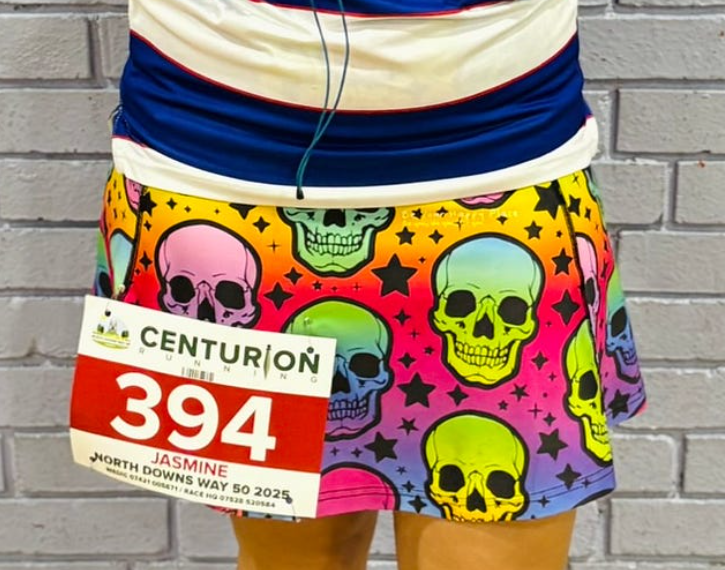
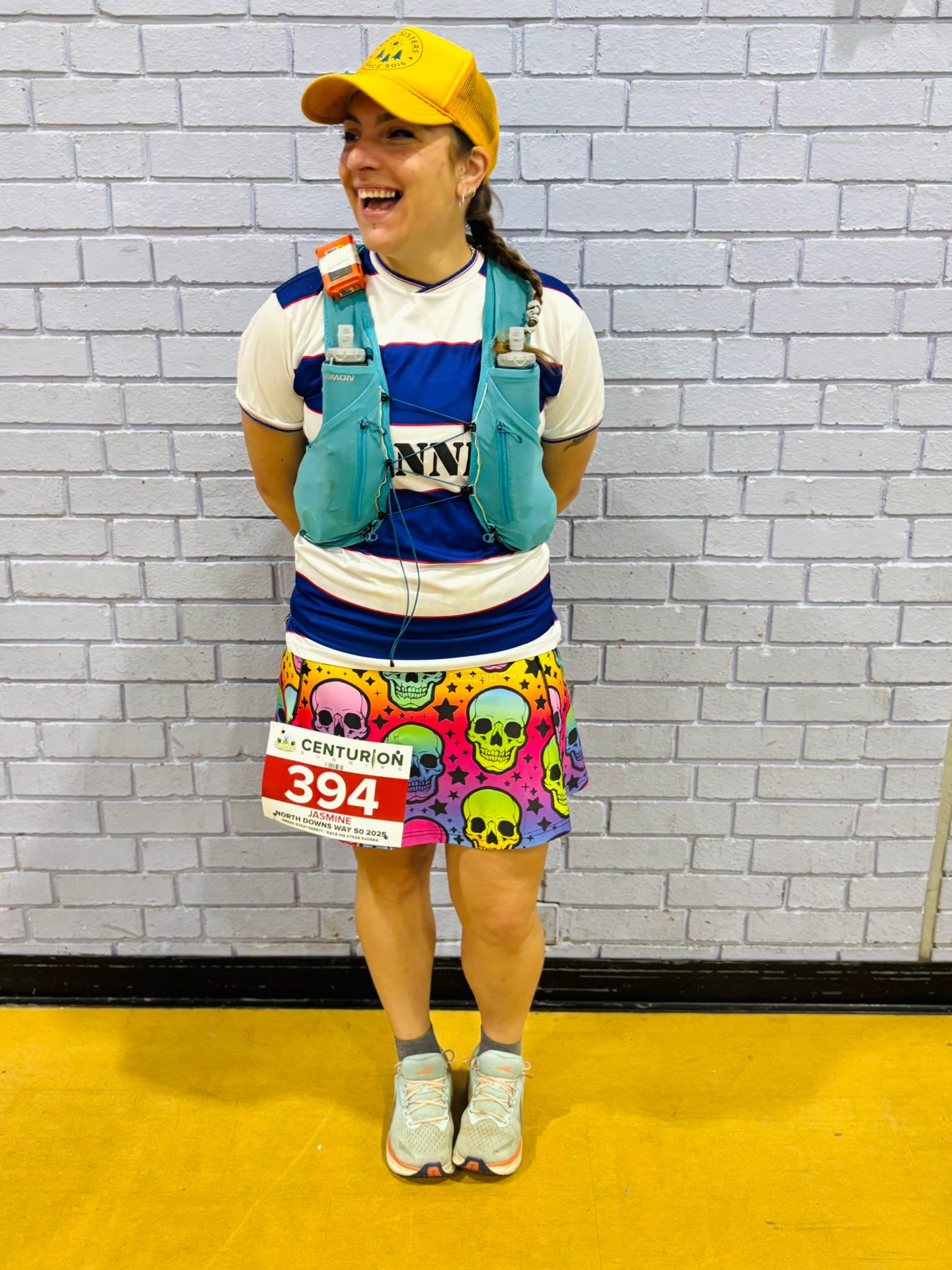
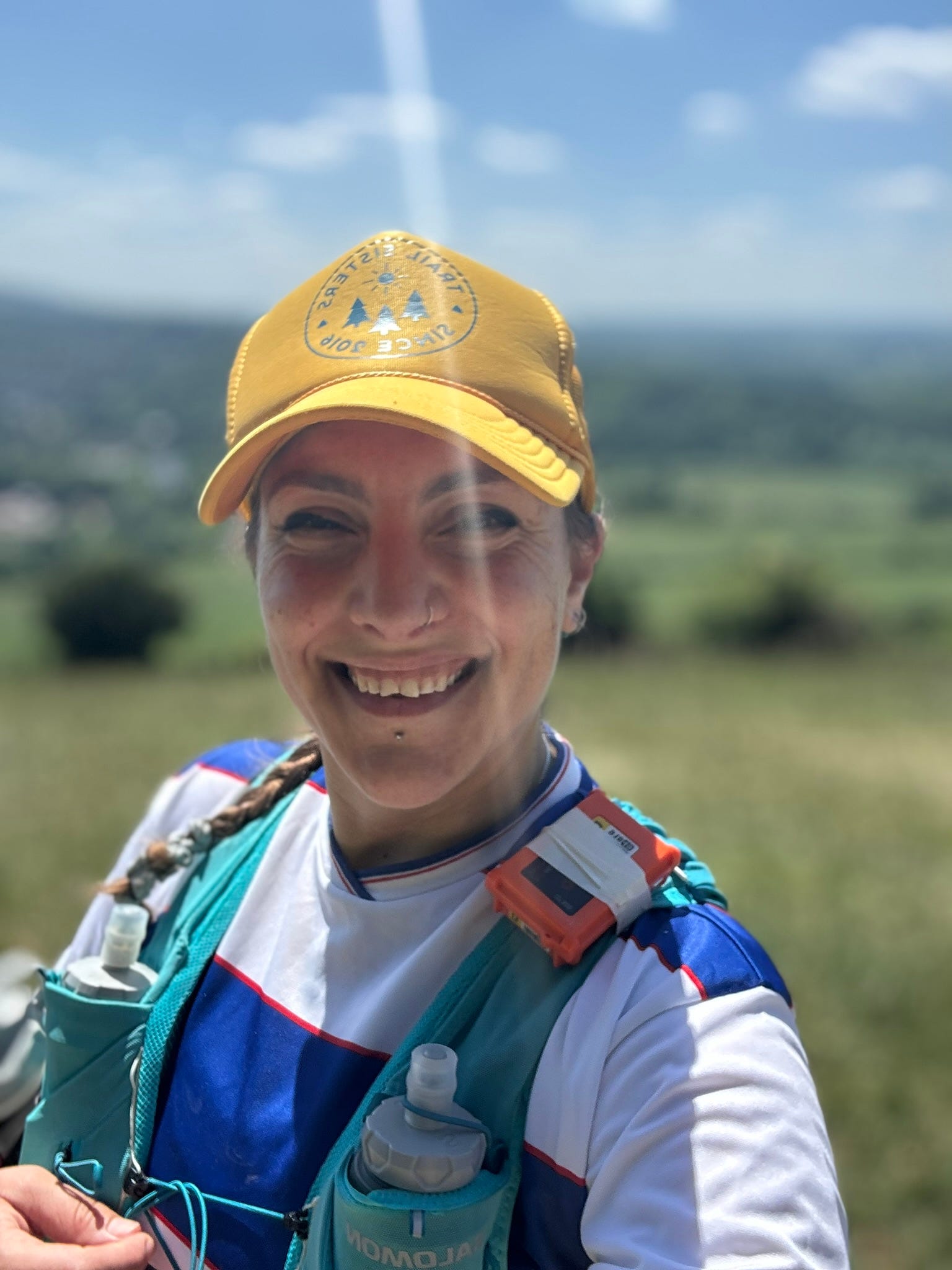

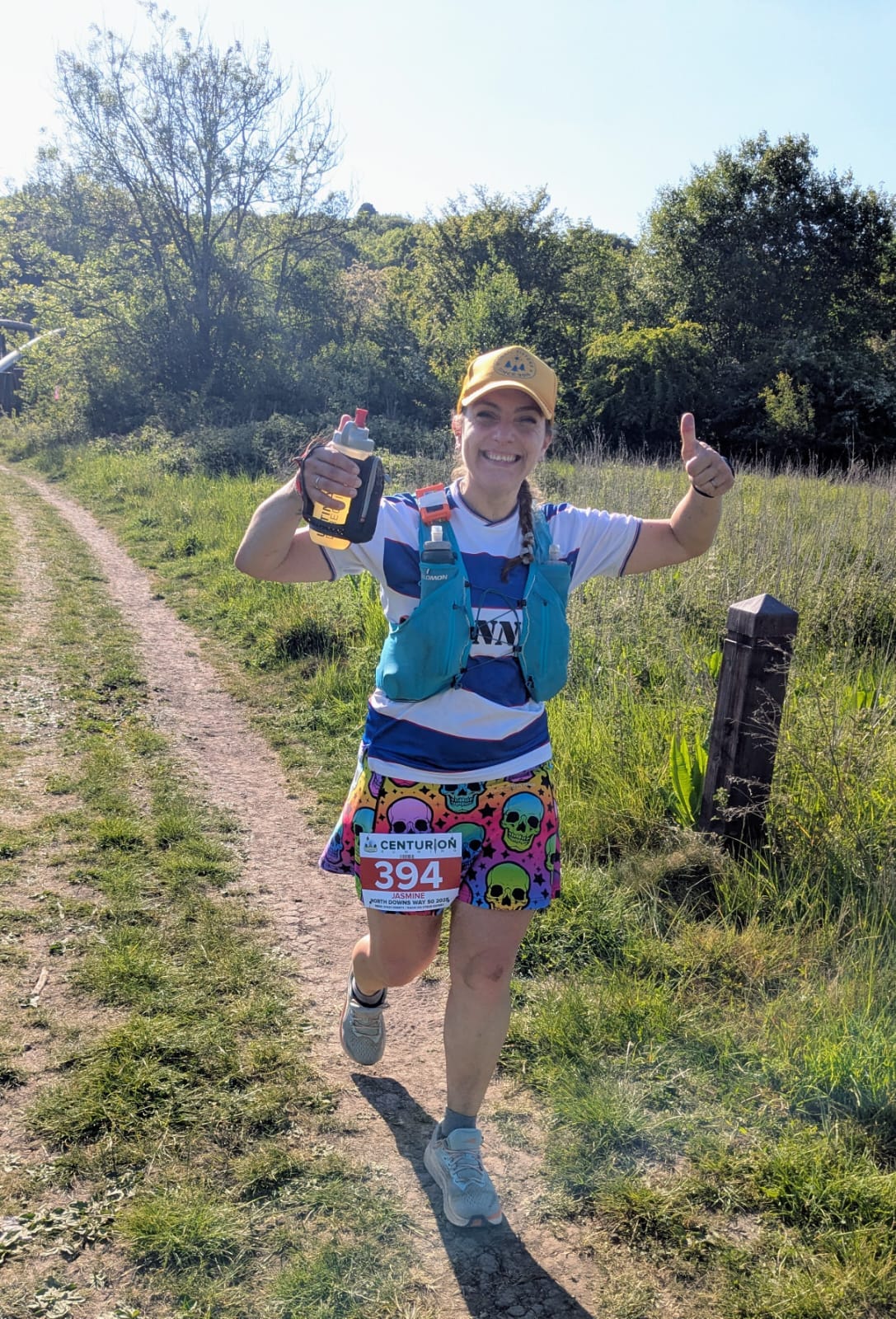
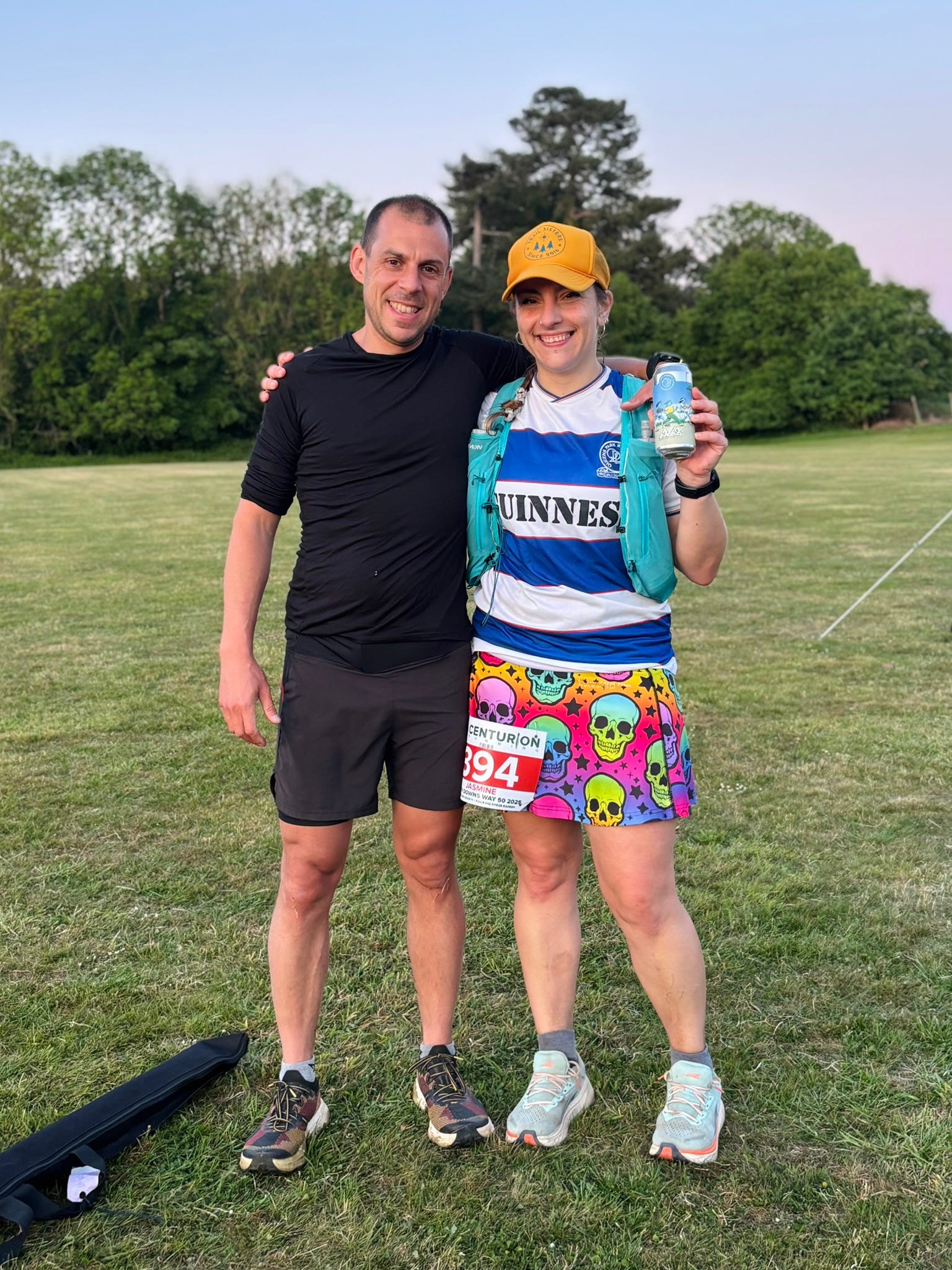
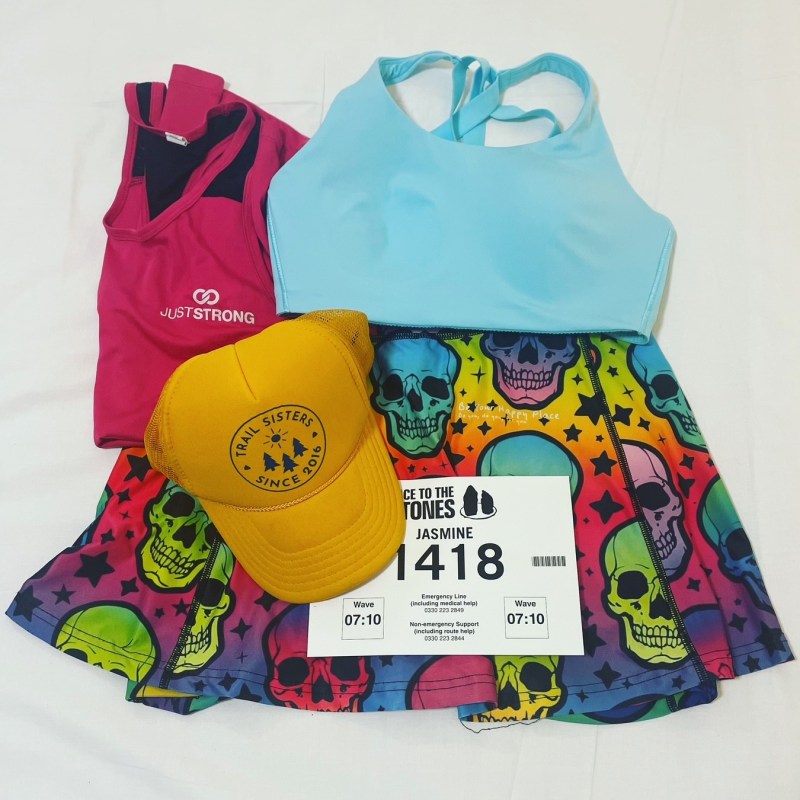

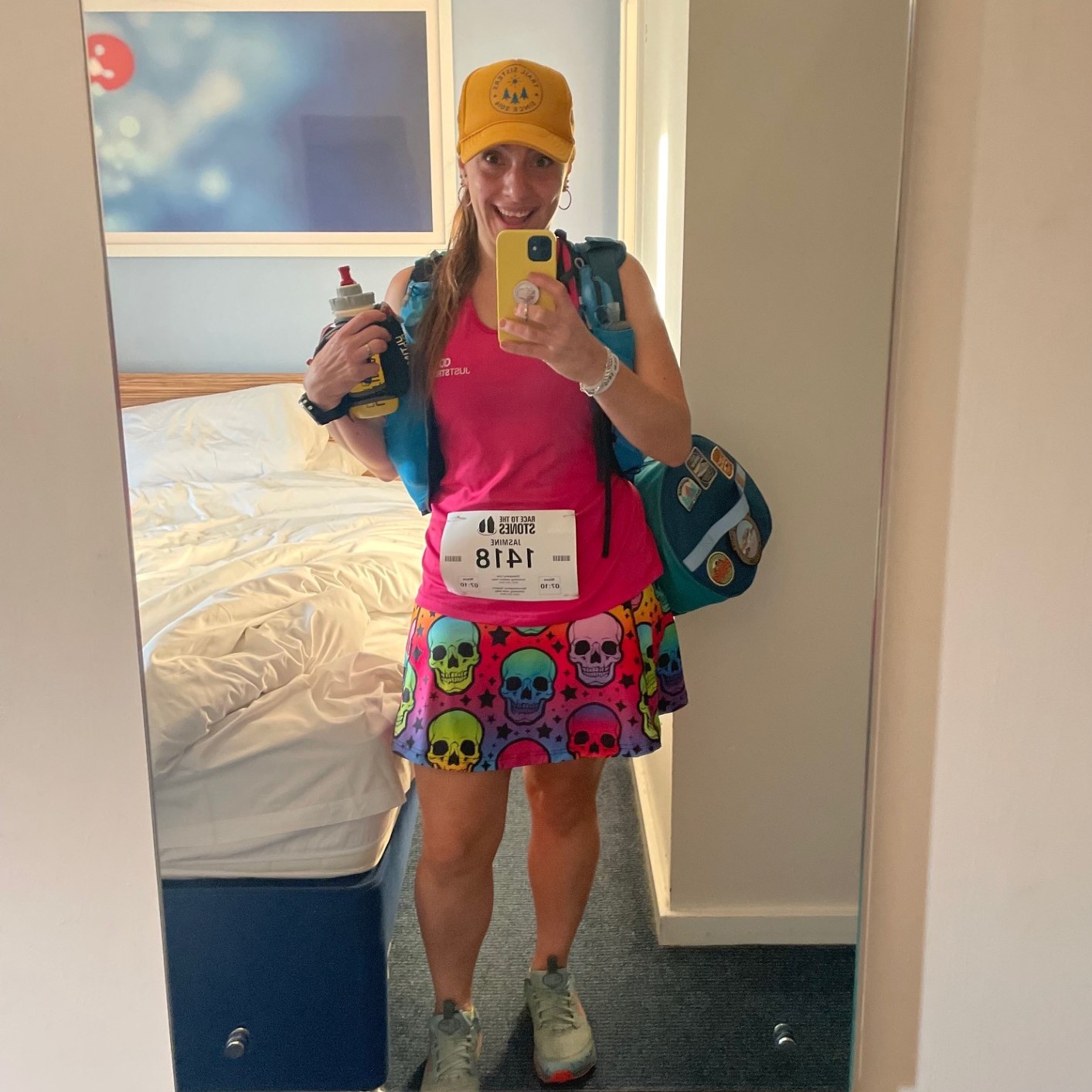

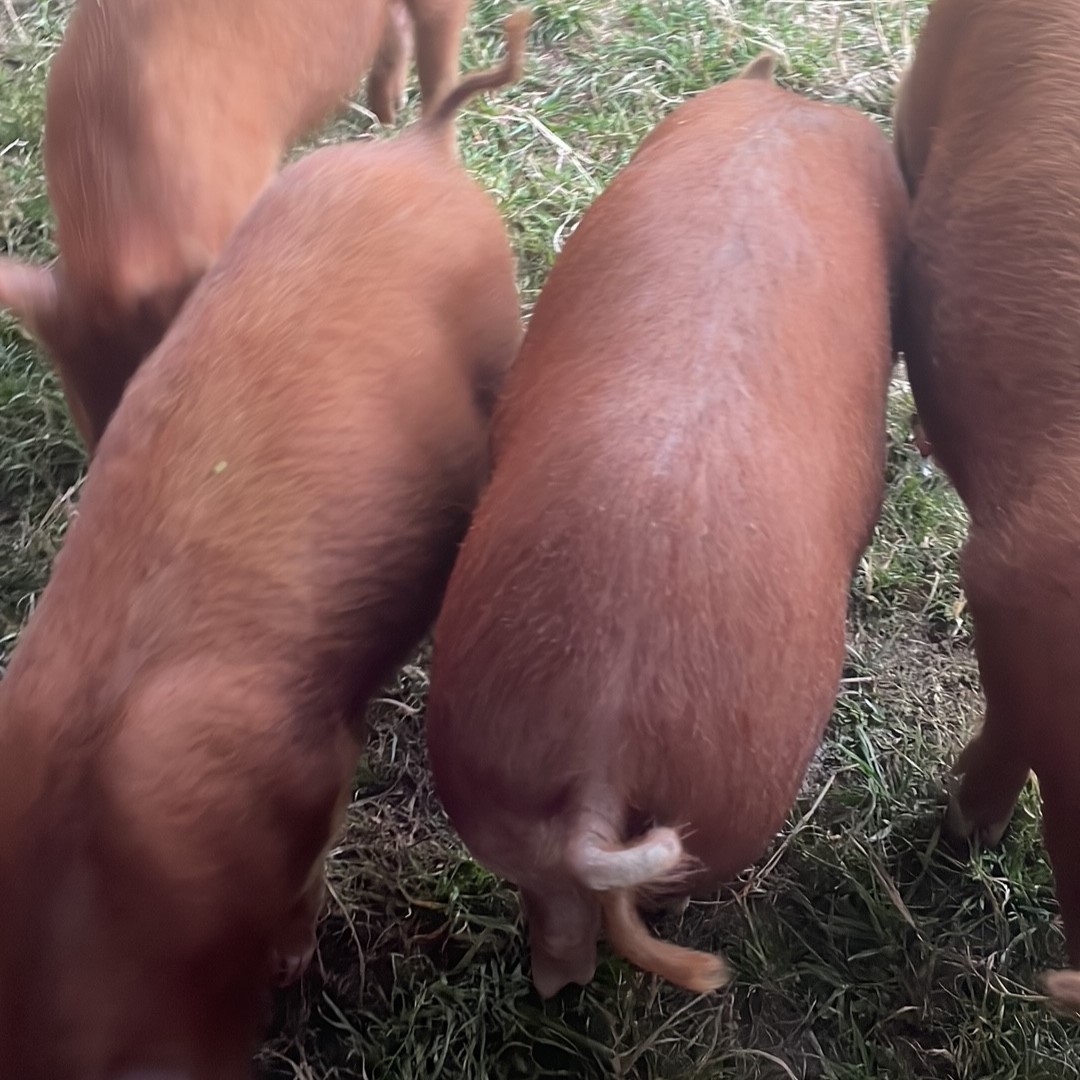



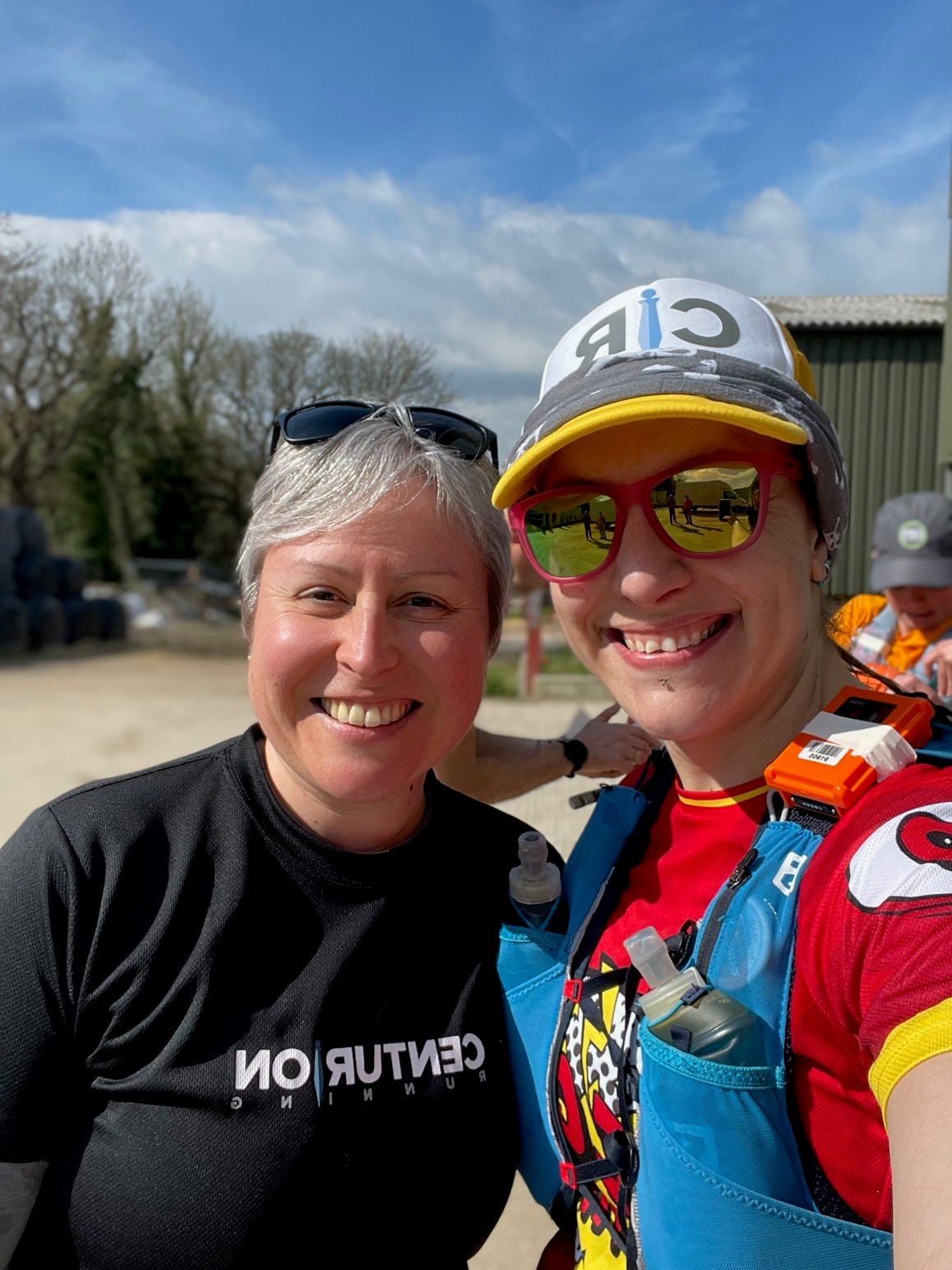

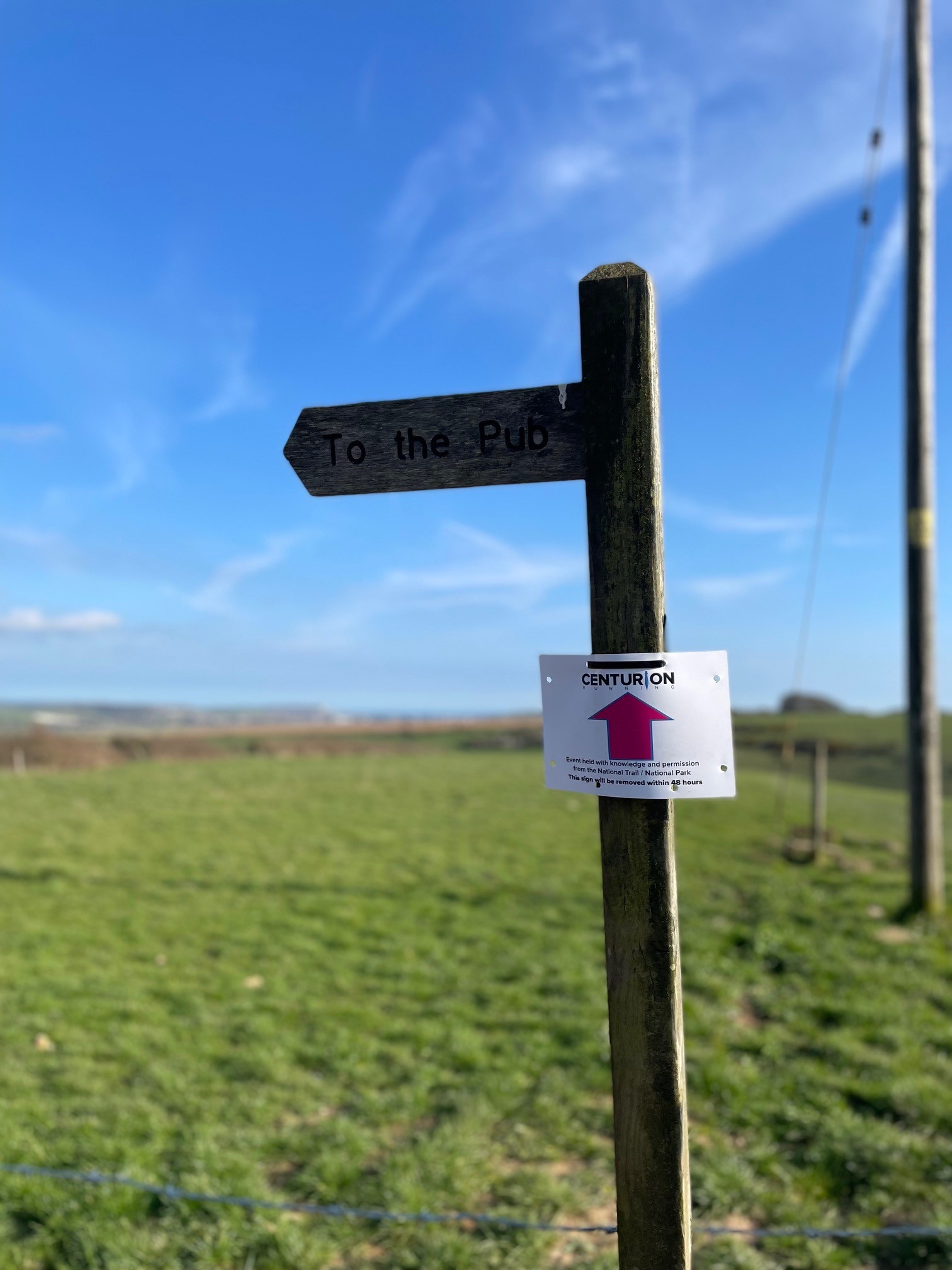
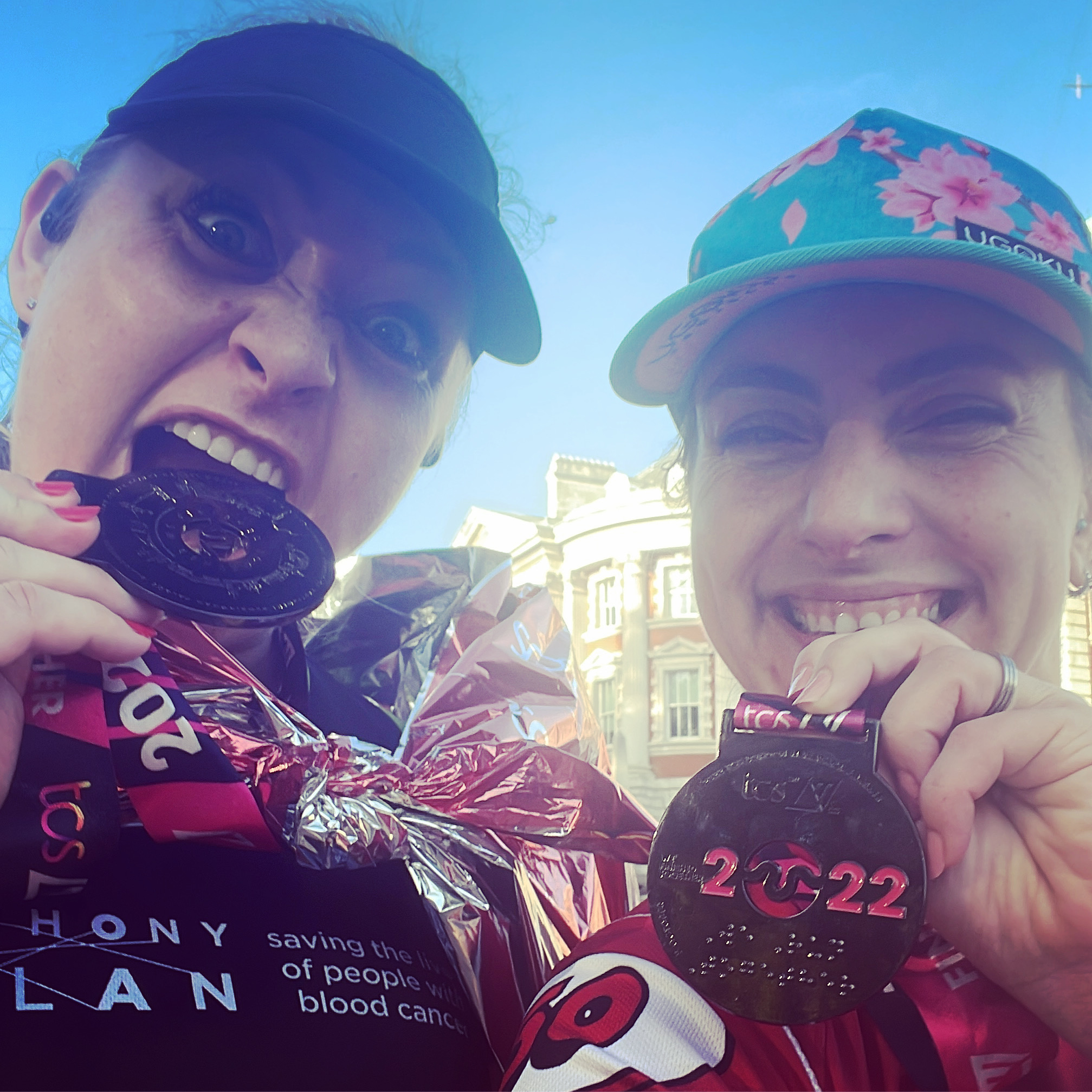

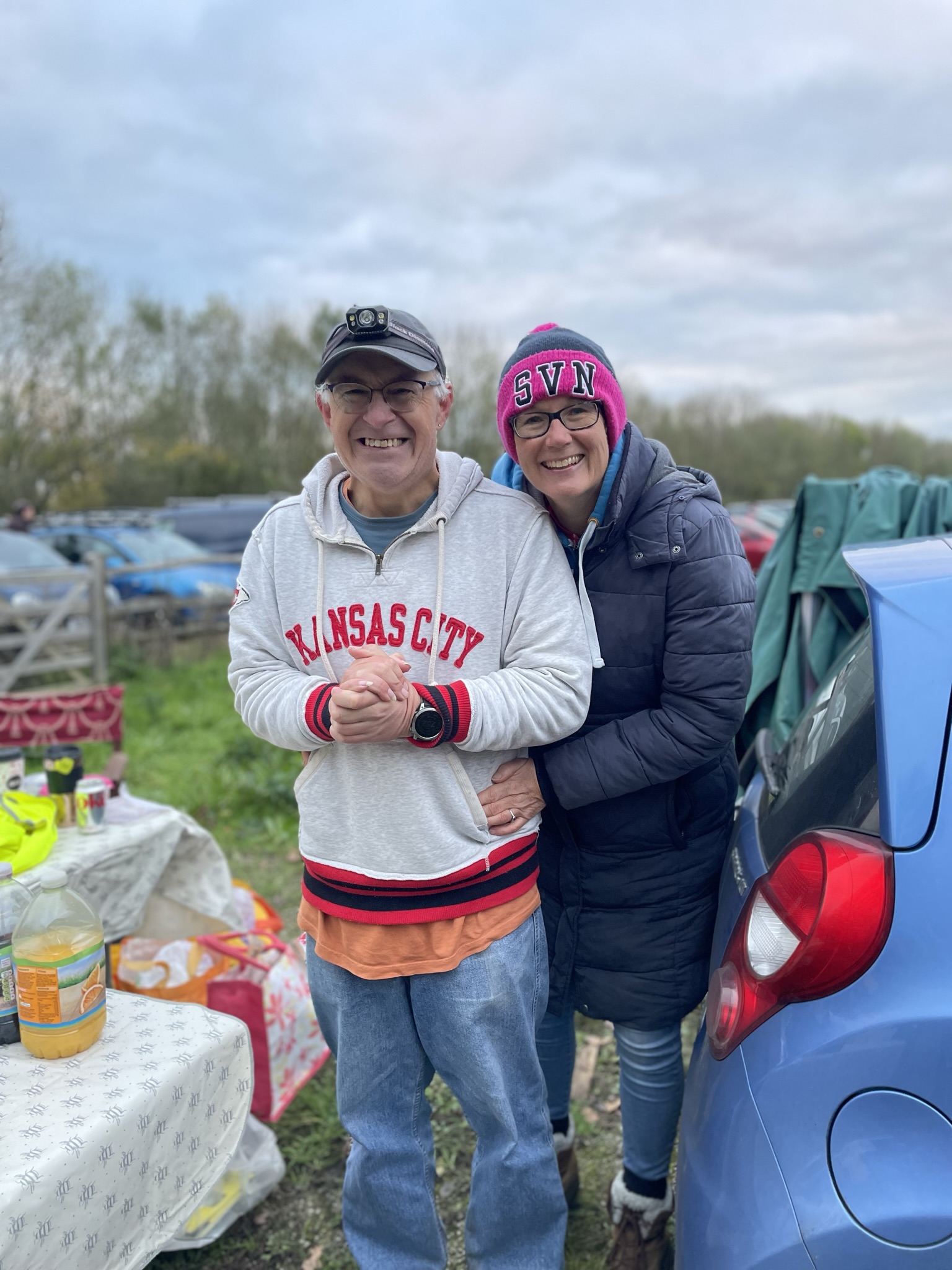

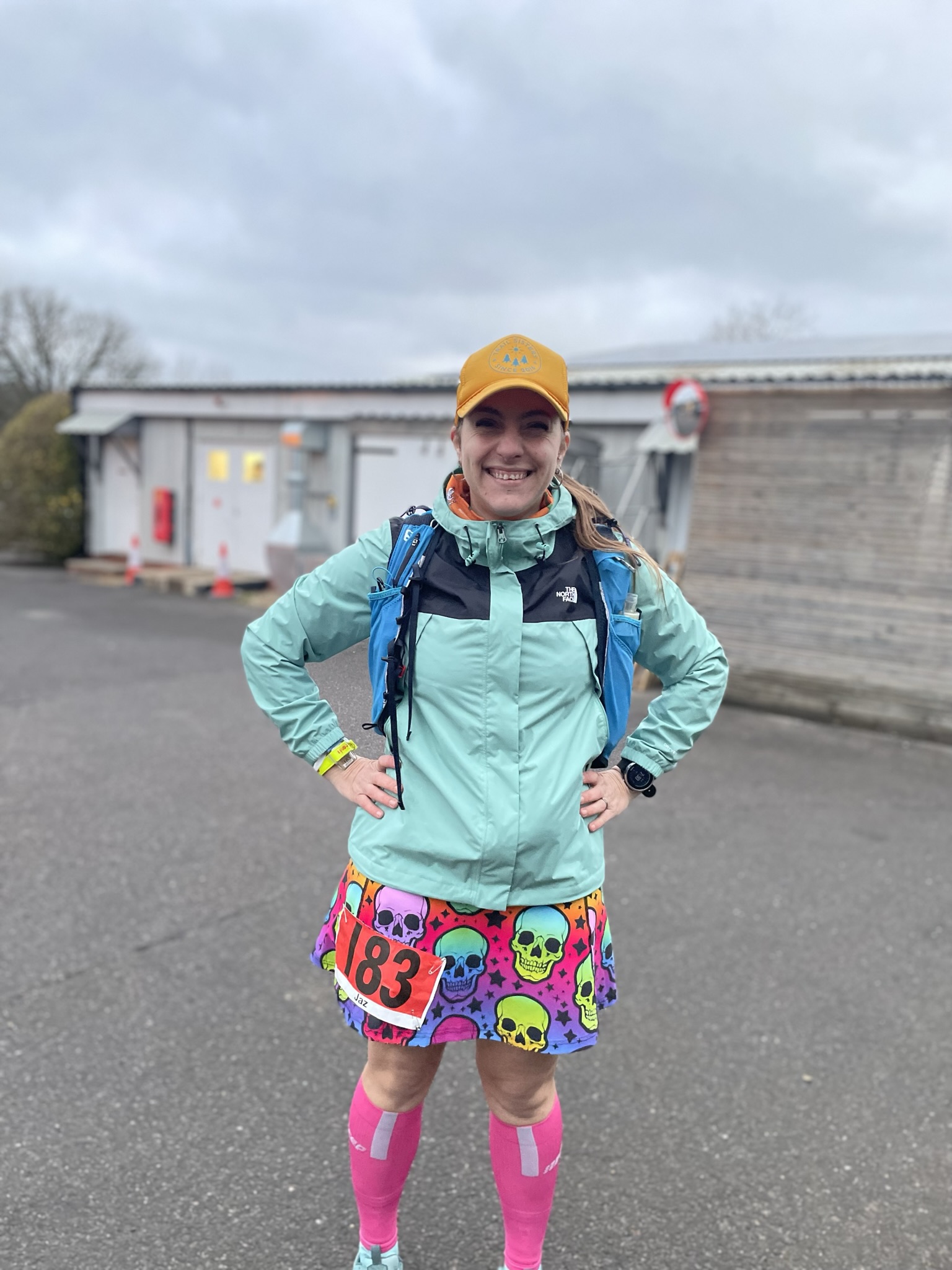

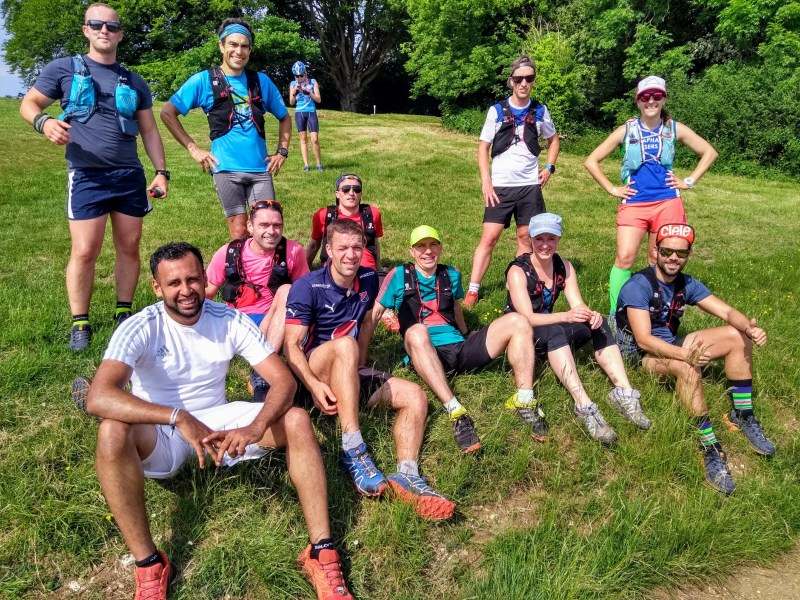
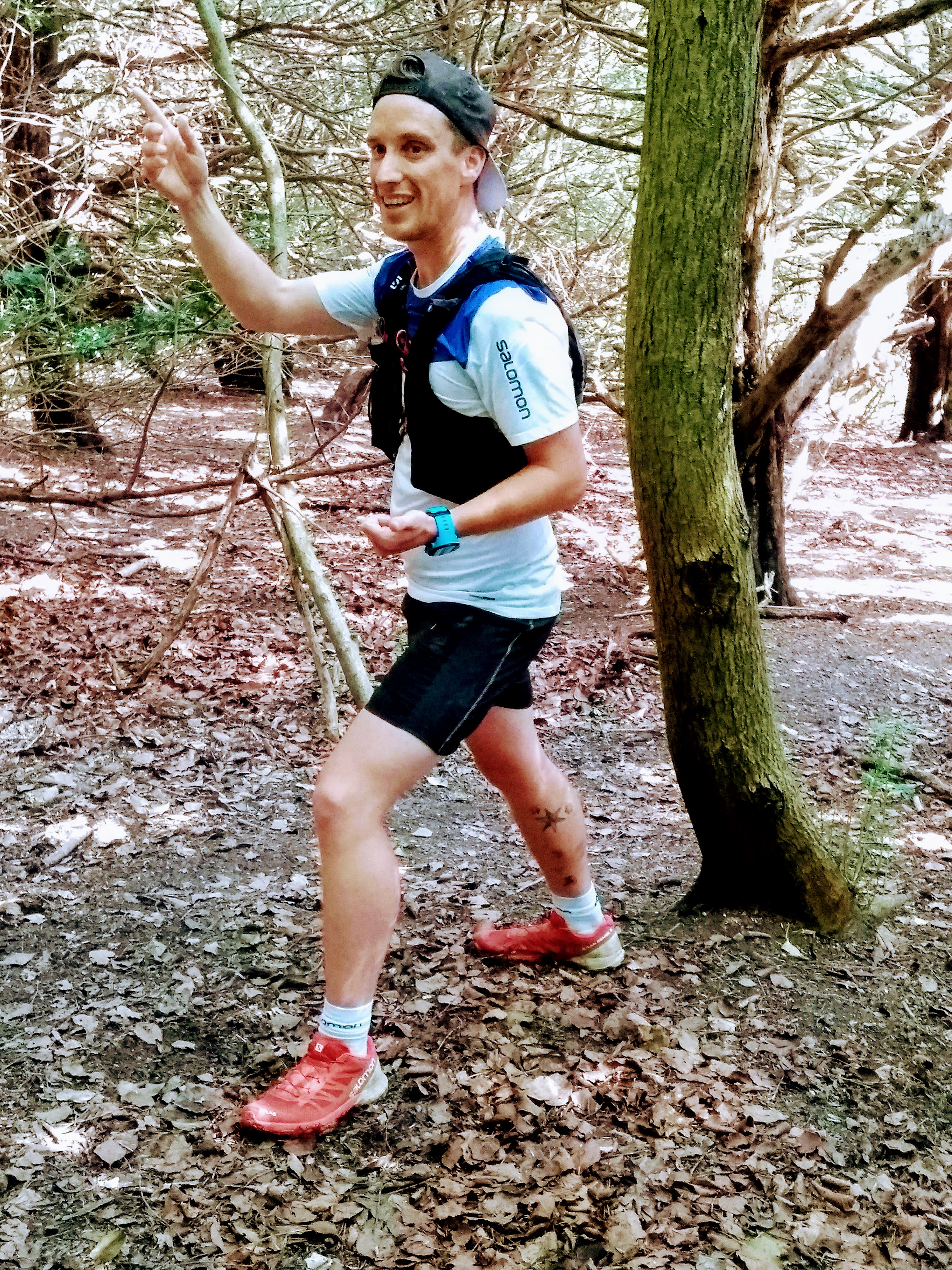
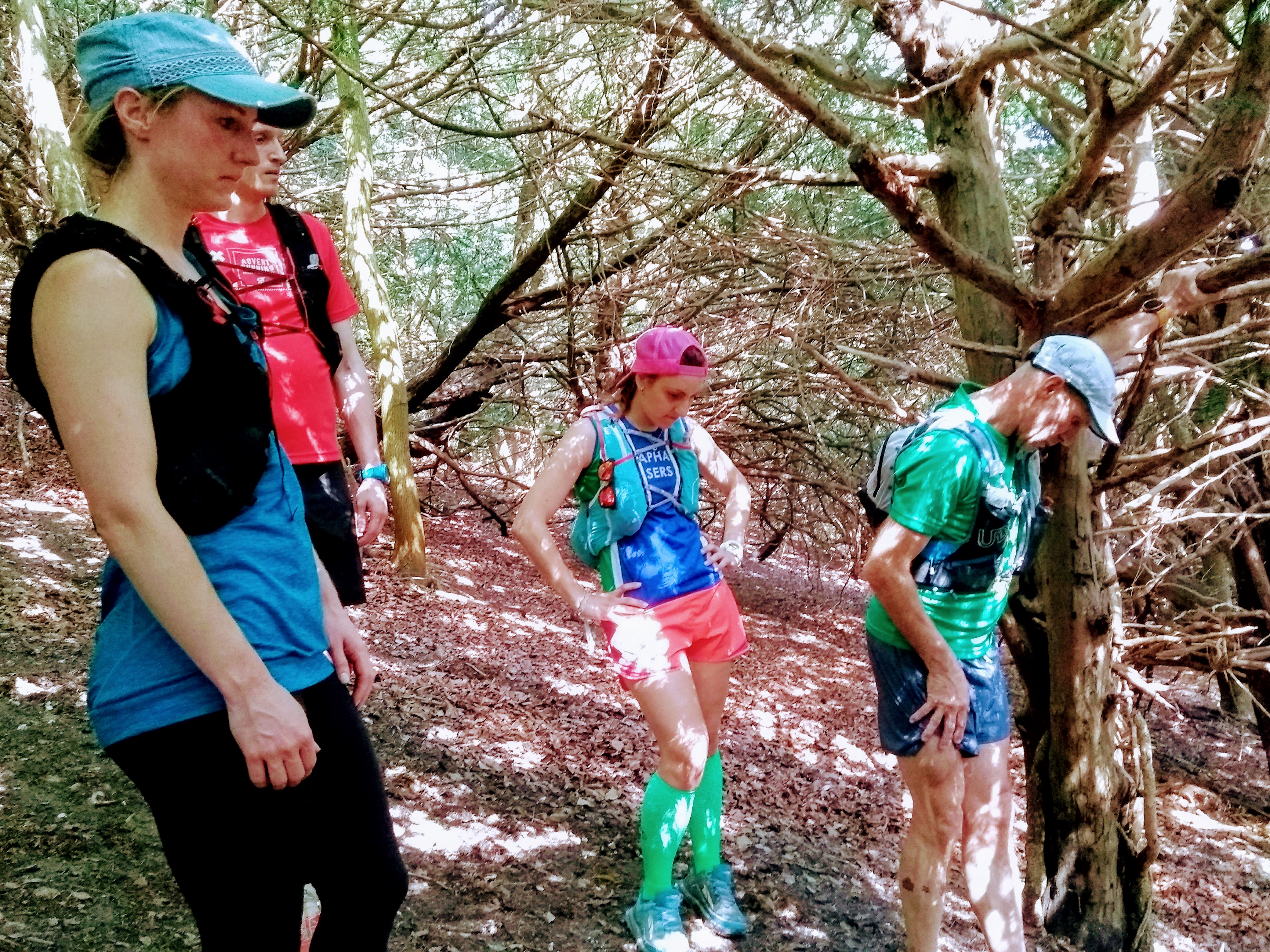
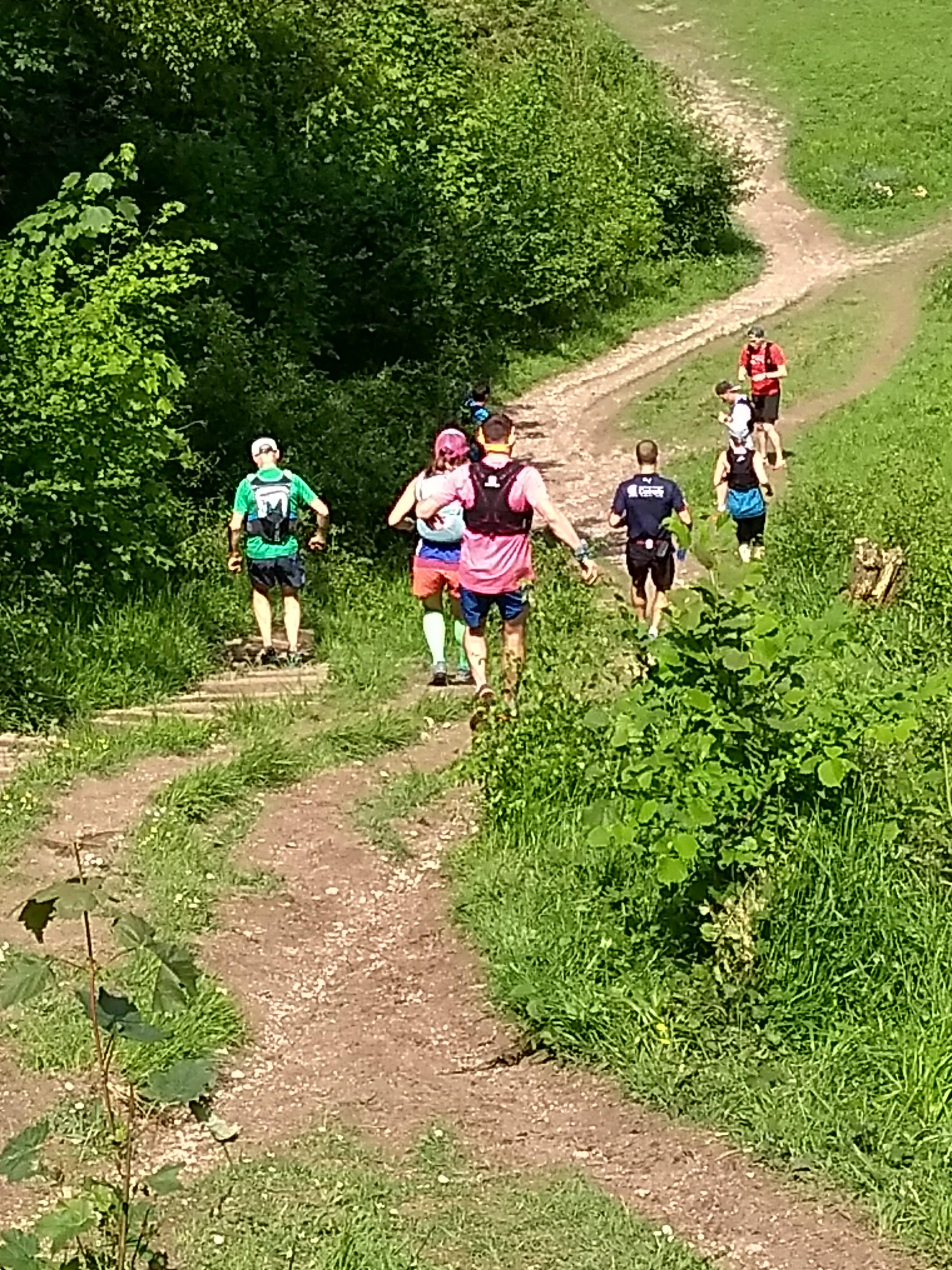
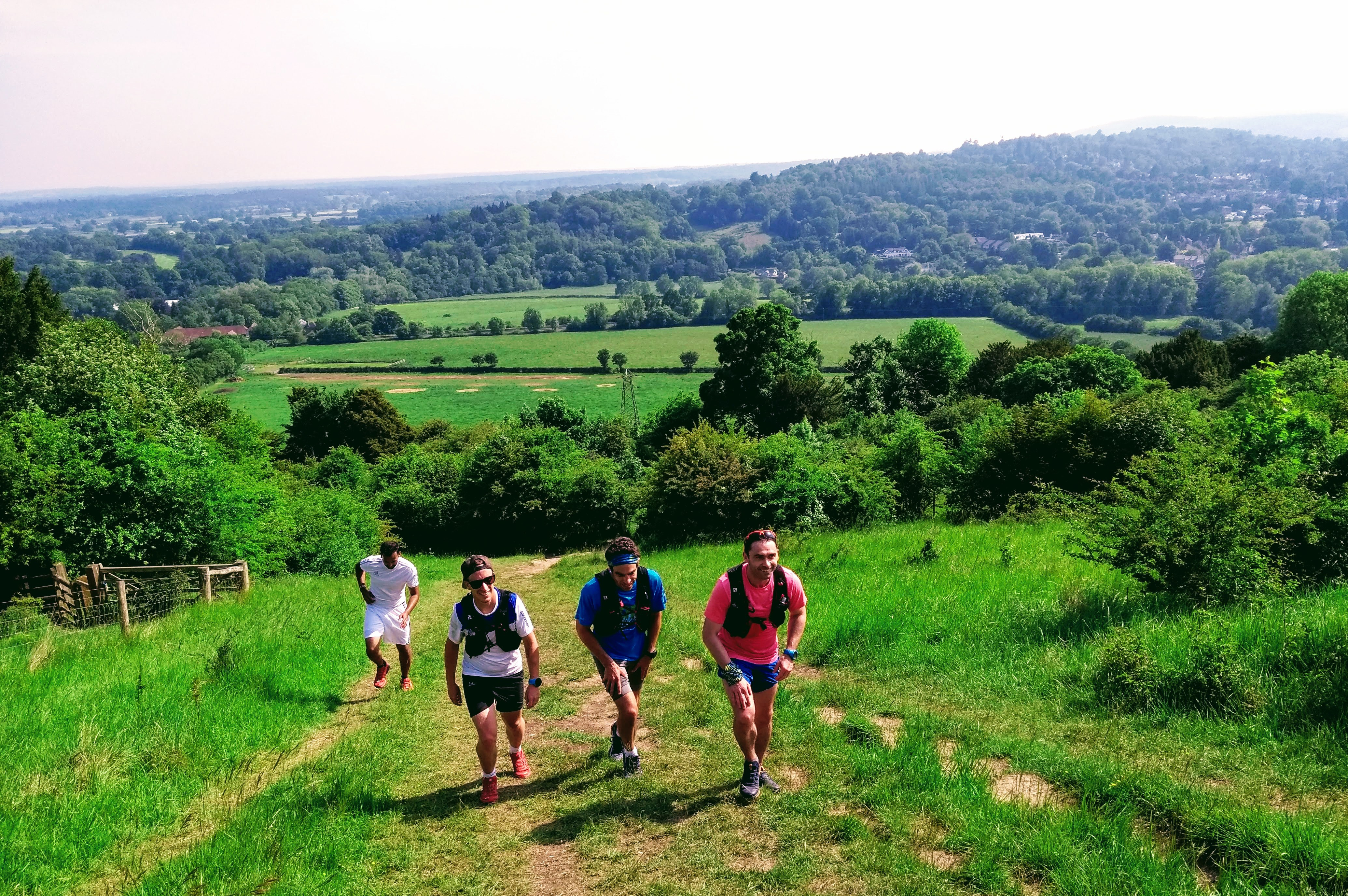

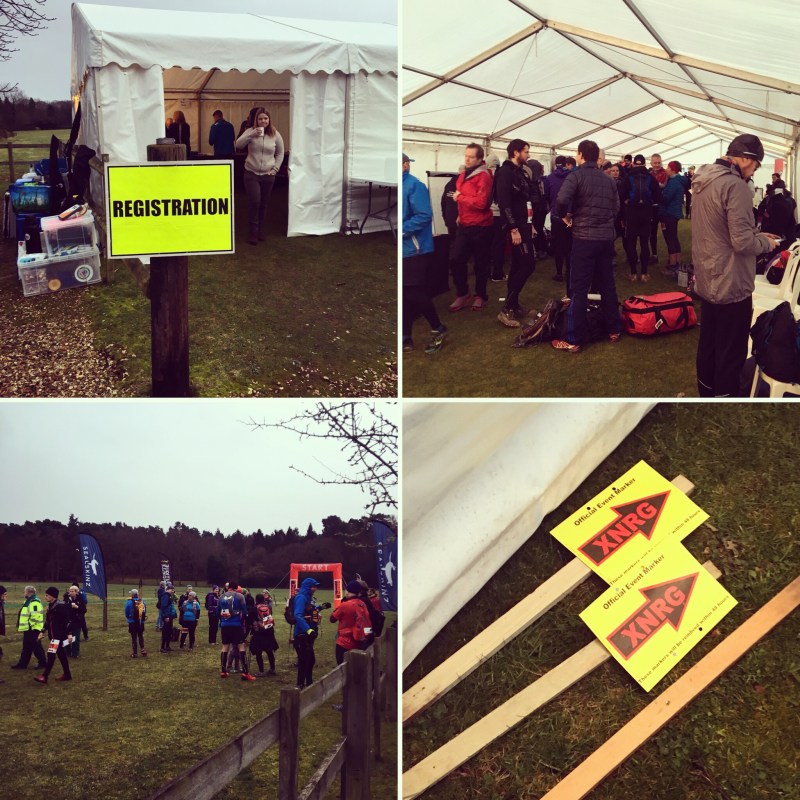
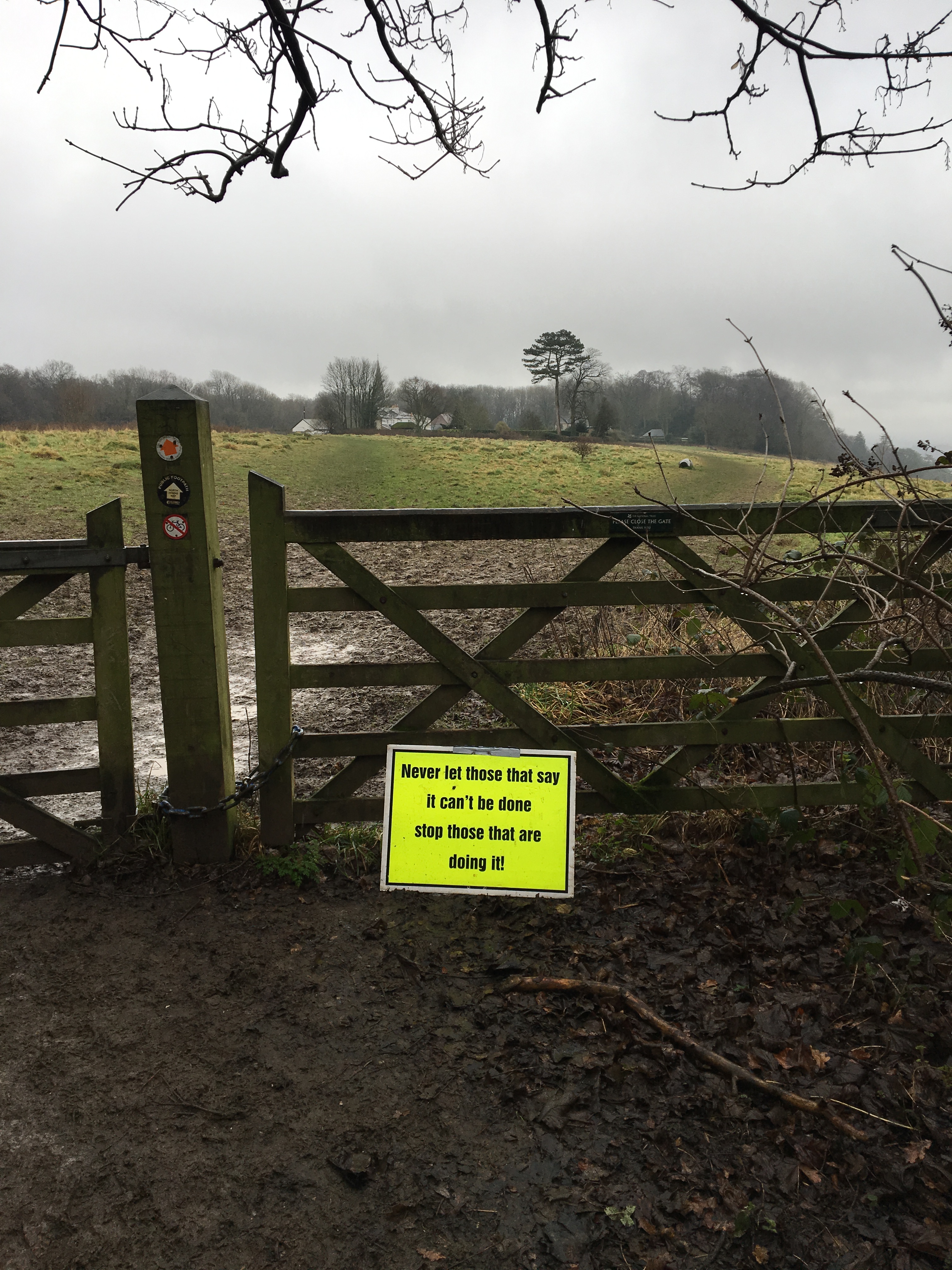

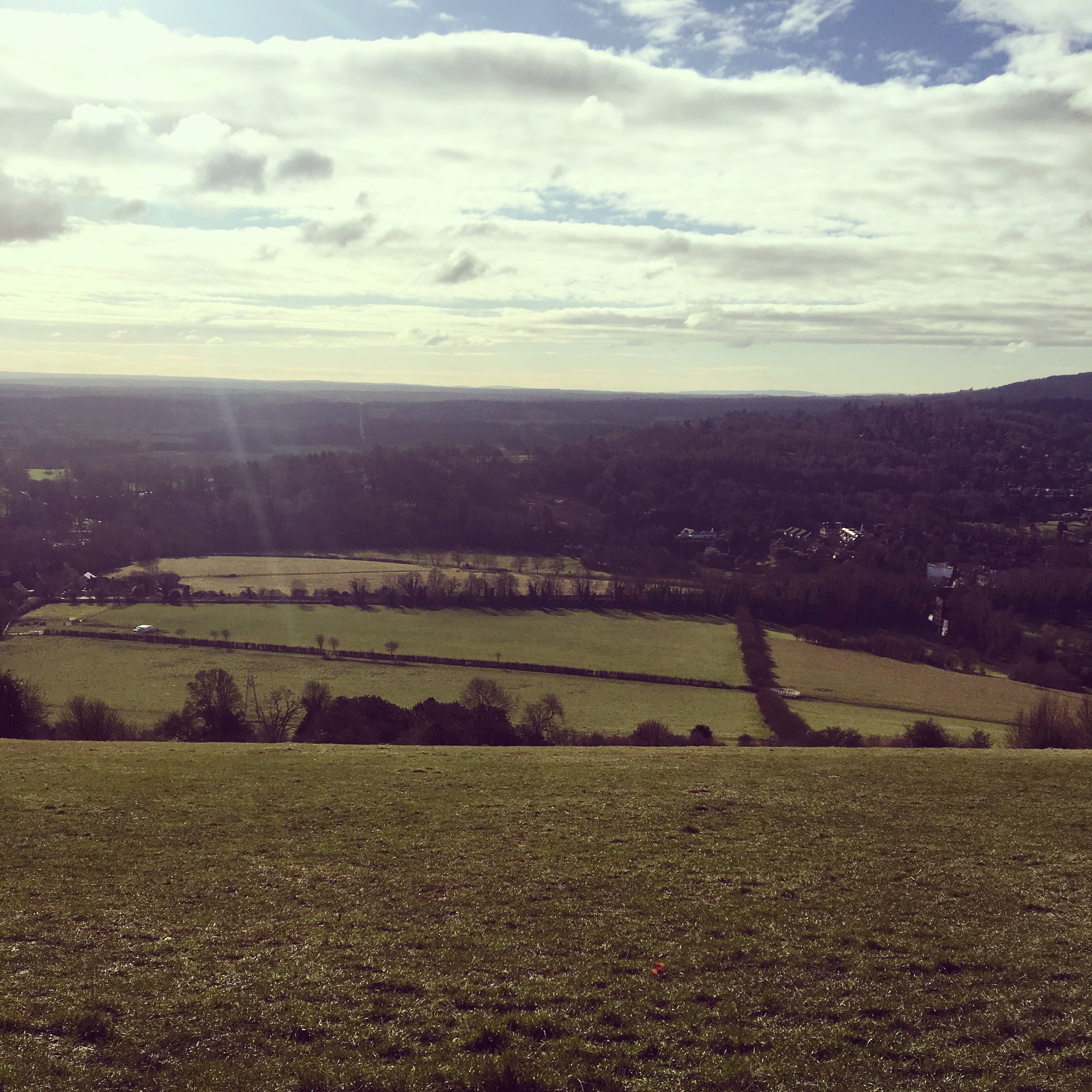
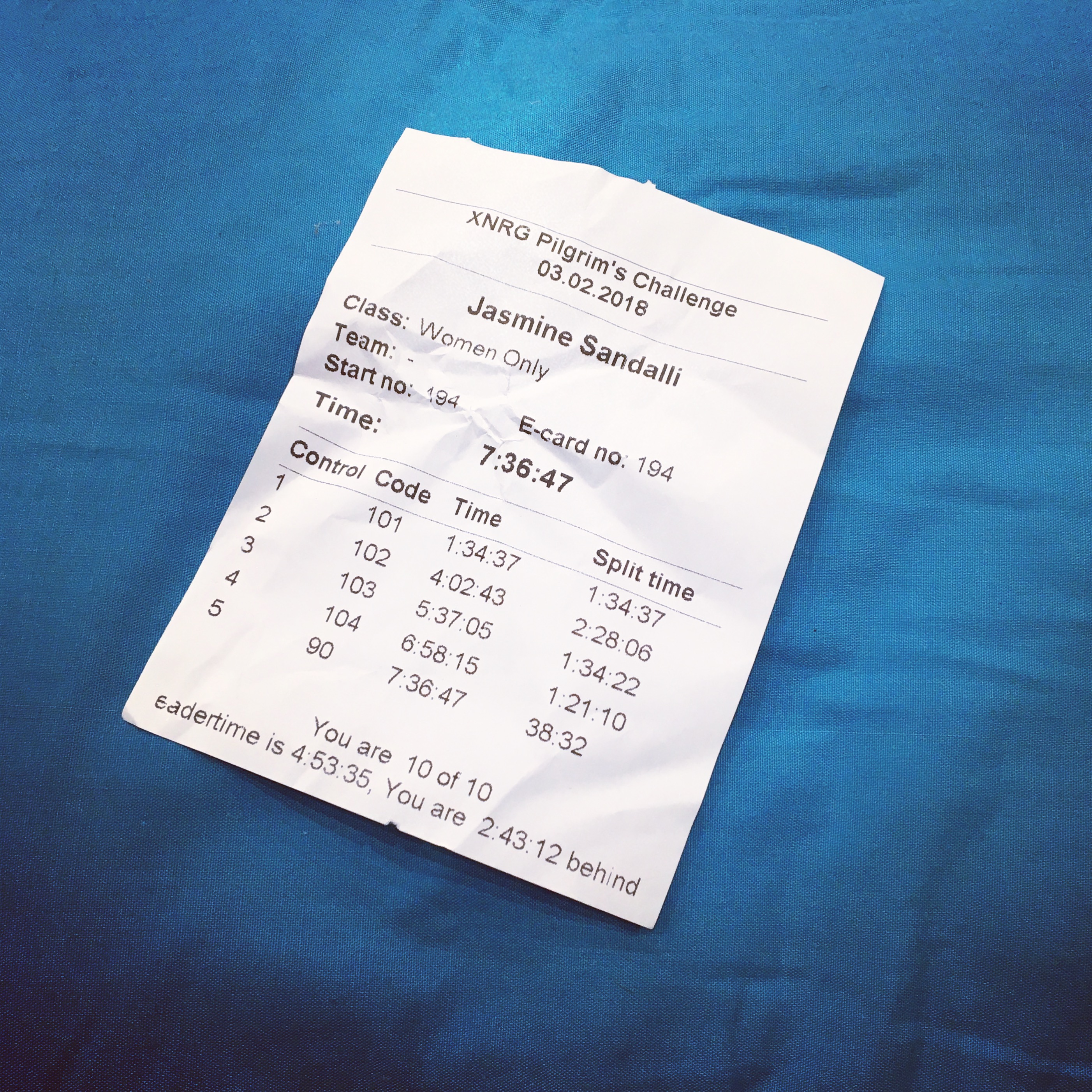

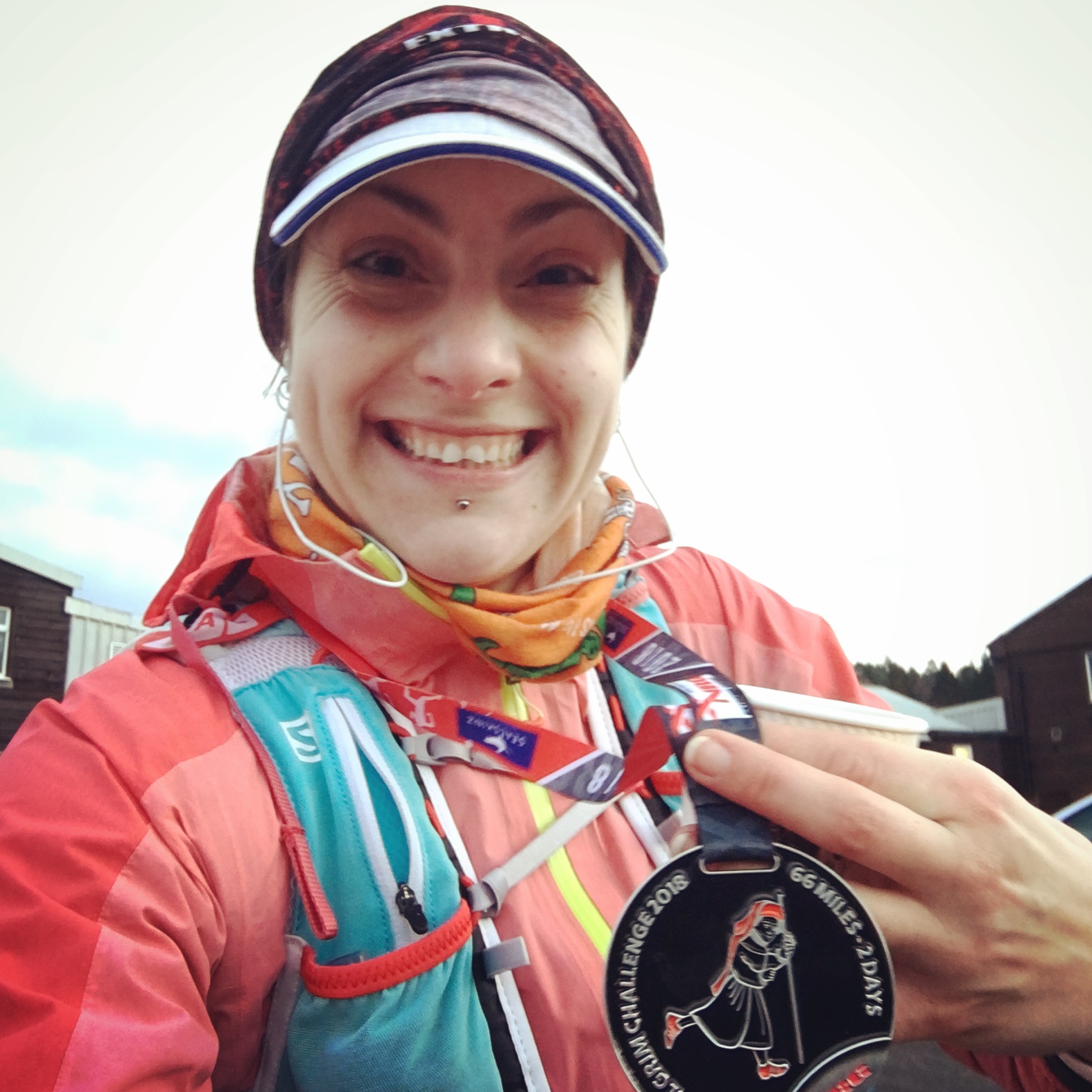
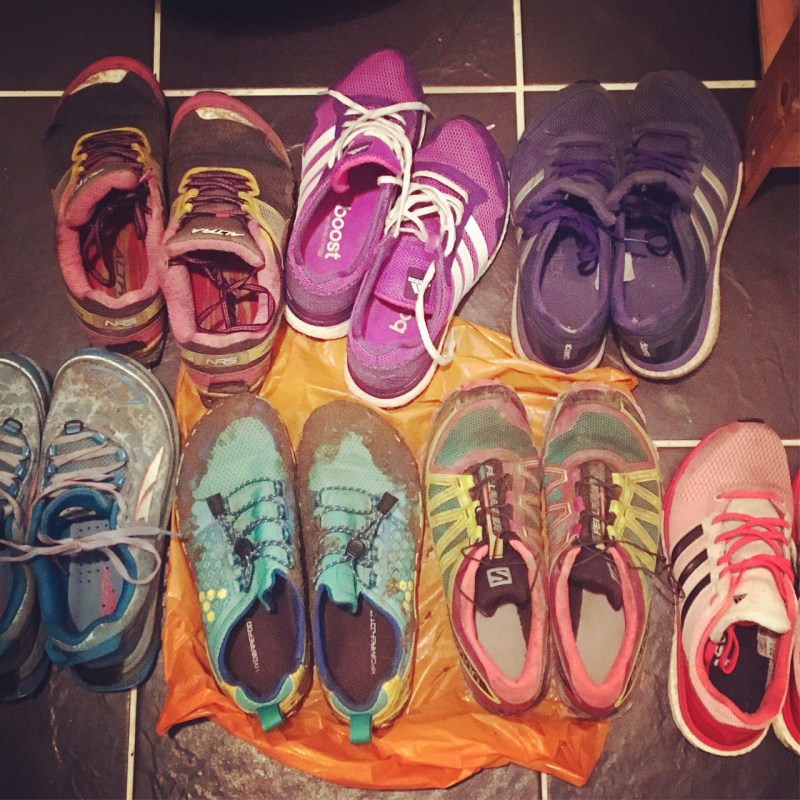
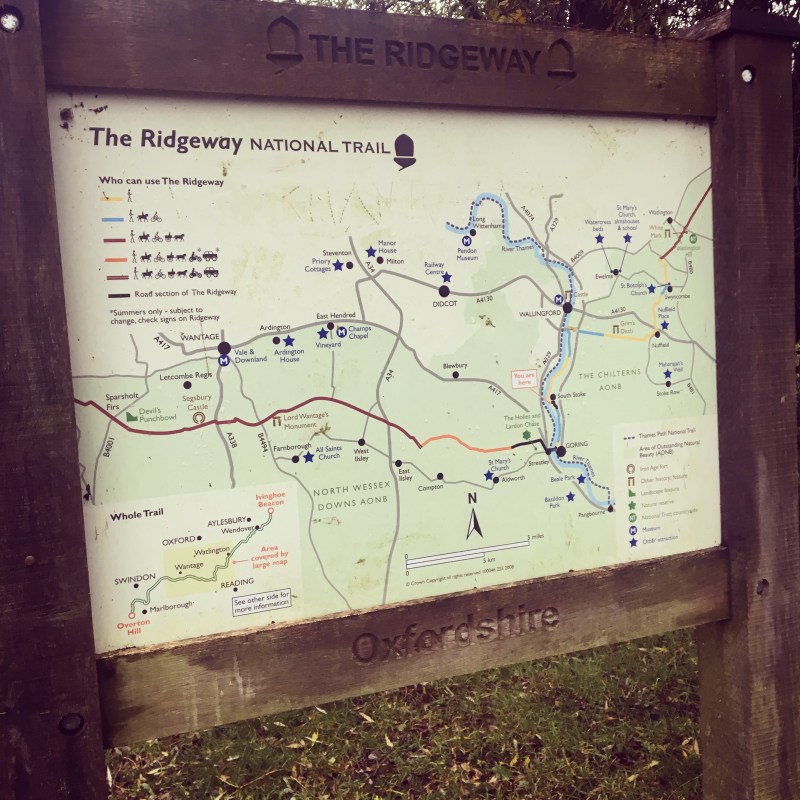
 Medal Magpie