This May I finished the North Downs Way 50, and I didn’t.
The last time I crossed the finish line at a Centurion race was September 2017, at the Chiltern Wonderland 50. A month later at the fourth and final race of that year’s 50 Mile Grand Slam, I had one ten mile lap of the Wendover Woods 50 left between me and the dinner plate sized Grand Slam medal I’d been working for basically all year. And just like that, my body gave up.
Since then I’ve had a fair few DNS’s – they’re so much worse than a DNF but you have to know when it’s not right to put yourself and others at unreasonable risk – and one timeout at the South Downs Way 50 a couple of years ago. I was so ready for redemption.
Working with the marvellous Eddie Sutton I’ve been gradually building up my endurance with the aim of getting that elusive 100 mile finish. Of course, to even get a 100 mile START I would need to have completed a 50+ mile qualifying race, and I finally got that in September 2024 with the Norman 100km, bidding a fond goodbye to SVN in the process. (More on that another day). I was so proud, even though it took me the best part of 24 hours and involved a lot of lying flat on the floor to quell my overwhelming nausea. It gave me the confidence that, with enough time, I could finish the distance. And more importantly, I could problem solve, deal with the dark, battle on, not give up.
Now, I had to get a bit quicker. I needed a Centurion challenge. And I needed another crack at a finisher’s medal.
In the run up to this year’s North Downs Way 50 I had picked up a sub 6-hour 50k at Queen of the Suburbs in March – one of my strongest performances to date and over 2 hours faster than 2024 – logged a couple more off road marathons to keep the volume ticking over, and I was feeling good. Like, almost old me again. I found the two products that my stomach can just about cope with, I had a pacing plan and a fuelling plan I knew I could stick to, and ten years of experience under my belt. Most of all, I had the fire back. I REALLY WANTED this finish.
In a very first-day-of-school moment Andy dropped me off at the leisure centre in Farnham, let me wipe my snotty nose on his shoulder, and wished me good luck. Centurion head honcho James Elson gave me a hug just before the briefing to show appreciation for my lucky QPR shirt – I promised myself I’d wear it if the Under 23’s won their cup final game – and I trotted towards the starting line with the rest of wave 2. All my nerves, all my anxiety just melted. I was going to do this.
But.
Right from the off I was battling constant nausea. I mean constant. Knowing that I had to had to HAD TO keep fuel going in every twenty minutes and trigger another wave or risk crashing out altogether, I realised early on that this was going to be about grit and discipline. Circular breathing and Veloforte chews. Don’t think about how long was left.
All I could focus on was
breathe in get to the next checkpoint puff out
over and over
If that sounds melodramatic, let me explain emetophobia to you. It’s irrational, obviously. The roiling tornado in my stomach is more than discomfort; it spins me off kilter, like vertigo. Rationally I know that being sick is no big deal but that doesn’t stop me from feeling like I’m going to die. Compound that with the fact that nausea greets me every morning and rears its head at the worst possible moments. So all things considered, running 50 hilly miles in the heat is kind of a stupid idea.
At least I have the experience to know that nausea sucks but underfuelling is ten times worse. As torturous as it was I stuck to the fuelling plan, 60g carbs an hour spread over 20 minute gaps. All my calories were in my vest, so there was no reason to risk eating something that would make things worse and no reason to dither at the checkpoints. The gamble paid off for a while – by the time I approached the Stepping Stones checkpoint at mile 24 I was in a rhythm, my stomach had settled, and I got to see the ray of sunshine that is supervolunteer Laure.
The next eight miles were all about climbing and all in the high heat of the day. Box Hill, Colley Hill, Reigate Hill. The worst climb of the day was behind me but the nausea wasn’t – with about a mile to go to the next checkpoint, getting dizzy and with the sun beating down, I couldn’t hold back any longer. One thing I have learned is that yes it’s gross and terrifying and no you don’t die and yes it’s always absolutely fine afterwards, as long as you do the one thing that seems entirely counterintuitive and immediately eat. The glamour of trail running. Puke and rally. Keep going.
A hug from Jem at the 32 mile checkpoint and a quick refill of my water bottles and I was straight back on the trail. At this point I had just under an hour in hand over the cutoffs, but by the time I reached Caterham six miles later that cushion was down to half an hour and at the final checkpoint at Botley Hill I got in with just ten minutes to spare. Fitness, fatigue, speed – none of those were a problem. It was simply that every time I tried to run my stomach turned into a washing machine. And yet… I was having a blast.
My trail angel Cat and her trusty companion Mabeldog had dropped by partway through the stretch to wish me luck and reassure me on my timings – there’s a reason I call her a trail angel – but I knew that if I wanted to get that medal I was going to have to keep going as fast as I could possibly manage, and that meant dealing with my nausea demons for two more hours. I could keep them at bay when I walked, but when I walked I was wasting valuable minutes, possibly seconds – so no walking if I could help it. James had just arrived as I left Botley Hill, ready to sweep the final leg of the course, and shortly afterwards both he and Frank caught me up.
Frank’s story was even more woeful than mine. He’d taken a bad tumble before Caterham and was hobbling, walking poles for legs. But he was moving with purpose. It turned out that he had been on the verge of dropping at Botley Hill when James persuaded him he still had time to make it. I had a companion for the death march to the end. And that’s when the magic happened.
I’ve made this sound awful I know – and I can’t pretend the experience wasn’t attritional, because it obviously was. What made the day was the Centurion team and volunteers: their passion, their encouragement, their professionalism even, and when you spend an hour in James’ company you can see why that ethos runs through everything that Centurion do. We chatted for ages about our mutual love of a wonky little club from West London, about having both had season tickets in R Block, about awaydays, about Stan Bowles in the Springbok pub. About ex-Ranger Eze scoring the winner for Palace in the FA Cup Final just minutes before. James couldn’t help or pace us, but he encouraged us every step of the way, called out the times as we went, kept us going. Both Frank and moved as quickly as possible but once we got past the last steep climb it was clear that we were cutting it fine.
And then we got to the endless, soul destroying fields section. I remembered these from my last run here in 2017; they are deceptively slow because despite being flat they’re heavily rutted and a real energy drainer. James‘ timechecks came through with increasing urgency: you’ve got 2 miles left and 24 minutes to do it in, you need to run, you can do this. The last half mile would be on a road and downhill. After that point I was vaguely aware of James’ voice behind us but I didn’t know what he was saying. All I could think was – MOVE.
As soon as we got to the road I put the afterburners on and dropped an 8:59 pace for the last half mile. There would be seconds in it. Seconds only matter when they’re the wrong side of the cutoff, I thought. Moved into intervals pace. Drove forward from my knees. Turned left into the playing fields. Up the grass hill. Saw the finish arch. Saw people cheering us in. Heard people cheering us in. Felt the breath dragged out of my lungs as I sprinted for the line.
saw the clock
saw a thirteen
saw that I was just over
found myself saying no no no
went for it anyway
a finish line is a finish line
BIG LEAP
done.
Almost straight into Nici Griffin’s arms. Frank right behind me. Twenty seconds over the cutoff.
If anyone came close to breaking my heart that day it was Nici – she approached us with dread, started to explain that she was sorry, it was the worst part of her job, she had to tell us that… and I said I know, it’s fine. Please don’t be sorry. Finally let myself drop to the floor. Just like that: no more nausea. No more attrition. Nothing more to do.
Of course I was disappointed – I am, still – but I remember nothing but gratitude and pride from that moment. It may have been a DNF but I felt like an Olympian. This is why the trail running community is so special. I felt no compunction about being twenty seconds from a medal – even if I’d been offered one I’d have refused it, I knew the breaks when I signed up. The challenge was to finish in 13 hours and I didn’t. That’s what makes it worth it.
Only once I got home, scrolling through Instagram, did I realise that James had been filming the last ten minutes of the race. My husband couldn’t bear to watch. I couldn’t tear my eyes away.
The main reason I’m not upset is that this isn’t an end for me. In many ways it’s a much bigger confidence boost even than the 100km I finished just 8 months before – this was never about just getting to the end, but getting there with purpose. The North Downs Way 50 2025 was one more step towards getting back to ultra fitness on a journey that arguably started back at the end of 2017. You could even say it started with my first NDW100 DNF in 2015. That journey will finish when I finally get that 100 mile buckle. And I will, even if it takes me 100 tries.
What’s more, that lucky QPR shirt will be with me when I do.
I can’t thank James, Nici, Drew and the Centurion team enough for a brilliant day. If you want to know what you’re made of, do a Centurion race. I promise you, you’ll not regret it.
After my South Downs Way 50 DNF in May 2023 I found myself looking down the barrel of an entry to the Autumn 100, my third attempt at the distance, and about to pull the trigger on my backup qualifier. Race to the Stones: 100k along the beloved and familiar Ridgeway in the height of summer with a generous cut off and few excuses. This was going to come down sheer bloody determination, and to courage.
Which brings to my mum.
As I’ve got older and wiser I have become increasingly aware of how courageous my livewire of a mum actually is. Baby Jaz, age 20, thought she was a billy big bollox for flying alone to a Morrissey concert in Dublin with £9.50 in her bank account and the address of a hostel written on her hand; baby mum did sort of the same thing, except it was a casino in North Cyprus, two bob and tuppence, and she ended up living there for 6 years. While I fretted about keeping my running streak through lockdown, at the same age mum had uprooted a young family, leaving behind her 3 bed semi and her Laura Ashley wallpaper and her Sky dish to live the Good Life in a whitewashed cottage with a mother in law with dementia and 8 hours of electricity a day. At age 39 I was beating myself up for failing to finish yet another Centurion race; when my mum was the same age a business dispute involved a guy taking a baseball bat to her head, whereupon she turned right around and gave it back to him. It is not easy to scare my mum.
But my mum’s Achilles heel is driving at night and/or in bad weather; she is terrified of it. I knew this as I rang her from the Race to the Stones race HQ at 2am to ask for a lift home – a 4 hour round trip on a grim and stormy moonless night. I thought about the way she didn’t even flinch when I asked her for help. And I thought long and hard about what a failure I was for registering myself a DNF with the race officials – a race I still had 12 fucking hours to finish – all because my nerve had abandoned me.
As I prepped my bag the night before – in a Travelodge inexplicably located on a roundabout like a JG Ballard nightmare – I mentally walked through my plan for the race, trying not to let panic overwhelm me. This would be the longest race attempt for a number of years; still though, I had a fighting chance this time. I had supercoach Eddie Sutton in my corner, I had a nutrition plan, I had a very generous cutoff, and I had a little printout of the course elevation, aid station locations, and photos of the cats.
Ah. I had no coffee. Bloody cheapskate Travelodge.
Like many others I came out of lockdown physically unscathed but with a fragile few threads of confidence; compared with how fearlessly I used to throw myself into ultra races and adventure challenges I now doubted I could hobble/hike a distance I regularly used to cover on a route I adored, and the lack of coffee sounded an ominous twang as another thread of confidence snapped. And that’s the frame of mind I started with: a bit excited, mostly terrified. You should be respectfully nervous at the start line of an ultra – as much as I talk about normalising the effort it’s still a bit insane to travel that far on foot – but in retrospect the balance of respect and terror was way off and that should have been a warning sign. Nonetheless, I took off through the starting arch at Lewknor with the 07:10 wave, my GPS route set for Avebury, and immediately felt my legs go stone dead.
My plan had been to run 3 miles and walk 1, and eat in the walk breaks – something I’d practiced but never executed in a race before. Fairly quickly I fell in with a good group of people and was chatting away happily, getting to the root of a good conversation the way you only can when you’re side by side on a trail, when my watch buzzed to tell me I was three miles in. Haunted by idea of blowing up early like I did on the South Downs Way 50 I let them go on, and with them the chance of companionship and distraction. It would turn out to be a terrible call, and a good example of why having a plan is important on an ultra, but being able to adapt much more so.
So yeah. Quelle surprise, alone and not focusing, I took a wrong turn within the hour and earned myself a bonus mile. Not a disaster or even unusual – and yet I almost burst into tears. This was attritional already and I wasn’t even in double digits yet. The ombre sky and the summer morning haze were picturesque but difficult to enjoy while my mind ran through all the ways in which I hated everything. Common race experiences were presenting as catastrophes, energy wasted on panic. This is not what it’s meant to be about.
My first coffee of the day at pit stop 1 brought a brief boost – more than likely just restoring the proper ratio of coffee to blood, I am Turkish Cypriot after all – and shortly afterwards I fell in step with another first time runner doing the 100k straight through. As we chatted about life, the universe and everything another 20 miles slipped by. No fear, no panic, only fleeting pangs of doubt as the temperature continued to soar and the power of companionship. Although I had by now let a couple of nutrition reminders pass unheeded, we kept moving steadily together as far as halfway. Settling into the rest area, we planned on a maximum 30 minute pitstop to recharge phones, bellies and supplies. I admired my jacket potato and thought about how nice it would be if I could have eaten it.
And this is where my second biggest mistake of the day came in. Not having arranged where to meet at the end of the break and not feeling confident enough to go back out by myself, I waited for her at the restart banner for another half hour, in vain. I want to say I don’t know why I, a runner of ten years’ ultra experience, did this, but the truth is I know exactly why. My walk-run plan had collapsed. My eating schedule had collapsed. My self-belief had collapsed. In preparation for endurance sports you need to train not just your body but your mind as well, and in that moment I realised I had neglected my already most-neglected body part.
By the time I reached the pitstop just before 60k a humdinger of a storm landed, and with a woeful lack of calories to compensate my body temperature plummeted and I nearly fainted. No amount of forcing ready salted crisps against my numb mouth would help. This again. This insanity again. I know that if I eat I’ll be able to move; and yet nothing is more horrifying than the thought of eating once you’ve reached that point. I sat in the medical tent for almost an hour wrapped in a foil blanket and watching wild pigs hoover up crumbs. The DNF bus swung by and gave us exactly one chance to decide whether or not to get on board. As I dithered the driver, correctly judging that I would be physically able to carry on if I got some food in me, remarked that there was still almost a day left before the cutoff. Which was completely true, and kind of obvious when put that way. I’m so grateful that they didn’t make it easy to pull out just then; there was no second call. I HAD to keep trying.
As is often the case in ultra races, some angels appeared just when they were most needed. These ones were from Flyers Southend, as cheerful and kind a bunch of people you will ever bump into who readily agreed to let me join them for the next 8 miles. As the storm cleared a heavy dusk drew in and out came the headtorches. After braving the heat, the nausea, the cold and the hail, my next challenge was the dark; in preparation for this I’d done a nighttime marathon the month before, knowing that it was far from my favourite conditions to run in. The question was, would my nerve hold out now?
As the miles passed with no hope of food getting past my lips I focused purely on getting to the pit stop. No thinking of the 30km still to go after that, or the hours on feet, or the hills. My legs were jelly at this point, my stomach turning somersaults and my brain long since checked out of the race. When I finally landed in a plastic chair one of the aid station volunteers made me a crisp sandwich (salt, carbs, texture – trust me) and reassured me that I could take as long as I wanted. I cuddled it for ten minutes.
And then I broke out in sobs. Big, messy, childlike sobs. I wanted my mum. I wanted out.
In retrospect – and knowing that the next section was long, exposed and remote – it was probably the right call not to continue; you have to know when you’re putting others at risk as well as yourself. If I hadn’t been so familiar with the route would I have carried on and, having no other choice, somehow made it to the final stop? Possibly, if I had trained my fortitude as much as my legs or been able to eat that sandwich instead of clutching it like a dead pet. At the time though I knew my bravery had long since deserted me, if it had made it to the start line at all. Then again, I thought, Everest is littered with the remains of the brave.
So there I am, back at the beginning of this tale, curled up in a barn at the finish line while my mum battles her perfect storm of intense darkness, country roads and awful weather to rescue me. She will say that when her children (I’m 40 but I’m still her child) needs her then fear becomes irrelevant. I say that fortitude comes with practice.
I’m not telling you this story to put you off ultrarunning or any sort of endurance adventure; far from it, I strongly believe that the more you experience getting into and out of challenging situations the more prepared you’ll be for, well, life. It’s deeply satisfying to look back on an elevation chart, or pace splits, or even backwards at the expanse of terrain already covered, and think “I did that. What else can I do?” just as it is deeply satisfying to crack a tough problem at work, or master Through the Fire and Flames on guitar. But to get to “I did that” you usually start with “Can I do that?”. You plot the steps between the two, what you need to do to reach each one, what tiny hop of faith carries you between them. And that was the one crucial element I missed: faith in myself.
If I can take one positive from this experience, is that the best possible post-ultra recovery for those who can afford it is an all-inclusive week by a swimming pool on the south coast of Turkey. I ate my body weight in buffet food, floated from one swim-up bar to the next, and read a book a day.
And when I got home, I pulled out of the Autumn 100 with absolutely no compunction. Eddie had worked miracles with my physical state, but the mental fitness still had a long way to go. We would practice the scary things. We would practice the uncomfortable things. We would practice the attritional things. That’s what my mum would do.
I scrolled through my phone to find the entry labelled “Centurion RD”. I knew it would be there because I checked before the race start; I also knew because it had been there since 2015, when I first lined up for one of James Elson’s races. That day started quite a bit like today. Nervy. Optimistic. Blisteringly hot. (Early). It ended much the same as this one would too – with a DNF. But a very different outlook.
Describing where I guessed I was, I even apologized for bothering him. “I’m fine, don’t worry, I know I’ve timed out. Please tell the sweeper to wait for me.” But I didn’t feel especially emotional. The truth was, I’d known for a few miles that I wasn’t going to make it, and I knew why. It wasn’t that I didn’t care; after all, this was more than a race to me, it was my qualifier for the Autumn 100. I needed this finish to be allowed to run in October, and I needed it to reassure myself that I’m up to the task. I should have been crying, or angry, or disappointed. Remembering back to that first Centurion race when I sulked for the 2 hour drive home, chin on my knuckles staring out of the window. I’m eight years older now though. That brings its own demons, but it also means I’m eight years more experienced. So instead of sulking, I started running through the race step by step, in a bid to work out what went wrong.
The Start
The month leading up to the South Downs 50 was… suboptimal. Oh, is she getting her excuses in early? What a surprise. In all seriousness, after the disaster that was Kingston Breakfast Run I hit one of my worst patches of period pain so far and it showed in my mileage. For those of you who can’t relate – and I’m genuinely glad you can’t – I don’t just mean grab a hot water bottle and an ibuprofen. Pain, relentless chronic pain, is exhausting. A key feature of these bad patches is having to sleep 10+ hours plus naps during the day, and surviving on codeine while awake. Chronic pain even makes a hazard out of holding a cup of tea. It was deeply frustrating to be back in this cycle when there was so much at stake, so I tried to make the most of the enforced rest and hope the pain would subside by the race. A very unnerving taper.
If I was nervous, there were plenty of little touches on race day to make me feel optimistic. A lift to the start from Andy made all the difference to my lacklustre logistics. The Centurion shop, where (if you’re me) you inevitably stop to buy missing snacks and pretty hats. The ladies-only loos with a shorter queue, chintzy curtains and a toilet roll dolly (I guess you’ll just have to sign up next year to know if I’m joking). The reassuring presences of James and Nici and an army of volunteers. Optimism. That’ll start things off well.
So obviously I went out for the first couple of miles at a pace I had no business trying to run, chatting away to another lone runner who heaven help him probably wanted to focus on the uphill start and conserving breath. That should have been a clue. Never mind; I actually love the rolling ups and downs on this course, for whatever goes up is about to come back down. Dropping a sub 9 minute mile on the first descent, I carried on with my no-business pace.
The Middle
My plan had been to run to a pace around an hour inside the cut offs, and thanks to my hot start I was well within that. For someone with as much experience as I have, there were red flags and in my haste, I missed them. They said things like “if you go faster now you’ll bank time for later”, “hammer this downhill, it’s fun” and “save time at the aid station, your bottles don’t need refilling yet”. Saying that, recapturing the fun of trail running is pretty fundamental to recapturing my old self – so it’s seemed perfectly intuitive at the time to lean into that. This last year has been a process of accepting the fact that I’m functionally a newbie again, and that’s both a blessing and a curse. Being new to the sport you get the thrill of discovery (or to put it another way, the bliss of ignorance) but the price is the pitfalls that a new ultra runner can so easily fall into, and are usually on the lookout for. My experience should have made me less wary of those pitfalls but more wise to them – and it didn’t. So off I went, throwing my undrunk Tailwind and untrained quads all over the Downs like a demented pixie.
Rampaging into the first aid station at Botolphs, I was in a disgustingly good mood and comfortably ahead of schedule. It was warm but not blistering, although in retrospect I underestimated how dehydrated I really was. The next station at Saddlescombe Farm is only 5 miles on, and immediately followed by some more punchy climbs, so calories were the order of the day. I got a good little picnic spread going, topped up my water and got moving.
The rolling Downs are just one of the best places to be on a warm spring day. Trotting on ahead of my target pace, enjoying the views and appreciating my ability to move. It was liberating not to be in pain for once – sore, sure, but it’s a blessed relief from the alternative – even though I felt the heaviness in my legs weigh further and further down. As I reached the marathon mark on my watch, that weight landed hard. I realised at that point that, where there was usually pain, there was now the creeping threat of nausea. In all likelihood my rule of thumb estimates for calories were wildly off, from the days when I could cover 10 miles in two hours and not three, and my “hydration” was no more than a good score in Scrabble. And it was too late to do much about it. I tried bringing food up to my mouth – no dice. My pace slowed; still well within my target, but obviously coming to a halt. Thankfully, I was moments away from Housedean Farm.
And better still, the sunny smile of Laure from Fulham RC – a stalwart of Centurion races and a bloody lovely human. She had been looking out for me, gave me a massive hug and boost of joy, and helped me fill up on Tailwind and snacks. I didn’t want to admit that I was already on the struggle bus, so I took what I could and got right back on the trail. The next section is high and exposed – enough for me to need my jacket despite the heat – and although stunning, a real slog for my underfuelled body. I cheered myself up with video messages to my football friends and a bootstraps call to Andy while I pushed food against my unwilling mouth, trying to get my mindset and calories back on track. And watching my pace slip further and further away.
A miserable theme for the next seven miles. I wanted so badly to be doing better; but by this point, I also wanted not to feel sick any more. It’s a horrible Catch-22 situation: you can’t fix the hunger pangs without food; you can’t get food anywhere near you without vomming; you can’t vom because there’s nothing there. I want to say that determination dragged me through – seasoned ultra runners are no stranger to battling on for hours without calories. In reality, I’d left determination somewhere around Ditchling Beacon with my pace and my common sense. By the time I trotted across the bridge towards Southease Aid Station I was mathematically, physicaly, mentally DONE.
(Here is a cautionary tale for you all – I got into the sweeper bus at peace with my DNF and ready to be reunited with my kit bag and my journey home. By the time we actually made it to the track, having waited to sweep the handful of non-finishers from the next two aid stations, I was wearing all my kit including the spare layers, two foil blankets and a borrowed DryRobe, and even as I was curled up in a heated van I was shivering hard enough not to be able to speak. That’s how dehydrated and calorie deficient I’d got. Do not skimp on your mandatory kit, people. It may save your life.)
The End, and then some
So what went wrong?
To truly understand that, I’d have to go a bit further back than the start of the race.
Increasing speed work had been the right call – I ran a faster, hillier 35 miles that day than the 33 on Pilgrim’s day 1 in February. And to bring a little light into the story, seeing my fitness progress was a plus even if it ended in disaster. On the other hand, there still wasn’t enough structure or discipline in my self made plan, let alone enough mileage. Reflecting on my HR data, I spent a quarter of the race in Zone 5 and nearly 40% above Zone 3, which speaks to how hard I was working relative to pace – in other words, I just wasn’t fit enough. It’s all very well pointing to the inability to eat, the nausea, the dehydration; but not having enough fitness likely meant that I had no buffer to deal with the other setbacks.
In short, I didn’t respect the distance and it disrespected me back.
But there was something deeper to look into as well. I’d been struggling with lethargy alongside pain for months, and in the periods when it lifted I avoided training too hard in fear of wearing myself out. Not that that was the wrong thing to do, but it was addressing the symptoms more than the cause. And it’s not like lack of motivation was the problem – I wanted this SO badly. So. Think. Examine. Solve.
That’s when I decided to look up coaching; something I’ve toyed with for a while but considered to be too expensive. I figured that the monthly cost wasn’t much more than a day in the pub with QPR and investing in myself is a bit more responsible than investing in pale ale and pad thai. So I got in touch with a few ultra specialist coaches, explaining that I had a 100 miler to finish and no real idea how to do it, explaining that I needed someone who would understand and be flexible, but make me accountable to my goals. One of those phonecalls was with Eddie Sutton, and I came away feeling like I was talking to someone I’d known for years. It was a no brainer.
Taking charge not just of my training but a holistic understanding of my health, Eddie pointed out something she noticed in my Strava feed that I hadn’t: just how often I complain of fatigue. And she did this before we even had our first official call – an example of how the price you pay for isn’t just the hour’s consultation but the years of experience that back it up. Some small but significant steps, including changing my contraceptive, taking iron supplements and adding more walking (I’m completely serious) got me on the right track. And that was before I even had a training plan.
I won’t go into all the boring details here, but I will point out something I think was key to improving my fitness: we didn’t start with a plan. We started with giving me the best chance of following one.
I’m not a fucking idiot: I can Google; I have Hal Koerner and Krissy Moehl and Sarah Lavender Hall and P&D in my library; I know about the 80/20 split and time on feet and cross training and all that. My problem was, how do you jump into a 6 mile tempo when you can barely lift your feet? The answer was to break the problem down, step by step, and restart with the basics. You don’t grow a tree by sticking a twig in the ground and hoping for the best. You start with a seed.
Growth – in this context – looked like moving from despair, from feeling a total lack of control over my body, to actually listening to it and letting it take the lead. Growth looked like multiple mornings looking forward to the day instead of dreading it. Growth looked like starting off with one push up and eventually making it to six. And honestly, at times I was so overwhelmed with relief I cried. What a twat.
Fast forward
Next up – attempt number two at my Autumn 100 qualifier. I had a deferred entry to Race to the Stones in my pocket, something you have to enter a lottery for these days, and I was determined to make it count. A familiar trail, a generous cutoff, a well-organised race. This would be the best chance I’d have for a long time.
My mind is a swaying tower built from the bricks of habit. Little rituals that start, proceed and end exactly the same way every time; sometimes we call them ‘pings’. We’ll be sitting in the pub before a QPR home game and I’ll turn to Andy and ask if Tess (our cat) is OK, and he says, in a very matter of fact way, yes she is. And I say what’s she’s doing and he’ll answer without missing a beat, she’s curled up on the sofa, or she’s watching pigeons from the study windowsill. We are miles away, and have been for a whole morning. He doesn’t have a security camera, or a telepathic link; I know he doesn’t know for sure. But he answers me as if it’s the most natural question in the world and then we get on with our pints and complaining about Keith Stroud’s godawful refereeing.
This is one type of brick; there are many others like it, stacked and restacked daily. The foundation that my 2022 London Marathon training was built on is a bit different though. The preparation for a weekend long run starts 30 to 60 minutes in advance, packing and repacking my vest, insisting I’m not hungry and then eating a piece of Nutella toast at the last minute, checking weather, feeling nauseous, tying shoelaces two or three times, staring at the front door.
Andy, I’m nervous. I don’t know if I can do this.
You have to understand what an infinitely patient man Andy is. This is not my first rodeo. At this point I have run 53 official marathons and ultras, and probably 20 more marathon plus distances on top of that. I have run London twice before. He would have every right to dismiss my fears, or at least show some frustration; after all, he answered this EXACT comment seven days ago, and seven days before that; not so much travelling through time as trapped in a small pocket of it. But he doesn’t. It is a test of his kindness, and it’s a test that he passes every single time.
And for some reason, hearing his confident response is enough to make me believe I can do it, and off I go.
As you’ve probably heard before, the hard work of a marathon is done getting to the start line. Whatever happens out there on the course, it’s those training miles that often decide whether or not you’re going to finish, or hit your goal time, or (frankly) enjoy yourself. So it’s not much of an exaggeration to say that having Andy boot my arse out of the door every week was the single biggest factor to me getting to the end of this race. But why WAS it such a tall order, when I’ve done more than fifty of them before? Well, that story starts at the end of 2019.
So what happened was: I used to run a lot – then I worked a lot – then a pandemic landed – then –
*white noise*
And here we are now.
I don’t know if anyone else has experienced this, but my sense of time is completely screwed since 23rd March 2020. Like, I still think 2019 was last year. So was 2022. So was 2012. 1998 was maybe a decade ago. I spent a whole year – look at me, a WHOLE YEAR – thinking I was a year older than I was; even wrote job applications and race entries with the wrong damn age. And then I spent a year at that age thinking, nah, I’ve done 38 once already haven’t I? All because lockdown landed the day before my birthday and stopped time.
As a result, it’s taken me quite a while to really understand that I’m not in the shape I think I’m in. The mental gymnastics involved in believing I’m still a 35 year old who last ran a marathon a month ago contorted me into signing THAT Jaz up for races, writing cheques that 38 year old Jaz has to cash… but without the fitness to match it. Beating myself up because I can’t understand why my pace is so slow, why my fitness is suddenly on the floor. Not realising that I’m living with a sort of conscious amnesia, clouding the memories of two years of bad news and grief and stress and surviving on crisps and not much running.
Then I quit my dream job with no prospects to look forward to and barely enough savings to last me half a month. I gave myself the human equivalent of holding the button down on a PC to force a reboot and hoping it switches back on. Sure, all the unsaved work in the last two years was lost, but it worked. I did a bit of sleeping. I saw my dad for the first time in three years. I relearned the days of the week. I woke up.
And then I found myself with a handful of deferred race entries to use. Well, why not?
Which brings us back to the start of this story.
London Marathon 2022
It was October 2022. I had finally recieved one of the unicorns that is a ballot place (yes, they exist) just before the pandemic – having told anyone who’d listen and many who did not that I’d never run London again – and deferred it for the autumn, reasoning that I’d either be fit enough to go for it or I’d be stubbornly dragging my heels around, but I would never again take it for granted. And training started off pretty optimistically. Well it would do, wouldn’t it? Training through the summer, running in daylight, not having to carry two kilos worth of warm kit – lovely stuff. I even kept a run streak going from January to June, recapturing the time I felt most like me; like a runner who had a job instead of the other way around.
Of course fate isn’t that kind – a forced break from running for two months intervened just as I was getting into my stride. Pre-pandemic Jaz probably wouldn’t have given a second thought to rawdogging a marathon but I have to admit, I was back to beginner status at this point and I had no idea how long a marathon would take me to finish. And like a beginner, one of the first things I had to do was work on my ‘why’ – which is weird for me, because in any other context marathon and ultramarathon running IS my why. I figured it was as simple as getting back on track for the 100 Marathon Club (I was up to 53 at this point) and indulging in something I enjoy.
Which in a lot of ways was true, and in many more ways didn’t begin to tell the story of why. I’ve run a lot of marathons for the very simple reason that I enjoy doing them and they’re my favourite thing ever and I want to get to 100 of them as soon as humanly possible and then ideally 1000. But as it turned out, I rediscovered a completely different ‘why’; the cruellest one the pandemic took from us, a community.
Community like Sutton Striders, a new club close to my home that I had started training with. I missed my Clapham Chasers clubmates but life logistics just didn’t allow for me to be part of the everyday goings on any more; and although I figured I could train by myself no problem, I forgot what an impact the encouragement of fellow runners could have. That was until chairman Bryn put up a series of social media posts featuring the Striders running London, with a photo and a Q&A and a club logo. And there I was, among those posts. Part of a team. It was a small gesture on his part but it made me feel validated as a runner, in a way that solo loops around the block can’t. (That gesture meant so much, so unexpectedly, I later decided to join the committee even though I know the square root of fuck all about being on a committee).
Community like my gaggle of football hooligans, who nod warily over their pints every time they hear I’m doing another marathon, but who nonetheless turned up at the north end of Tower Bridge with a QPR scarf. Like one hooligan in particular who found time between being a barrister and a bestselling author to train for her first marathon. Enter low-key hero and glutton for punishment, Harriet. We bumbled around the race village together, we queued for loos together, we did a lot of Instagram twattery together, so when we worked out that she was only two start pens ahead of me I thought it would be a piece of cake to simply sprint the first mile, maybe two, and catch her up. The first two WERE pieces of cake; miles three and four at something close to my current parkrun pace were not, but I got there eventually and we ran, hobbled and grumbled the other twenty two miles together. And honestly it made my day to share those miles with her.
Community like Diana, who was thrust into our path at mile 18 by one of the volunteers. She’d been running with her husband but forced to stop for medical attention for agonising cramps – cramps which by rights should have taken her out of the race altogether. It took about six seconds to work out this isn’t a lady who understands the word “can’t”. Raising money in memory of her late daughter while undergoing chemotherapy herself, our grumblefest turned into a keep-Diana-going-fest, turned into a Diana-taking-care-of-us-fest, turned into a parade of her dozens of supporters who seems to be at every corner. At some point in that last eight miles we all took turns having a bit of a sob while the other two did the comforting, until we got to the last 400 metres where we met Diana’s husband who had waited, unwilling to cross the line without her – then the floodgates opened for us all. Crossing the line as a group of four ranks as one of my favourite running memories ever. (This one’s for Daisy.)
Community like my mum who was manning the water station at mile 5, who abandoned her duties long enough to give me a massive hug and then spent the rest of the day tirelessly singing and handing out drinks and probably hugging everyone who looked like they needed it. Community like the Anthony Nolan charity volunteers who cheered Harriet every time her black and green shirt approached. Community like my husband and his sister who, fifteen years on, still treat London like more than a marathon; who always remind me that it is.
And that’s just the start.
Autumn Ranscombe Challenge 2022
It’s November 2022, barely a month later.
Rachel and Tills haven’t see me in over two years but there is no hesitation whatsoever when they greet me at the start/finish pen of the Ranscombe Challenge, remembering my predilection for skull skirts and giant Galaxy chocolate bars. It’s one of the SVN trademark lap challenges and I’m here to see how far I can get, only a month after London. Of course I want another marathon finish; but I need to be able to drive myself home afterwards and I have no idea what my little legs have in them. So I take it a lap at a time.
As I’m out on the course, taking in the scenery while tiptoeing around the mud, my mind is already a dozen races ahead. At nine o- clock today the Centurion Autumn 100 2023 entries go on sale, and given how popular that race is I don’t want to miss the opportunity to bag a place for attempt number three at the distance. Trouble is, I’m not going to be back at my laptop until sundown, and I have no idea if that’s too later or not. So, as the hour ticks over at the start of my second lap, I trot along a rutted road with my face in my smartphone, trying not to stumble as I go through the sign up process and hoping the signal holds out. Totally normal behaviour.
It is stunning, and as the name suggests, challenging. The loop takes in part of the North Downs and involves a lot of crunchy climbs. My legs are absolutely not in skipping-like-an-ibex shape; I’m mostly hiking by the fourth lap, but I’m happy. I call Andy to get his advice on whether or not it’s worth grinding out two more for the marathon distance.
“Well, you didn’t drive all the way to bumfuck nowhere in Kent not to get a marathon finish.”
Yup.
And I do. And it’s very firmly type 1 fun, not type 2 fun. That’s what’s different for me at the moment – being so far off the pace, still suffering with chronic lethargy and general heaviness of self, it’s not so much that I can’t run fast as I can’t try to run fast. My body simply won’t answer the call to push beyond its limits because it’s already there. Every bit of rest I take feels like cheating; until I remember, this is as much as you’ve got right now. Remember that. This is 2022 Jaz, not 2019 Jaz or 2015 Jaz. The tradeoff is… it’s all fun. I’m having a lovely old day pottering about in some woods, catching up with old friends and being at peace.
Fast forward to a few months’ time: this will be the groundwork for the Jaz I want to be.
What I feel, picking up the medal, is less euphoria and more quiet satisfaction. I have a bit of a chat, queue up for a coffee, run my thumb pleasingly over the ridges of the medal. Examine the puzzle shape, which I love but which makes me a bit sad to think I’m missing the other three pieces. I should do the whole four race series next year, I think. A nice fuzzy feeling.
That feeling accompanies me on the drive home like a warm blanket, but is eventually jostled out by a nagging thought. Remember, Jaz. Did I leave some kit behind? Forget to pay the Dartford Bridge toll?
Ah, I remember. I officially have a 100 miler to train for.
SHIT.
Pilgrims Challenge 2023
It’s February 2023.
I’ve done the most natural thing I could think of – signed up for the XNRG Pilgrims Challenge. It’s 66 miles over two days along the North Downs; basically, run from Farnham to Redhill, stay overnight in a school hall, run back the next day. If you want a proper run down of the race look up my previous blogs from 2015 and 2018. There’s a reason I choose this race: because it’s familiar ground, safe ground. With their policy of no cut offs, I figure that it would be the perfect way to start this crash course in 100 mile race fitness: prove your endurance, then work on your speed.
There is one other factor I still need to work on: my mental strength. I’ve got enough experience behind me now to know I can slog out a finish if I want to; it’s the wanting to that I worry will let me down. I’m going to be away from home for a whole weekend, which means being away from Andy and our (now) two cats – one of which is a recently adopted elderly curmudgeon named Bay. He’s come down with a stomach bug a couple of days before the race, and although he’s got all the meds and fuss he could possibly need, I still feel immense guilt at taking the car for a whole weekend. What if he needs another emergency trip to the vets. What if Tess runs away. What if Andy trips over a cat and falls down the stairs. The line between being completely present for this race weekend and wanting to rush home to safety is wisp thin.
And that, more than almost anything else, brings home the sharp reality that the person running this race is present day Jaz. The bricks of habit that make up my tower apparently have less mortar holding them together than I realise.
But then; standing under the starting arch, marvelling at the lack of snow (I’ve never seen Pilgrims without it), I feel my shoulders climb down from around my ears. This is what I’m here for.
The next day and a half passes in bliss, for the most part. My progress is slow but determined. It’s not all bad news, being this new Jaz: I half run half hike the first day and it takes me almost ten hours, compared with my first ever finish at around six and a half – and I don’t mind. I’m not beating myself up for being slow like I did last time. In fact, the gentle pace means that I can post Instagram stories of my progress whenever signal allows, diarising the race in real time, not just recording in retrospect. I ring Andy at regular intervals, just to hear his reassuring voice. Partway through the second day I am blindsided by excruciating period cramps – which often make me black out with pain, or simply root me to bed – and I tramp on, wearing a grimace for a smile but knowing that all I have to do is move. In videos I describe the nostalgia I feel running this trail after so many years, a trail I used to train on once a month or more, but it feels more like going back in time. For a few joyful miles Cat is running along the North Downs with me, and it’s not deja vu, she’s really there.
Not that that stops me taking a wrong turn just as dusk starts to creep over the treetops. I’m so engrossed in a call to Andy (the cats are fine, the house is fine, he’s fine) that I gain myself some bonus mileage taking an adjacent trail into the lower woods outside Guildford and having to turn back. No big deal, not even this late in the day. I laugh it off with him, tell him I’ll call once I’m through the final checkpoint. And when I get there, cramming cookies into my race vest that I’m long past being able to eat, a wintry gloom is decidedly settled over Surrey.
That’s when I learn how close to meltdown I really am. Up to that last checkpoint I still believe that no matter how long it takes I’ll get to the end, that there’s nothing to worry about. I’m so proud of myself for getting through the weekend just trusting that everything would be fine, and my regular check ins with Andy contribute to that little echo chamber of optimism. So with a paltry 5 miles to go (maybe an hour and a half?) I call him for what I intended to be the last time. No answer, so I try once more just in case he’s in the middle of Apex Legends. Still, nope.
That’s ok. Give it ten and try again. Watch nervously as the trail ahead plunges into a thicker canopy, crowding out the light and the phone signal. Consider waiting in the open until he calls back, decide that’s daft, carry on. Feel the panic bubbling up. Try again and again for 30 minutes or more. Keep moving.
By this point my train of thought had taken me into a dark place. Bay could be hurt, but I’ve got the car so Andy can’t do anything about it. Andy could be hurt and nobody can get to him. Do I call our next door neighbour to get her to check? No, wait – she’s out for the weekend. What about my mum? She’s an hour’s drive away and she’s probably at work. Try again, try again, swallow down the panic. The last inhabited building before the trail disappeared into the darkness again almost tempted me to pull out of the race so at least I wouldn’t be exposed while I waited for him to call.
I carry on, dry sobbing and yelping to myself. The trail eventually opens out into a path between two of the Puttenham golf course greens – which means the clubhouse would be nearby too. I think, I’ll get shelter there while I figure out how to get home, tell the race director to come and pick me up – I’m pulling out of the race with three miles to go because my husband is potentially dead. Just try one more time.
And then he picks up.
Sounding very much not dead, but perhaps a little sleepy, Andy asks how I was getting on. And I, overwhelmed with relief, go into full on middle eastern woman of grief mode. Wailing, sobbing, hiccuping grotesquely, as a pair of gentleman golfers chasing the last rays of dusk looks on with confusion. From Andy’s perspective he was woken up from a thirty minute nap – something he’d been unable to do all day – to hear me crying unintelligibly down the phone at him from some woods in Surrey. He is alive, so are the cats and fish. Panic over.
No, there’s no Instagram story of that bit.
Therein lies one of the many lessons I later take away from that day: deal with your catastrophising anxiety, because nothing will bring it out faster than an overnight stretch of trail with no end in sight. Easier said than done; I’ve spent years triple checking the oven to make sure the cats aren’t hiding in there (they never are) and going home to lock a front door that is already locked (I almost made my friend miss parkrun doing that) and tapping Andy’s arm three times to make sure everything will be alright (it usually is). Making sure those bricks are neatly stacked. And waiting for earthquakes.
Outside the pub
It’s April 2023.
The day before the South Downs 50 2023, my qualifier for the Autumn 100. I have made it to the pub for QPR’s home game against Preston. Well, nearly; I’ve made it to the front door of the pub. People are milling about in the sunshine, gesticulating with pint glasses and probably complaining about Keith Stroud’s godawful referring. Andy comes out to meet me.
My tower has toppled.
As usual he soothes my rises anxiety, ruefully suggests I go back home. A football stadium is not a great place to be right now, and I need sleep before tomorrow’s early start. As I retrace my steps to the tube, I play time forwards 24 hours to imagine the race, how I’m going to manage my pace and fuelling strategy, begin to restack those bricks. One foot in front of the other.
Why am I nervous? I’ve done this before!
The next day is a story for another day.
To all those lucky enough/brave enough/daft enough to be toeing the line at London Marathon this Sunday: run well, run happy and be really fucking proud xxx
Monday 18th May marked the start of Mental Health Awareness Week 2020, and what a flipping time to be raising awareness of the importance of good mental health.
Being a locked-down runner who lives vicariously through Instagram, I’ve seen a ton of posts about the links between physical health (usually exercise and good diet) and mental health. One is often credited with influencing the other, whether that’s low mood or lack of motivation making it hard to get up and move around, or the head-clearing effects of a good workout. You’ll find 3.5 million Insta posts under the hashtag #runningmotivation alone.
This is not to say that mental ill health like depression or anxiety can be instantly cured by a run: for starters, although they’re often quoted together they are two very different things, can be experienced for very different reasons and in very different ways depending on who you’re talking to, and they are medical conditions not to be treated like a mardy half hour. But we also know that both are more widely reported now than, say, 40 years ago, in which time we’ve also seen an overall increase in sedentary behaviour, the introduction of smartphones, and a shift in the patterns of social interaction. (I’m not going to talk too much about this here but I strongly recommend Cal Newport’s Digital Minimalism for a study of the effects of social media on social interaction, including a correlation between the introduction of the smartphone and a rise in anxiety in young people.) In any case, unless we can control for all the variables that define life in 1980 and life now, we can’t know for certain how much technology or lifestyle contribute to this increase, if at all. But we’ve worked out that we can use that technology to retake control of our lifestyle.
So it’s understandable that our sedentary, screen-addicted society increasingly pursues the idea of mens sana in corpore sano (a healthy mind in a healthy body) by following popular diet programs, taking up a new sport or activity (parkrun and CrossFit being pretty notable among these), and using apps and social media to create virtual communities with no physical base, such as the Lonely Goat Running Club and Runspire. My gateway drug to running was a pledge to raise money for the cancer charities that cared for one of my childhood friends; I stayed with it when my self-esteem rocketed; now I run because it gives me a whole new community of people that I’m proud to call friends, as well as a sense of self-worth and, most importantly, of control, of autonomy. If the growth of parkrun is any indicator, it seems there are thousands of others that feel similarly to me.
And now, here comes 2020 to hit us in the face with a massive brick. A massive coronavirus shaped brick. Bye bye mental health.
If you’re putting your life at risk every day just so the country can still rely on healthcare, groceries, education and utilities, there’s a whole new level of fear to face every day, compounded by the possibility of PTSD or moral injury among healthcare workers. If you run a small business or are self-employed, the risk of economic collapse could well be hanging like the sword of Damocles, bringing the anxiety of not knowing (or even having control over) when and how to safely restart operations. If you’re grieving the loss of a loved one, you’re likely doing it with little to no support, unable even to give them a send-off that they deserve and left without closure. Lockdown has presented the UK with a sharp uptick in reports of domestic abuse, and if you’re one such victim you’re faced with even less opportunity to escape. And if you’re one of the furloughed, working from home, homeschoolers and caregivers, isolation is probably forcing you to re-evaluate everything you thought you knew. Including what it’s like to talk to another grown-up.
So why am I talking about this on a running blog?
Something at the core of Cal Newports’ plea to digitally minimise our lives; something the LSE blog linked above calls key to the resilience that is “essential for key workers’ mental health”; something at the heart of both parkrun and CrossFit’s values; something that, frankly, pays my bills. Community, assembly, shared experience.
I create theatre for a living, I have done all my professional life and before that I traipsed around on my mum’s coat-tails as she did the same. An occupational hazard of working in theatre is being regularly asked why, especially when it pays so poorly and isn’t exactly key work, and the short answer is those three phrases: Community, assembly, shared experience. Coming together to share an emotional response, positive or negative, to see one thing from multiple perspectives, is the bedrock of empathy. Theatre, literature and the arts all allow us to walk a mile in someone else’s shoes, and this is crucial for our sociological development as a sort of low-risk exposure to the unknown. As humans we naturally commune, for safety and for fun. Assembling with others is how we tread the path to civilisation, whatever we believe that to be.
So for me there are obvious parallels between theatre and running, and it wasn’t until I had both in my life that I realised how the experience of one helped me articulate the other, and vice versa.
This article, which first appeared barely a fortnight into the UK and US lockdown hit the nail on the head for me. To quote: “The coronavirus is so insidious because it attacks one of the central yearnings of human nature, which just so happens to be the bedrock theatre is built on: our desire to assemble.” I think you can replace the word “theatre” with “running”, “football”, “gaming”, “a vegetable growing club” and it’s still true. My clubmates at Clapham Chasers don’t just give me motivation when I can’t be arsed to run, they help me see my own value when I’m feeling worthless and encourage me to help others through my experiences, to pass on the torch. It’s no coincidence that I don’t blog as much when I haven’t seen them for a while. However we choose to do it, assembly and social interaction provides us with an invisible armour, physically and emotionally; you only know it’s there when you need to use it.
Quoting from the LSE blog again: “Resilience is personal, organisational, family and community… that’s why our ‘clap for carers’ on a Thursday evening may have such significance for frontline workers beyond the immediacy of expressed appreciation.” We look to our community, whatever form it may take, for validation and for growth, for support and for constructive feedback. That doesn’t mean we don’t occasionally want to tell that community to sod off, but by and large humans are designed to be pack animals, not lone wolves. To me, it seems obvious that community is how we will survive the lasting impact of coronavirus, mental and physical, the same way it has done for countless threats before.
In much the same way that the war effort was credited with bringing Britain together, lockdown has highlighted the true heroes of the community, both among our selfless key workers and those who volunteer to support them. We’ve also seen more than enough examples of self-preservation, people behaving somewhere on a spectrum between blind panic and outright selfishness. Stress encourages us to classify information quickly as either good or bad so that we can respond appropriately to a perceived threat: during the chaos of the pandemic we have become accustomed to categorising people as “heroes” (Captain Tom, NHS staff) and “villains” (beachgoers, Hyde Park protesters). Presumably these binary definitions make for good headlines when there’s bugger all else to report on apart from death tolls, but the consequence is that you’re defined as either a good person or a bad person and you have to pick a side. To someone familiar with the curse of anxiety, this can lead to the logical conclusion that if you’re not a good person doing good things – fundraising, delivering sandwiches to NHS staff, staying alert and saving lives – then you must be a bad person. Even if the government instruction was, for starters, actual instruction as opposed to polite requests and secondly, completely unambiguous, I think the fear of somehow becoming a villain and being ostracised by the greater part of society will manifest as yet another risk to mental health.
How can we combat this? Well, a good first step is to be careful about the news you read and employ critical thinking. Evaluate and analyse the information you receive: its provenance, the source and its motivations, the details available, the age of the information (i.e. breaking news is not as trustworthy as an editorial summary a week later, for fairly obvious reasons). If you’re not sure what critical thinking means this might help.
And if we continue to be presented with heroes and villians, I think it’s important to use critical thinking to humanise “the villains” rather than demonise them. Did the loo roll shortage leave you wiping your arse with pages from the Tambury Gazette? How annoying. Still, ask yourself why people reacted to a global pandemic by panic buying. Better still, find an article that does it for you. Perhaps you’re a runner who suddenly found their usual route full of dog walkers, or someone on their government-approved stroll on a country lane having to veer out of the path of cyclists. Who’s in the right in each circumstance? You have to believe it’s you, because if you’re not the hero, you must be the villain.
It’s easy to mistake a kneejerk response for a rational perspective, but this is where community in all its forms can help. Perhaps we can’t physically assemble right now, but we can be together, we can try to exercise the empathy we developed once upon a time, and it might take an extra effort but we can do that. For instance, do you need to post that tweet about your neighbour’s annoying VE Day party? It was stupid of them, have a word if you have to but maybe leave the rest of the Twitterverse out of it. Social media, which has been a breeding ground for mental health risks for years, could be one of our only ways to assemble, but platform by platform it’s fast turning into a swamp of bile and fury. Zoom, Skype and Portal will soon be the only safe spaces left.
We must recognise that anger is a consequence of fear. Everyone has a right to be afraid but civilisation means resisting the temptation to turn every fear to anger. Our key workers go to work not knowing whether or not doing so will kill them, but knowing society depends on them. There are people trapped at home with their abusers, or their own torturous thoughts; despite the best efforts of the furlough scheme there are people scraping at the bottom of their overdraft to pay bills and buy food, not knowing when they’ll get income again; there are people overwhelmed by a double workload and half the resources to do it; there are people experiencing how isolating it is to be a stay at home parent, even though you’re never alone; there are people asking themselves what there is left to live for, if not the life they knew up until now; all of them are experiencing fear. If any of these sound like you, remember you’re not alone. You’re in that massive grey area between heroism and villainry just like the rest of us.
What I’m trying to say is: be kind. Be empathetic. If you can afford to stay home then stay home, because as far as we know isolation is the best possible defence against the spread of the virus (and because the sight of a beach crammed with sunbathers must be pretty frightening to a COVID ward nurse right now). But if you can’t – and there are many reasons why that might be – let’s not walk straight into a mental health pandemic by villainising each other. Community spirit isn’t about everyone doing the same thing, but doing what we can for each other. Assembly cultivates empathy. Empathy is what will keep us together when we can’t assemble.
I’m going to leave you with this BBC article which summarises the more practical ways to take care of your mental health right now, and some useful links below for those in crisis.
This is a post written in two parts: before Coronavirus and after Coronavirus. Settle in with a drink, if you’ve got any left.
BC
Perfect is the enemy of great.
Like almost everything I know about the modern world, I found that quote on Instagram.
Have you ever had one of those moments where you can’t think of the exact right word, or even the words to describe it, and you skirt hopelessly around it like a tipsy Christmas day game of Taboo… and the person next to you gets it straight away? That’s how I felt about this quote. I didn’t know how to articulate myself, but apparently the internet has a babelfish to my brain. As soon as I found this phrase, I realised just how much I have been trying to be perfect instead of great.
I have grasped at the edges of this philosophy so many times over the last two years, and for want of a way to articulate it I’ve given up and ploughed merrily on, somewhere between fear of failure and fear of doing nothing. Now I think, perhaps they’re the same thing? Perhaps, to mitigate the risk of failure, I’ve been trying to give myself more chances at success in something, anything. There must be something that I’m successful at, and success means perfection. And if I’m not going to be perfect at it, why bother trying it at all.
Because the difference between success and perfection isn’t always that easy to recognise, is it? If you were to ask me what I’ve done since June 2018, I’d probably say not much. I’d be thinking, “well I DNS’d that race, and we missed out on our big honeymoon, and I’ve not been keeping up with the blog, and my uni grades have been so-so…” I’d be thinking of all the targets my scattergun approach to achievement failed to hit, not remembering that I’ve been firing with ten fingers on ten different triggers. Achievement is much easier to remember if it has context. Failure is memorable regardless.
Here’s the thing – I’ve actually ticked off quite a few things from the bucket list since we last caught up.
I am now OFFICIALLY an Associate Member of the 100 Marathon Club, having completed 50 marathons and ultras. *smug dance*
I’ve done my 100th parkrun and my 25th volunteer stint 🙂
I’ve started my dream job as a production manager in a producing house. It’s literally the answer I’ve given every time an interviewer asked “where do you see yourself in x years”. NOW I HAVE TO THINK OF A NEW ONE.
I’ve passed my first half year of uni with a respectable result. Not bad considering I barely got GCSEs in the subjects I’m studying.
I got married, rescued one and three quarter cats, renovated the hallway, embraced my Turkish eyebrows, got my QPR season ticket back, started therapy, and finally won a ballot place for the London Marathon.
The problem is, I don’t immediately remember these moments. (That last paragraph took as long to write as the whole rest of the post). I remember the races I didn’t start or finish; I think about how much sooner I’d have hit my fiftieth if I’d done them all. Or how much my average time has come down, or how long it’s been since I went sub 4, or ran 50 miles, or how Western States doesn’t seem to be any closer. Focusing on perfect has made it impossible to recognise smaller successes, let alone enjoy or remember them. And in being so afraid of documenting failure, I have to admit I gave up on writing full stop… forgetting that the reason I started this blog in the first place was to share and to reflect.
And to challenge myself.
2020 target – 20 challenges:
Including…
London Marathon – and finishing with a GFA time. YES I SAID IT.
Sub-23 parkrun again
Race to the Tower in a day
Autumn 100. Adam M, I’m getting my name on that list if it kills me.
Ealing Half Marathon, sub 1:40
to be continued…
AC
To anyone who guessed that it would literally take a global pandemic for me to get off my arse and finish this bloody post: congratulations! You win a bonus bog roll. (Disclaimer: may be made of the unread pages of the London Marathon commiserations magazines…)
How many times have I sat down to finish this and not even opened WordPress? Behold an increasingly inventive list of diversionary tactics. Weekday evenings are so tiring. Maybe I should try another blog platform. I shouldn’t spend my weekends blogging. That old classic about not having time. Look, a moth.
Talk about taking your own advice…
I started my job last April with good enough intentions: take your lunch breaks, don’t get caught up in other people’s projects (subtitled: don’t be a busybody), don’t volunteer for all the exciting jobs, leave time for running and uni and life. Because that’s who you are.
But-
London training plan!
so many fun shows
learn calculus in three weeks kthnxbye
ooh new books to read
we need you we need you we need you
did you learn calculus yet
new book stack getting highhhhh
SHINY BAUBLES
So there I am, knee deep in work again, frustrated with myself for slipping into that well-worn groove: NOTenoughtimeNOTenoughtimeNOTenoughTIMEnotenoughTIMEnotenoughTIME
When suddenly, wrapped in a big velvety bow: time.
My job is to make things that bring hundreds of people into a room together. As I write, that doesn’t look likely to happen for months. I can’t pretend I’ve got my head around that yet.
Having been too busy to finish anything seems like a churlish thing to complain about with the context of the last two weeks, in this new reality. My dream job – which has been more like one of those exhilarating, exhausting, directed-by-Michael-Bay type vivid dreams – now consists of me replying to emails from home, with no shows to production manage and next to no human interaction. Two weeks ago a 50 hour week was me taking it easy. Soon I’ll barely be able to fill 5 and 4 of those will be on Zoom.
Wary as I am of productivity porn, I did a thing that makes me prouder, in a way, than all my challenges combined. I spent last week and a great many Post-It notes reconstructing and practicing my ideal daily timetable. Instead of waiting for routine to find me, I finally went out and tracked that wily bastard down, and in doing so I realised that it’s not time I’ve been short of so much as structure. I remember being able to multitask. In fact, I remember it being something I excelled in – once upon a time.
Which led to me rediscovering, not just the liberation of routine, but something of my old self. A problem solver, which is sort of key to my job. A person who could look at a tangle of wool and immediately see the end of it buried deep. Impervious to decision fatigue, able to tune out the noise. Someone who could dig into imperfection and find greatness. I miss being that person.
Rereading the last full-length post I published, I reflected on the theme of identity; or in that particular situation, a lack of one. There’s also an argument that too many identities is as bad as none. So now when I ask myself “what have I done since I last posted?”, I feel compelled to rephrase it: who have I been for the last eighteen months? Who do I want to be?
I’ve been a mid pack runner.
I’ve been a freelance production manager.
I’ve been a resident production manager.
I’ve been a mentor.
I’ve been a mentee.
I’ve been a wife.
I’ve been a friend (albeit a rubbish one).
I’ve been a sister (an EXCELLENT one).
I’ve been a university student.
I’ve been a therapy patient.
I’ve been anything but perfect.
What I want to be is a normal someone who does great things. And I think, perhaps, the key to becoming that is simply deciding to.
Cover image from Romy and Michele’s High School Reunion. A film that embodies this philosophy and is also awesome in every conceivable way.
*taps microphone* Is this thing on? I mean, still on?
Well it’s nice of you to come back (thank you two people). To say I’ve been wallowing in a mudbath of self-pity is… a bit of an understatement. As I scoop the gloop from my eyes I notice that my last post was 9 whole months ago. Standard jokes about I could have had a kid in that time blah blah – fuck it, you’d have known all about it if I had.
No, nothing so productive as that I’m afraid.
I have at least changed jobs, started a degree, switched my Twitter handle to @medalmagpie (WHY have I not done that before?) and been to the bottom of a well and back. That’s a story for another day – for the meantime I’m still here and still alive and still very much looks for all that glitters.
Why I’m writing now is simply to overcome inertia; to rev the car a couple of times before releasing the handbrake. But I have been sitting in the driver’s seat for months. Plucking up the courage to go.
Sitting on the monument at the Trig point, legs dangling over the edge, I refresh the Centurion tracking page on my phone every couple of minutes. I can see the runners who have officially passed the Stepping Stones checkpoint, around 24 miles in to the North Downs Way 100 and a mile below us, and I’m counting them as they make it to the crest of Box Hill. I feel as though I am watching a procession of warriors, marching into battle, and I am in awe. When I grow up, this will be me.
Actually, it almost was, twice.
For the first time since Brighton Marathon in 2014 my running shoes gather dust on the shoe rack, seven bizarre weeks. For the first time since Brighton 2014, I actually feel no guilt for not running, although the effects of FOMO were far more crippling than a broken metatarsal. I go back in time, back to when I ran once, maybe twice a week, slightly laboured stride and happy to be under nine and a half minute miles. Back to when I looked forward to the day, far in the future, when I’d be able to cover more than a marathon. Back to when I believed it was possible because I didn’t know any better.
Now I’m armed with the double edged sword of knowing it IS possible… but knowing what you have to sacrifice to make it so. Knowing that I just have to put the hard yards in if I want to reach that goal – knowing that hard doesn’t begin to describe those yards – and knowing how impossibly far away that goal is right now.
In a weird, deja-vu way it’s kind of liberating.
Spool on a month and I’m pretty much over the broken foot (I read a New Scientist article about how pain is probably all in your head so that’s that sorted); I finally brace myself and step on the scales. Yes, definitely time to get back running, I think – it was time to get back running about ten pounds ago. But my body disagrees; first in the form of flu – actual influenza, not your sachet of Beechams and a good night’s sleep – chased down by a diagnosis of seasonal asthma. It’s like breathing through a snorkel. I make it into work a couple of times, gasping and sucking on my inhaler, and am unceremoniously sent back home again. I’ve missed more work in a month than I have ever missed in the eight years since I joined. And here I am now. Sulking.
Oh Nemi, you get me…
The hardest thing to get my head around was that I’m not used to feeling ill, so I refused to believe that I was ill to begin with – that was the extent of my empirical reasoning. Unsurprisingly, simply behaving as if I was perfectly healthy did not, in fact, make it so. I’m talking Theresa May levels of denial here. After three visits to my GP and another to a walk in centre, I was on the way home from work again, missing yet another big event, and as I phoned Andy to tell him I was on the way home again I broke down in tears – not because of my health, but because missing out on more of my life genuinely frightened me. And then I realised what I’ve really been fighting against: the loss of identity. I’m a runner who isn’t really running much. I’m a blogger who hasn’t got anything to blog about. I’m a production manager who’s not well enough to manage any productions. So without those identities, what the fuck am I?
The first step has to be rest, proper proper rest. Not sitting down for ten straight minutes then deciding to hoover the house. Not going to sleep only to have anxiety dreams about everything I thought I’d do that day and didn’t. Not dragging 60% of my capacity into work to do a half assed job and come out having jeopardised my health for no real value. I hate not being useful, but right now I am the very definition of useless.
Then and only then can I take the second step of rebuilding. Or rather, recapturing the four years ago version of me which had drive but also humility, self awareness, and a long way to go. Except this time I get to add experience into the mix. Isn’t that the perfect situation to be in? Potential plus direction? Ambition plus self-awareness? That’s how I’m choosing to see it.
I remind myself of pretty much the second ever thing I vowed after I decided, halfway through my first marathon, that nothing but ultras would do for me. As soon as I heard it existed I wanted to run Western States 100, and I wanted to run it well – which meant I would need to comfortably finish a bog standard one before even getting on a plane to the West Coast, and not just because the entry requirements stipulate it. And then I wanted to run the Grand Union Canal. And then I wanted to further, longer, harder. And despite the lack of training – or inadequate training – I’ve logged in the last couple of years, despite the two failed attempts at the North Downs 100 and the ever rising tally of DNFs, I remember how much I want this.
This is what I think, back there on the top of the monument. I think, I want to be you. All you people dying in the heat, barely a quarter of the way through, with sleep demons and blisters and aches and nausea to look forward to, I would swap places with you in a heartbeat. I want my identity back.
So, get used to this born-again devotee evangelising about the wonders of ultra-running, carrying on like I invented it.
It’s been a big year. And it’s not even half over.
I write this in a period of… forced rest, shall we say. I haven’t run in nearly three weeks. Possibly I’ve forgotten how to. Is that a thing?
Tuesday 5th June was a big day. We flew over to North Cyprus, the home of my father and my unpronounceable name, a well-preserved Mediterranean paradise, for the start of a holiday that would be anything but a holiday. The flight itself was the first ordeal: we were travelling with Andy’s mum who hadn’t flown in 25 years and my aunt who has no kneecaps and can’t walk further than the front door. We were due to change planes at Istanbul with just one hour to make the transfer and with the help of pre-booked “special assistance”, whatever form that would take. Special assistance basically amounted to Gatwick Airport staff telling us to walk to Departures to pick up the wheelchair we needed to reach Departures, and Turkish Airlines forcing my aunt to sit in the centre of the plane by a window because her disability would make her a danger to other passengers during emergency evacuation. It’s not a very optimistic policy, if I may say so.
Then our first flight was delayed, leaving only half an hour for the transfer. If Istanbul Airport staff hadn’t saved the day with a motorised buggy we might still be looking for Gate 307.
When we finally landed at Ercan Airport, North Cyprus, the island was already cloaked in a navy velvet darkness. Every time I visit I forget how different the darkness is from the darkness in London. I mean for starters it’s not a hazy sodium orange, it’s profoundly, thickly dark. Andy wrestled the cumbersome minivan we had hired around the twisting mountain roads to the soundtrack of our jokes and daft questions, relieved to be nearly there. I made a pithy quip about which of my family would uphold the tradition of falling over and needing hospital.
Within an hour we turned into an exclusive looking cul-de-sac high above the shoreline and pulled up in front of our villa. Or rather, underneath it. Turns out when you build a villa in the side of a mountain the fourth floor and the ground floor are sort of the same thing, and both entrances need a minimum of two knees per person. Ah.
Somehow we managed to squeeze the van into an alley at the back/top of the villa where we dropped off passengers and luggage, and with my expert banksmanship definitely didn’t scrape any water hydrants on the way back out. By this point I’d been awake and on edge for fifteen solid hours, and all I wanted was not to be wearing wedge heels and high waisted slacks, because what kind of vain moron dresses like that for travelling. On my way back down the cobbled pavement to guide Andy into the underground parking bay, I might have been a little bit stompy.
SHIT. Crack. Boom. Wedge caught cobble edge, foot turned inwards, I hit the deck. That crack resounded in my ears. It was like I’d heard it from inside my body, not through my ears.
The systems check kicked in. Am I bleeding? Not enough to matter. Can I put weight on that foot? Just about – enough for it not to be broken, not enough to convince Andy I was OK. Within half an hour it had ballooned, but I insisted it was just a sprain and I could tough it out with rest and elevation, otherwise known as bed. At 3am I was woken by excruciating pain, and realised I had no idea how hospitals worked in North Cyprus. So we didn’t go to any.
Lying awake with my right foot burning a hole through the mattress, all I could think about was the roasting I would get from my mum and sister the following day. No way I could admit to be the family klutz so early on in the week. I’ll admit that my overriding motive for avoiding treatment was not to be the person that caused a fuss, not to spend the whole holiday as the centre of attention.
Oh, did I mention why we were on holiday with half the family? We were there to get married.
The run up to the Saturday would be hectic; making sure all fifty of our guests landed OK and made it to their respective villas, buying last minute provisions, greeting and hosting welcome dinners and barely being off our feet. I didn’t get rest but I did at least stick my foot on the dashboard while Andy drove us everywhere – plans to split the work so we could relax more went out of the window. Each day the foot progressed through shades of purple and green, the swelling straining the straps of my flip flop. I still harboured hopes of a wedding morning run in the mountains. Andy growled at me a lot.
Saturday 9th June was a BIG day. And after a few false starts – probably the first wedding you’ll read about where the bride arrived early but the ceremony was delayed because the groom had to flag down a coach – it was a FUCKING AWESOME day. We had so much fun, or as much fun as you can have in a gown and a suit in 38 degrees of heat. I forced my feet into glittery Vivienne Westwood high heels for the ceremony and danced all night in bare feet, determined to enjoy my big day. All that hassle had been worth it. The stress dripped from my shoulders, the pain in my foot even let up. It felt perversely good.
The rest of the week was a poolside haze. My sister’s wedding present – a personalised hip flask full of gin – came everywhere with me. I could dangle my feet in the infinity pool, gin in hand, gaze out at the sea and pretend I was in an episode of the Night Manager but with fewer terrorists. Now that I wasn’t stubbornly dancing and dashing around on it my foot would heal in a jiffy, right?
Saturday 16th June was a big day. A World Cup barbecue at a friend’s house, the other end of the Northern Line. Apparently it was a ten minute walk away from the tube. Ten minutes after Andy said this, we were still at least fifteen minutes away at my hobbling pace. I’d never felt like such a burden to him before, and that’s saying something.
Monday 18th June was a big day. Two whole weeks away from work, the longest holiday I’ve ever taken without spending it moonlighting. Never mind remembering how to function as an adult, I’d forgotten how much walking I have to do. At the end of the day I was in so much pain I considered sleeping at the office and eating the goldfish for dinner.
Tuesday 19th June was the day I finally admitted defeat. The swelling had gone down but my foot still wasn’t bending where it was meant to bend, and the pain was getting worse. I made it through the day with the help of one of Andy’s old crutches and signed in at St Helier Urgent Care Centre at 5pm, mumbling vaguely about a two week old sprain that wouldn’t heal. Unsurprisingly, I didn’t get rated as a priority. One woman came in shortly after me with a toe missing and a young guy in overalls was washing chemicals out of his eyes, and even they had to wait nearly two hours. Andy brought me a picnic of Capri Sun and crisps. We settled in.
When I was called in the nurse on duty asked if I smoked or drank as she prodded my foot. Confident that it would all turn out to be a waste of time I brazened it out for Andy’s benefit, then she hit a spot in the middle of my foot and I screamed. “I’m going to send you for an X-ray,” she smiled grimly. “That was your fifth metatarsal.” The first thing I thought was, “That’s what happened to David Beckham, at least it’s World Cup appropriate.” Then I realised what she was saying. You don’t X-ray sprains. Drat bugger balls bollocks arse.
Thankfully the fracture was so small I got away without using a cast, but I did get fitted with a snazzy support boot. When I asked how long I would need to wear it she said told me six weeks from the point of fracture, meaning another four weeks at least, giving a good deal of emphasis to that last bit. I avoided Andy’s glare.
This Thursday should have been a big day. I had a place in the SVN Teddy Bear’s Picnic Challenge, aiming to rack up another marathon for the 100 Club bid. It took me a few days to face up to the fact I wouldn’t be running it, and email Traviss. I gave away my ticket to the Salomon trail running festival at Box Hill. I did a load of laundry and it had no running clothes in it. None whatsoever.
Then a large brown envelope flopped onto my doormat. It was the long-awaited issue 9 of Ultra magazine, which is exciting enough in itself, but this issue would have one of my own articles in it. I did a little one foot jig as I re-read it. The article was about a race I did 18 months ago, wrote about a year ago, and I was finally seeing it in print! I remembered staying up to the wee hours to finish it, my plans to write it over a weekend scuppered. That felt like yesterday.
In an ideal world I’d spend all my time either running or writing about running – as it is I have to squeeze them in around gainful employment, seeing friends and family, every Saturday committed to QPR, the list goes on. There’s so much I want to do, too; I’m on promises to try kickboxing, bouldering, Crossfit and manicures but they somehow keep falling out of the diary. I never have time for anything. I’ve almost run out of time to bitch about not having time.
But here’s the thing, I do now. Instead of bemoaning the running I can’t do, I thought about what else I can do with that time, googled “exercise on a broken foot”. Swimming is high up there, stationery cycling, some yoga moves… presumably hang-gliding and parachuting are worth a punt too. I’ve already read four novels and I’m working through A-level maths. Now that I don’t have a wedding to plan, I’ve even managed a bit of rest.
Not that I’d wish an injury like this on myself or anyone else, I think this particular cloud might have a silver lining. Obviously I’d rather be running (as would my appetite) but now it’s not me making the decision not to run I feel oddly liberated. I feel less guilty about devoting more time to my blog, or to reading the backlog of twenty or so books on my iPad; I’m saying yes when my friends ask if I’m free to catch up after work. I’m spending quality time with my new husband. What a novelty.
That’s not to say I’ve given up on running – the sooner I get fit again the sooner I can stop gawping at people who run by (I only notice I’m doing it when the saliva hits my chin). But I am going to treat the next four weeks as a gift, not a burden. I’m going to appreciate the time I have, take advantage of new opportunities, do the things I “never have time for”. I’m going to appreciate my body more, pay closer attention to those niggles and make the most of my fitness. I’m going to have to work bloody hard to get it back.
And the minute the fracture clinic gives me the all clear, I’ll be back on those trails.
Usually when I line up at the start of a trail race, I look like something out of the Salomon bargain basement catalogue. Shoes, race vest, belt pack, shorts, sunglasses, running jacket, bottles, knickers, all plastered with Salomon branding. So when our club offered places on a Salomon sponsored trail running workshop with a Salomon athlete, I was quite careful to moderate my outfit and not look like a total fangirl.
Since I reserve my Fellraisers for the claggiest of clag mud and mostly wear Altras in the summer, the Timps were the obvious choice for a hot dry day with enough texture underfoot to need some grip. In fact the only Salomon thing I ended up taking was my race vest and that has lasted me four years and counting; it is basically irreplaceable (jinx). Although when we got to the Box Hill car park we did get the chance to try out some of the new season light trail and racing shoes and the latest version of the S-Lab vest, which takes the existing awesome design and adds the only feature it was missing, front pockets for easy access food and maps. It was useful to have a chance to test kit – as much as my little duck feet love their Altras, I had harboured hopes of picking up some Salomon Sense Rides for road to trail and mixed terrain running, but my size 5.5s could barely fit into the size 7s on offer. I love my feet, but they’re really not shoe shaped.
Who’s Who
The group was made up of runners from both Clapham Chasers and Advent Running, and it was great to mix with another club in a sociable setting – especially one that like ours is based in the city but has a small core of trail fanatics. Our coach for the day was Matt Buck, a personal trainer, trail runner and Salomon sponsored athlete, and the plan was to learn a bit about trail running techniques, have a leisurely trot around the Downs and get lots and lots of photos. Matt had already run one session that morning before ours was due to start at lunchtime, and I caught up with the first lot of Chasers at the cafe – a short run but a surprisingly tough one, they said. I’ll be honest, when I heard the word “short” I pre-empted a bit of a sulk.
Warmup
We started off by running half a mile through the more densely wooded areas where I got to chatting with one of Matt’s glamorous assistants for the day, a client of his and fellow trail runner called Neil, who was ostensibly there to help corral runners but mainly for the same reason we all were – because why not. Any excuse really, if I was in his position I’d volunteer for every damn opportunity to run up Box Hill. The shade of the trees was perfect, brushing the heat from our skin and lighting up the air with a warm green glow. Bliss.
Back to basics
We found a clearing where Matt talked a little about the importance of looking ahead, which is the first time I realised a) just how back to basics we were going to go today and b) just how much we needed to. The group being a fairly eclectic mix, I assumed that I would be one of the more experienced trail runners out there, and on paper I was – but apparently one with some awful bad habits and probably the most to learn. Looking ten paces in front and not straight down is not just harder than it sounds, it’s downright counter-intuitive to begin with. We were reminded many times to keep our heads up and that reminder rings in my ears to this day. Eventually though it became clear how valuable that was – not only for being able to see but being able to breathe too.
The other key bit of advice was about footwork – namely taking small steps and keeping high knees. Being as undisciplined a runner as it’s possible to be, I’ve only ever done knee drills as part of the team before cross country races and that’s because I’m terrified of defying the team captains. Retraining my knees to stay high became even more important once we got the hang of looking ahead, but it also had the pleasant side effect of making me feel lighter and faster as I ran. Which is sort of the point.
Down we go
We then moved on to my favourite subject – downhill running. Another thing I basically considered myself to be god of, until I learned just how wrong I do it. I mean, wrong isn’t exactly bad, but the older I get the more my kamikaze technique (or lack of one) is likely to stitch me up – at least knowing how to do it correctly I can choose to be kamikaze, instead of being one by default. The key was taking small lights steps, landing on our toes and balls of our feet, and if that sounds like a mad thing to do going downhill, well, it felt it too. But it was surprisingly easy to get used to once I loosened my shoulders, and definitely less shredding on the old quads. We did three reps going down towards the junction with the lower trail, where a family of four tried to enjoy their picnic and pretended not to notice the 12 or so screeching lunatics barrelling towards them with no apparent control. Happy weekend guys.
What goes down must come up
The final lesson was the one I was most looking forward to. We started by climbing partway up the smooth slope of Box Hill (no steps for us today) and the combination of the hill, the heat and my lack of fitness nearly knocked me out cold. Huddled in a rare spot of shade Matt reiterated the importance of high knees and good posture, even more crucial for uphill climbs than for level running, simply because being hunched over dramatically reduces lung capacity and can cause you to run out of breath sooner. Again it was common sense more than revelation, but to someone like me with ingrained bad habits it was easier said than done. Between photo ops we tried a couple of short burst runs up the rest of the hill, hopping from tree to tree to allow for rests in the shade.
The most valuable technique I learned that day was to bounce on the balls of my feet going uphill just the same way as we had done downhill, and use the springiness of my legs rather than allowing heavy landings to drain my energy. It was tiring to begin with of course, but it made such a huge and immediate difference to my climbs. And to my state of mind, actually. You’d be surprised how much less gruelling a hill can look when you’re staring at the sky and not the ground. This was why he’d been so strict about looking ten paces ahead before, because you really can’t keep your head up if you don’t know where your feet are about to land. As I gasped for breath at the top all those lessons started to fall into place.
Home sweet home
We wound our way back to the car park via the trails less travelled, routes around the North Downs I didn’t even know were there let alone tried running on. Tiptoeing through the tree cover was glorious but bloody hell was I ready for a break – I’ve rarely got to the end of a run so thoroughly exhausted. Whether it was the terrain, the heat or the fact that we’d been outside for so long, if you’d asked me to say how far we’d run without looking at my watch I’d have guessed at least 10k. When we reached the viewpoint for our last photo op however, we had barely scraped three miles. Three miles?! How could three slow moving miles possibly be so hard? And how did Matt manage to do three or four of these sessions in a day?
It was bloody worth it though. Worth it to learn real techniques from a real professional trail runner. Worth it to discover new ways to enjoy an old trail. Worth it to meet new friends, from a club with a lot in common with our own. Worth it to experience trail running as a new sport again. And just three days later I ran one of the easiest, most enjoyable and most satisfying marathons of my career, all thanks to the techniques we were taught that day.
The all-Salomon wardrobe will be back out soon…
Thanks to Neil Williams of Advent Running for all the photos, including the cover image – how he managed to get so many pictures while we ran is a miracle!

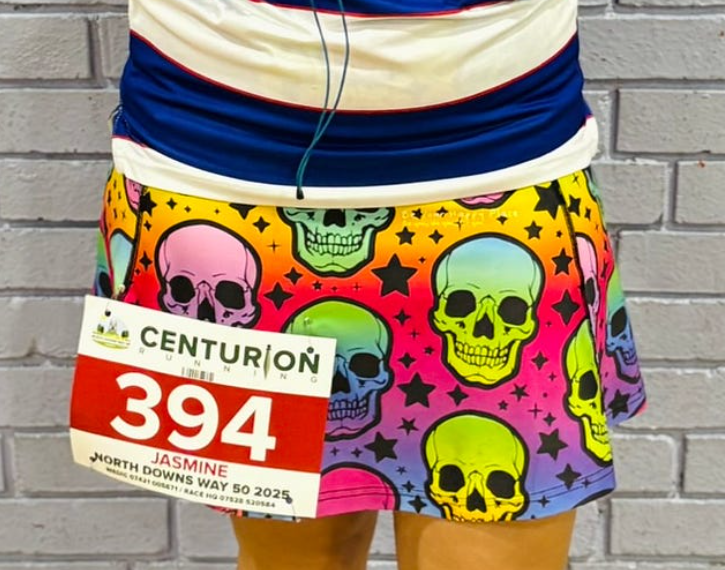
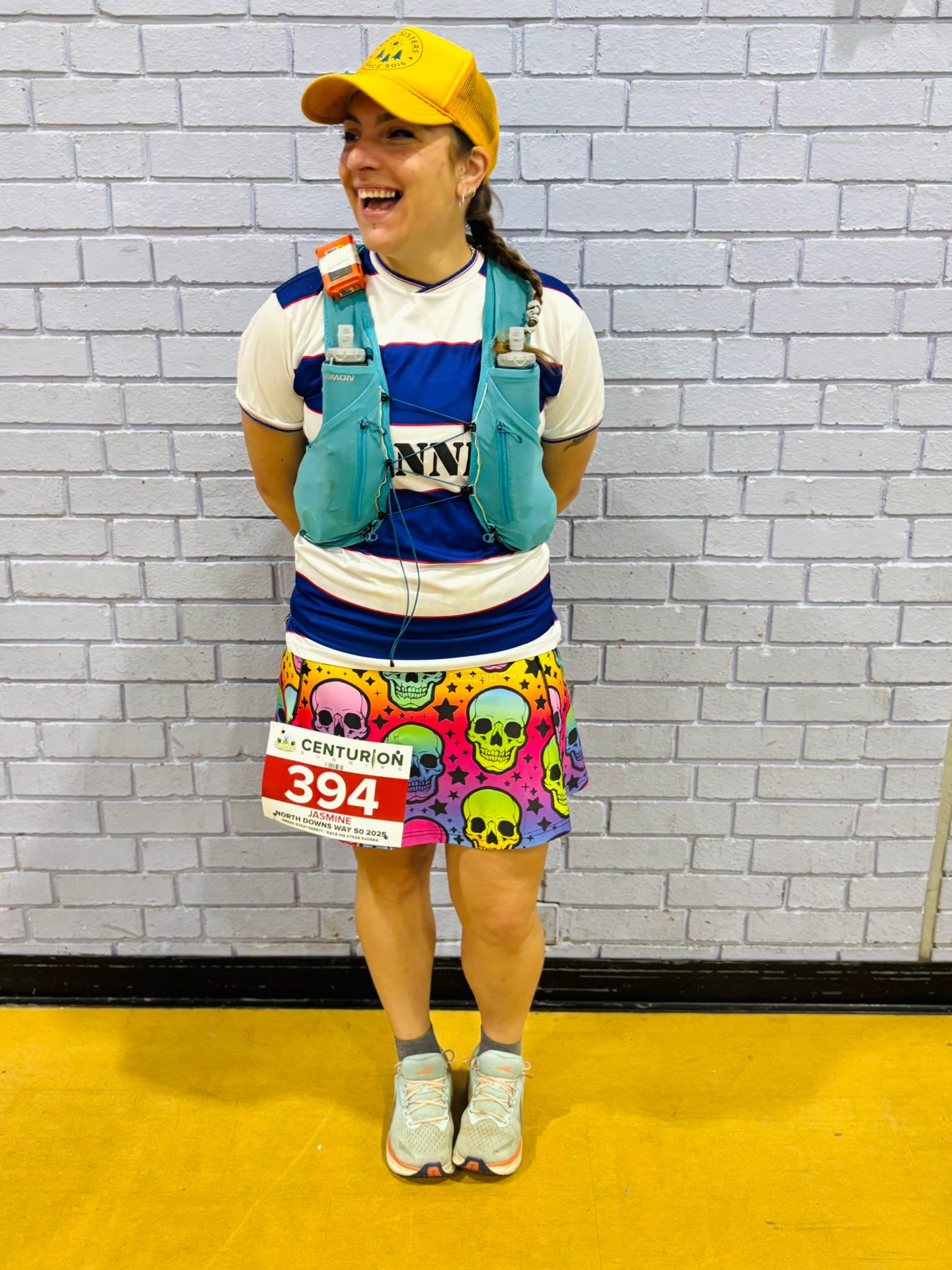
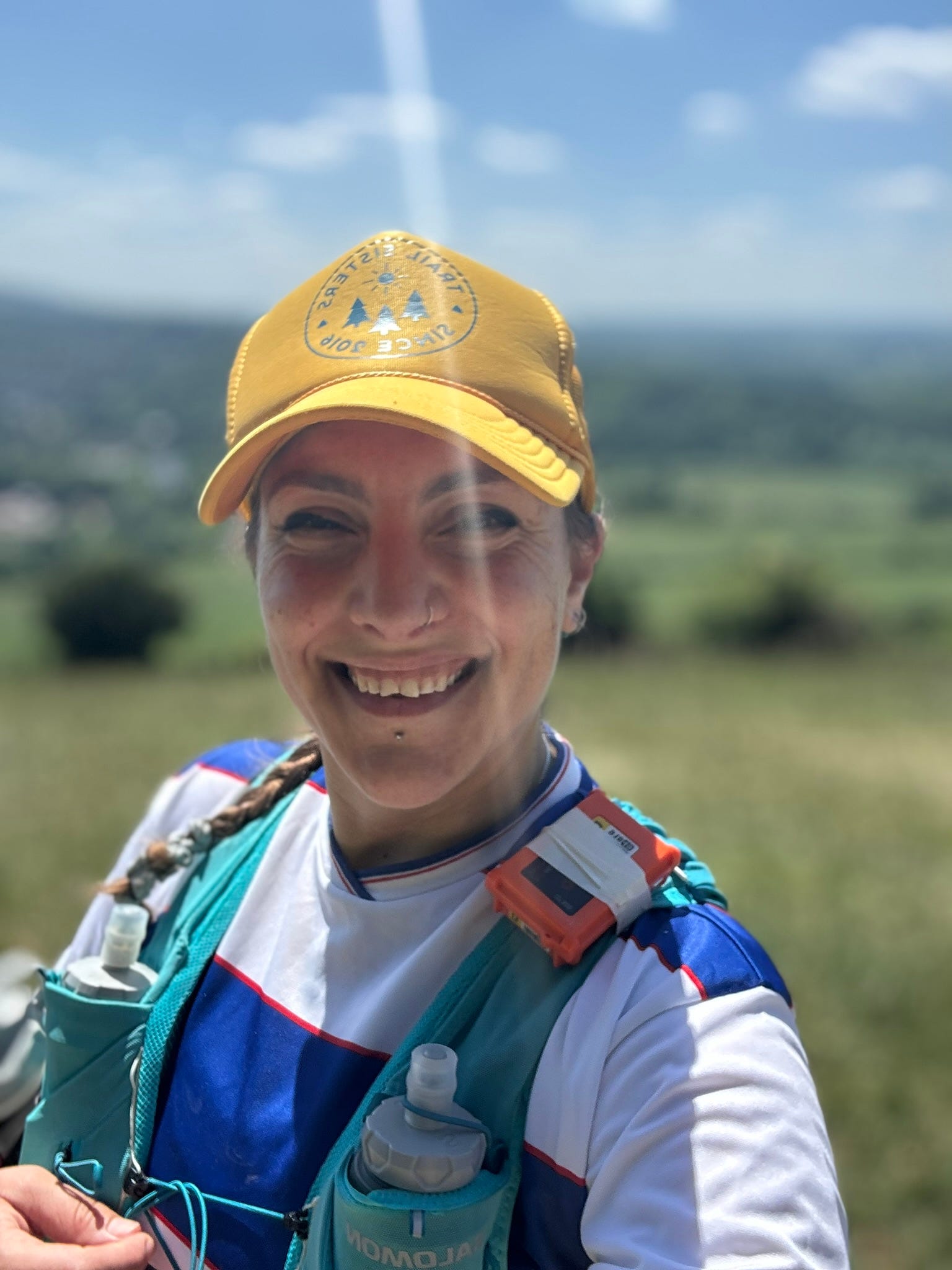

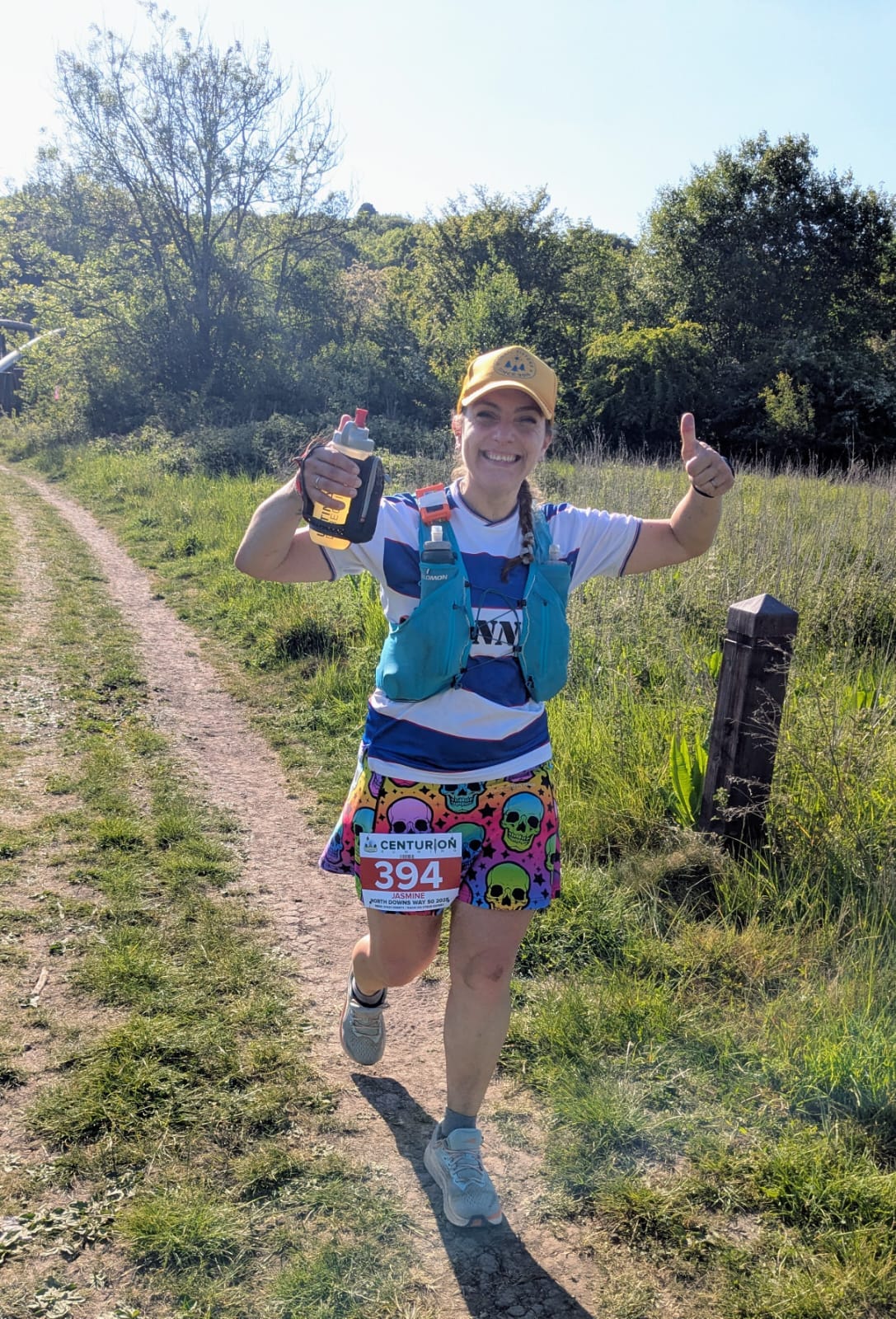
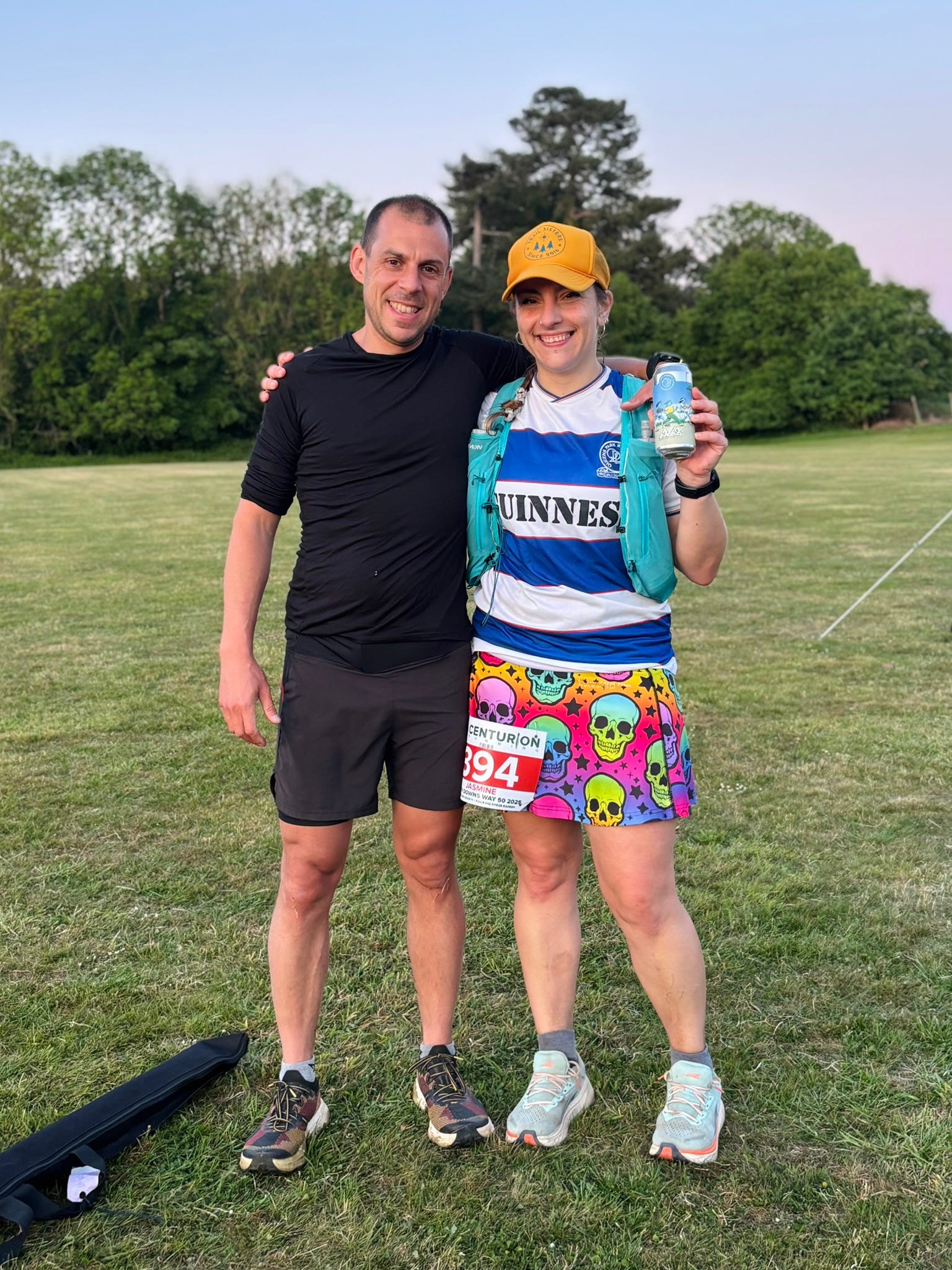
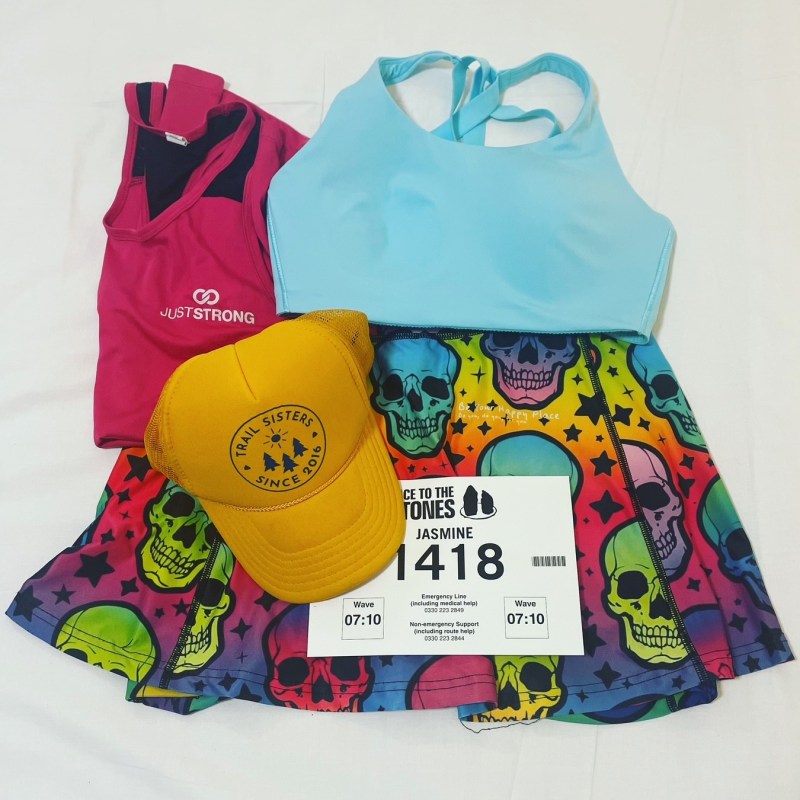

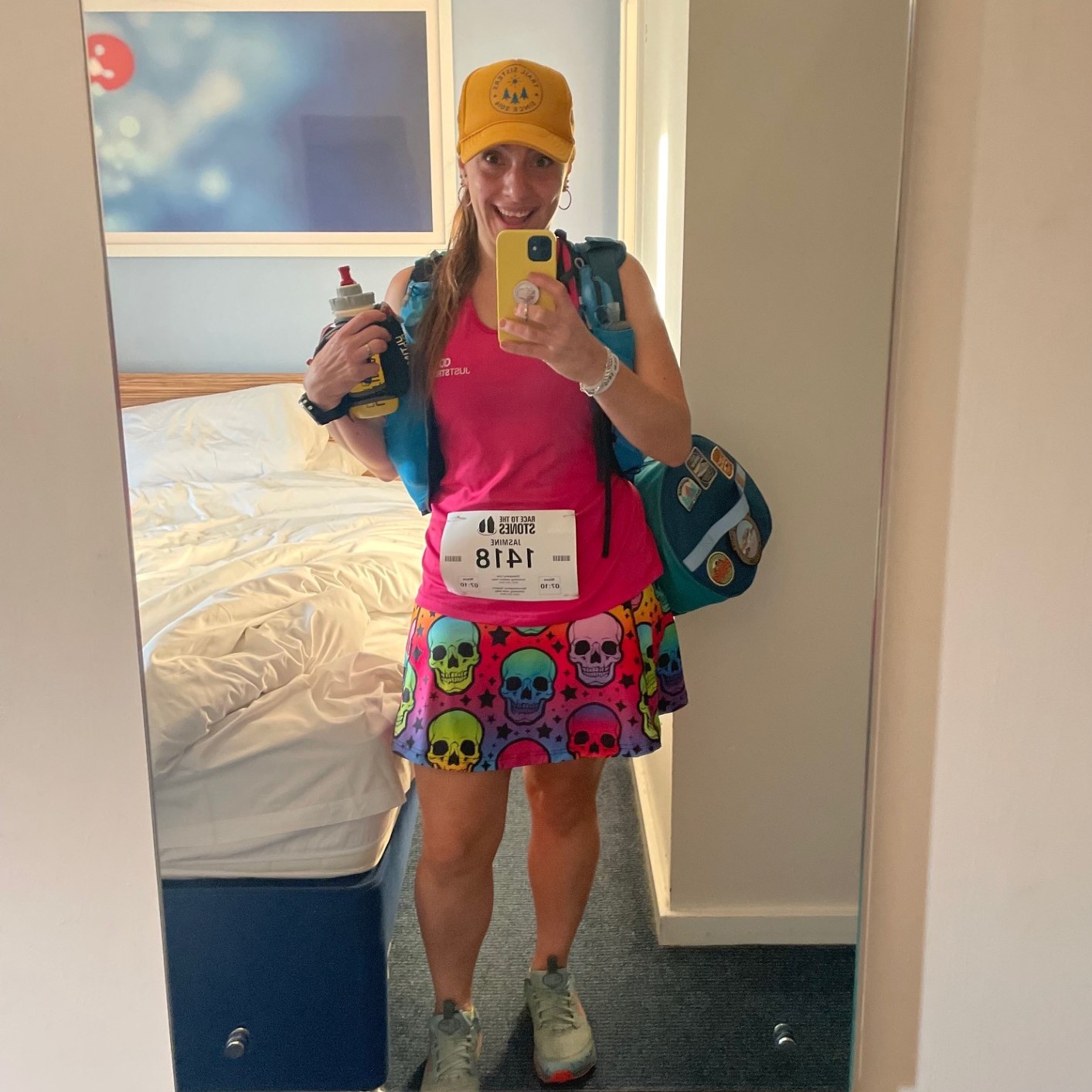

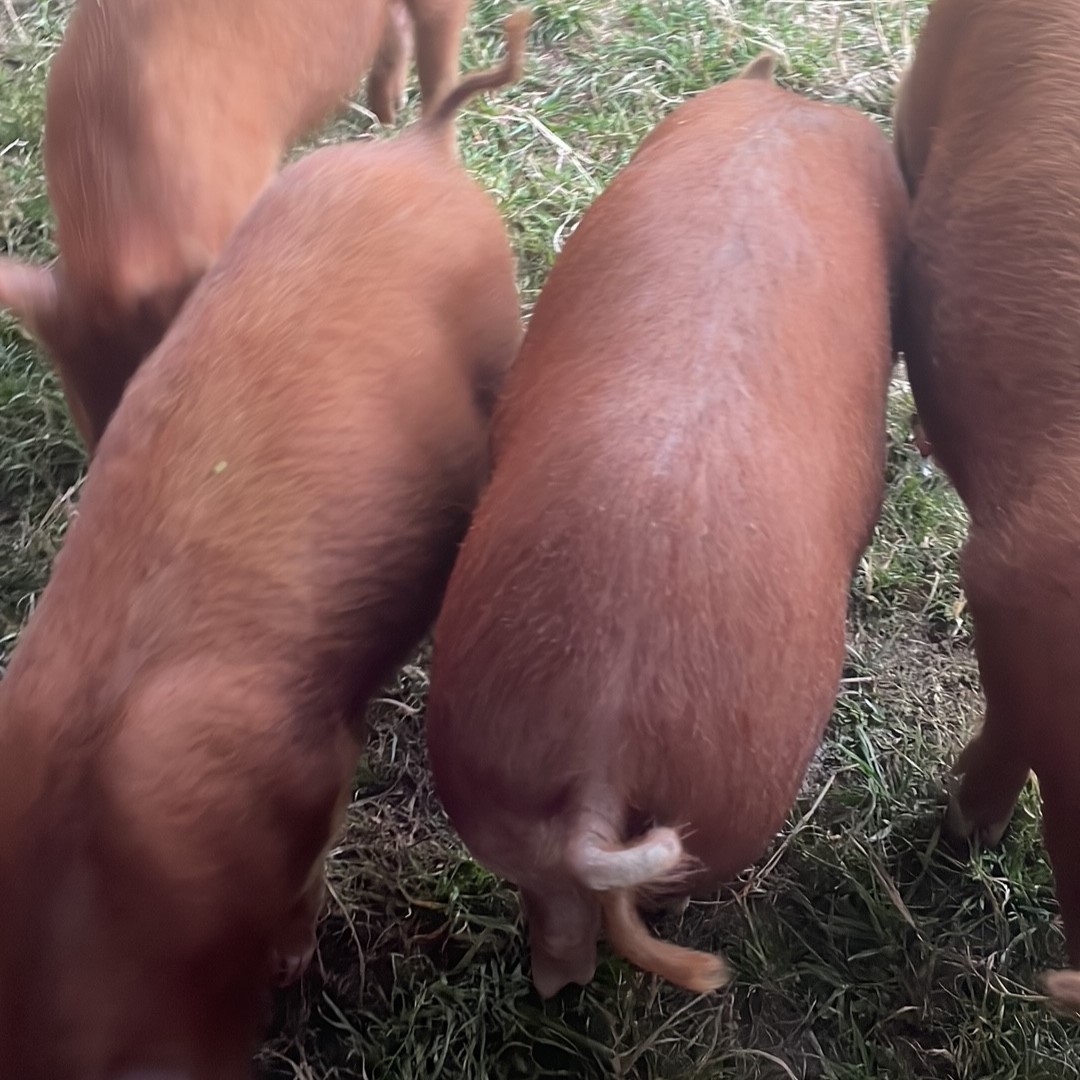
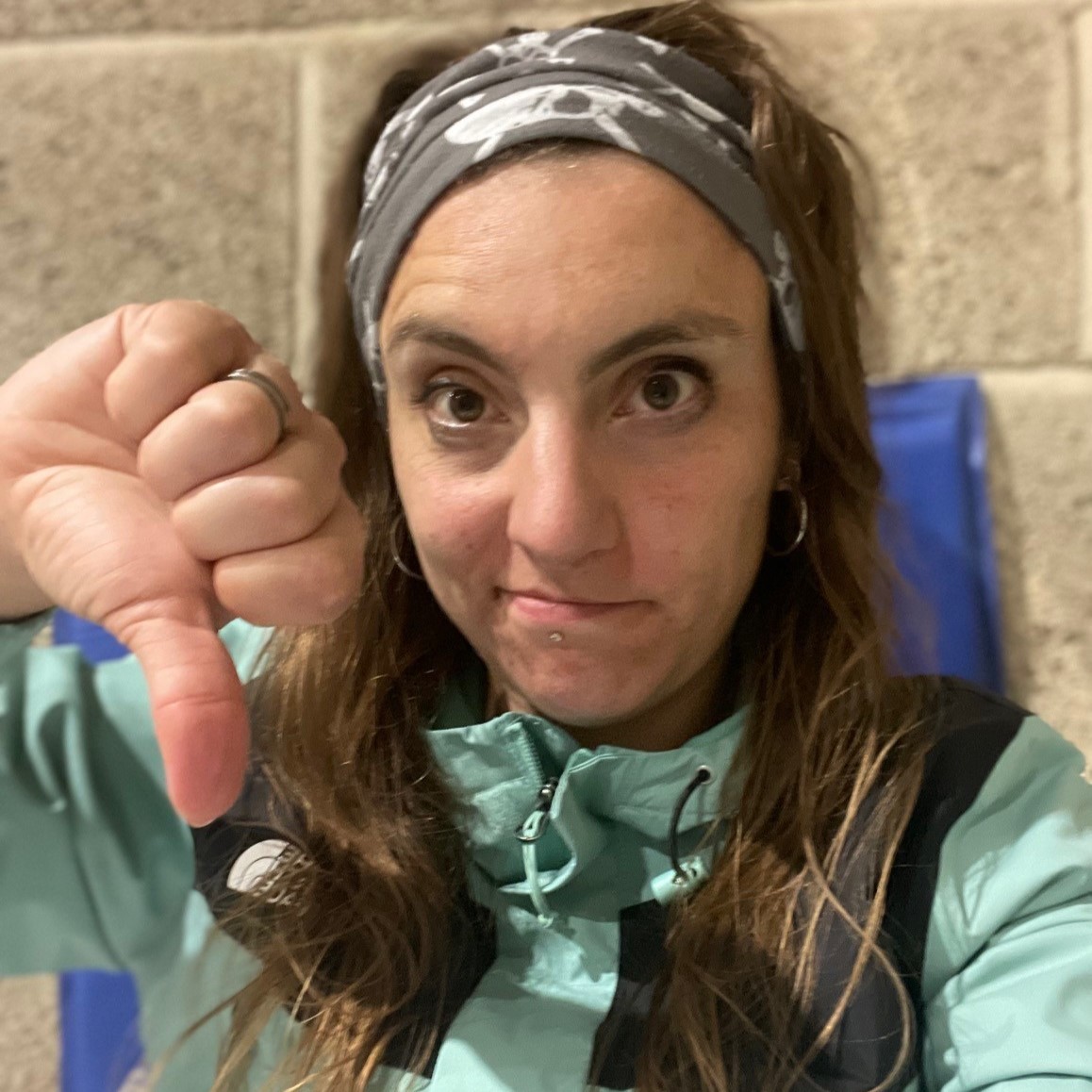



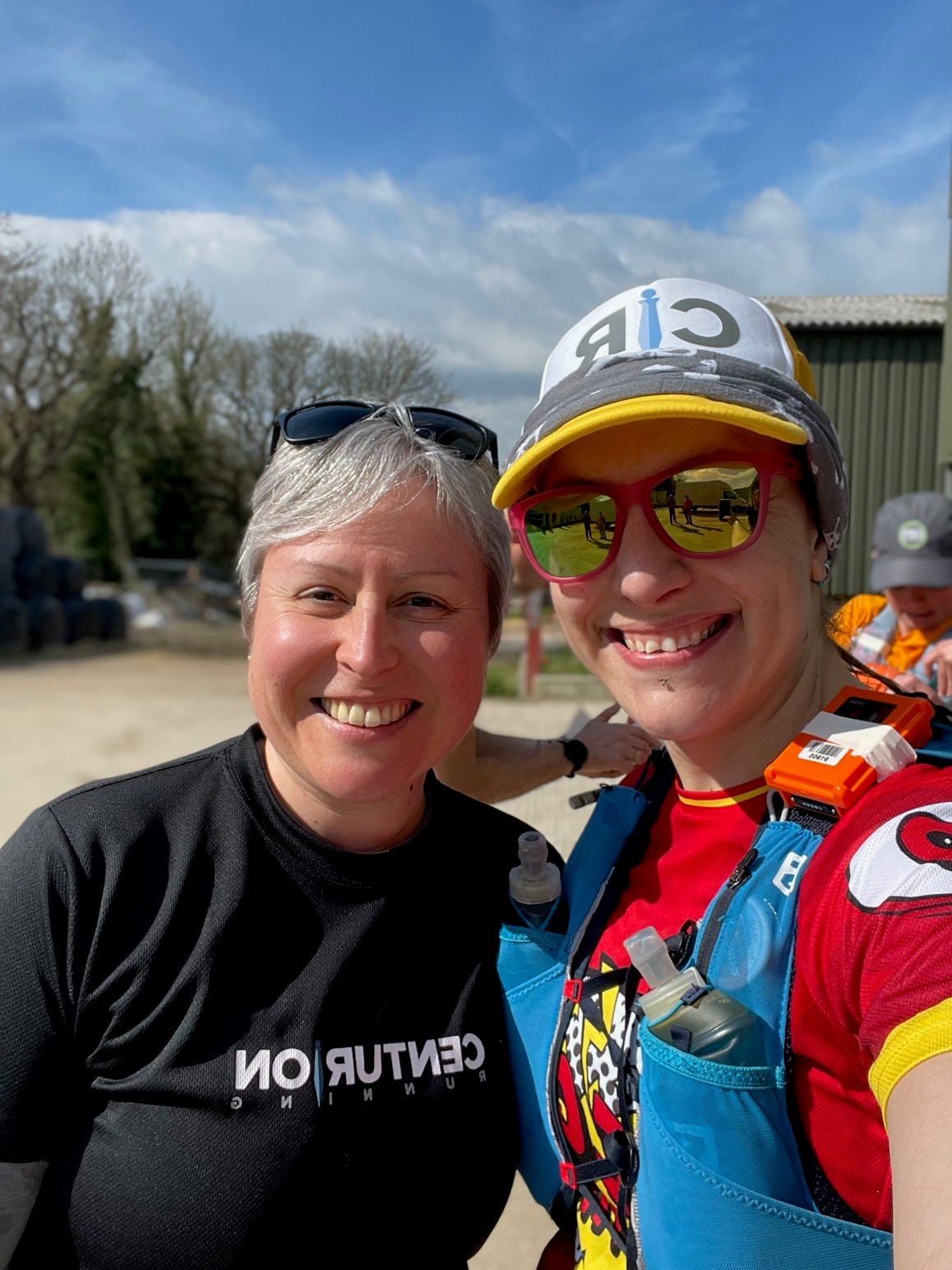
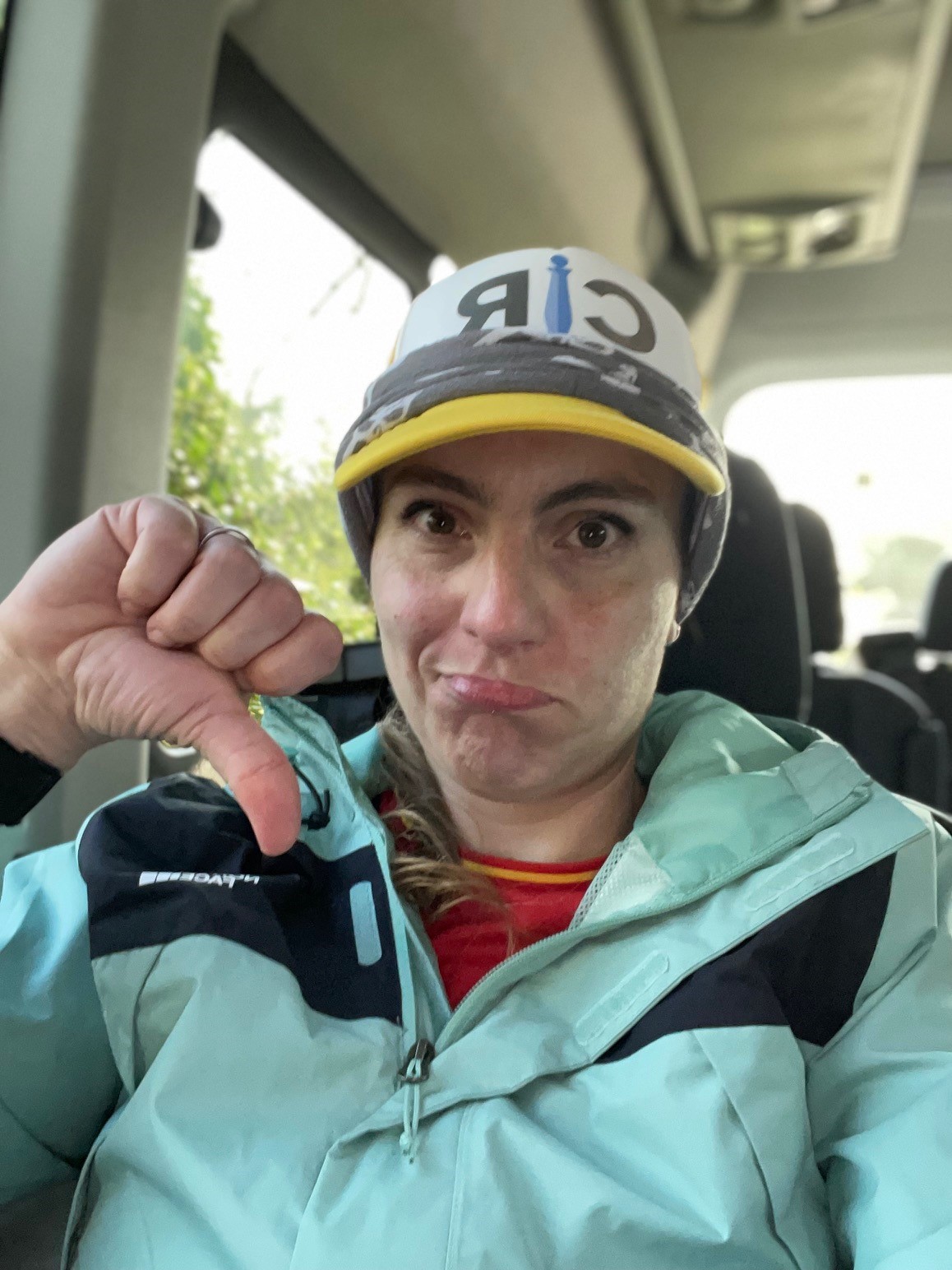

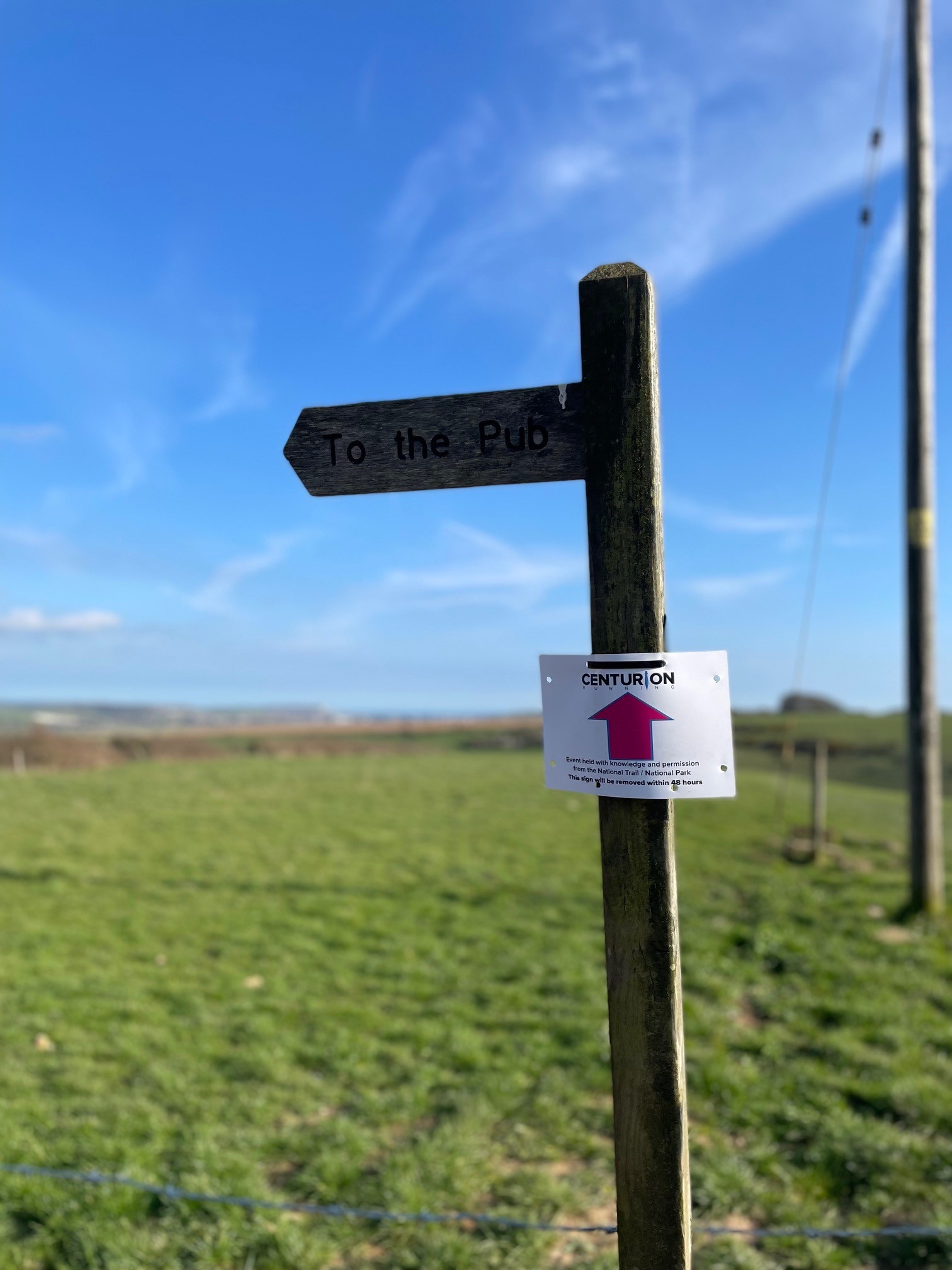
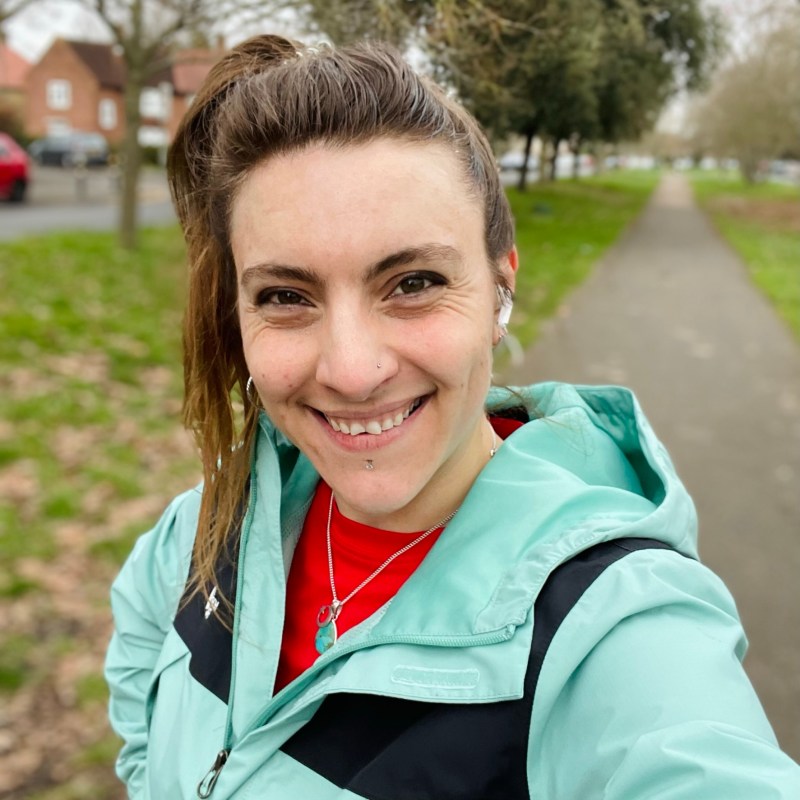
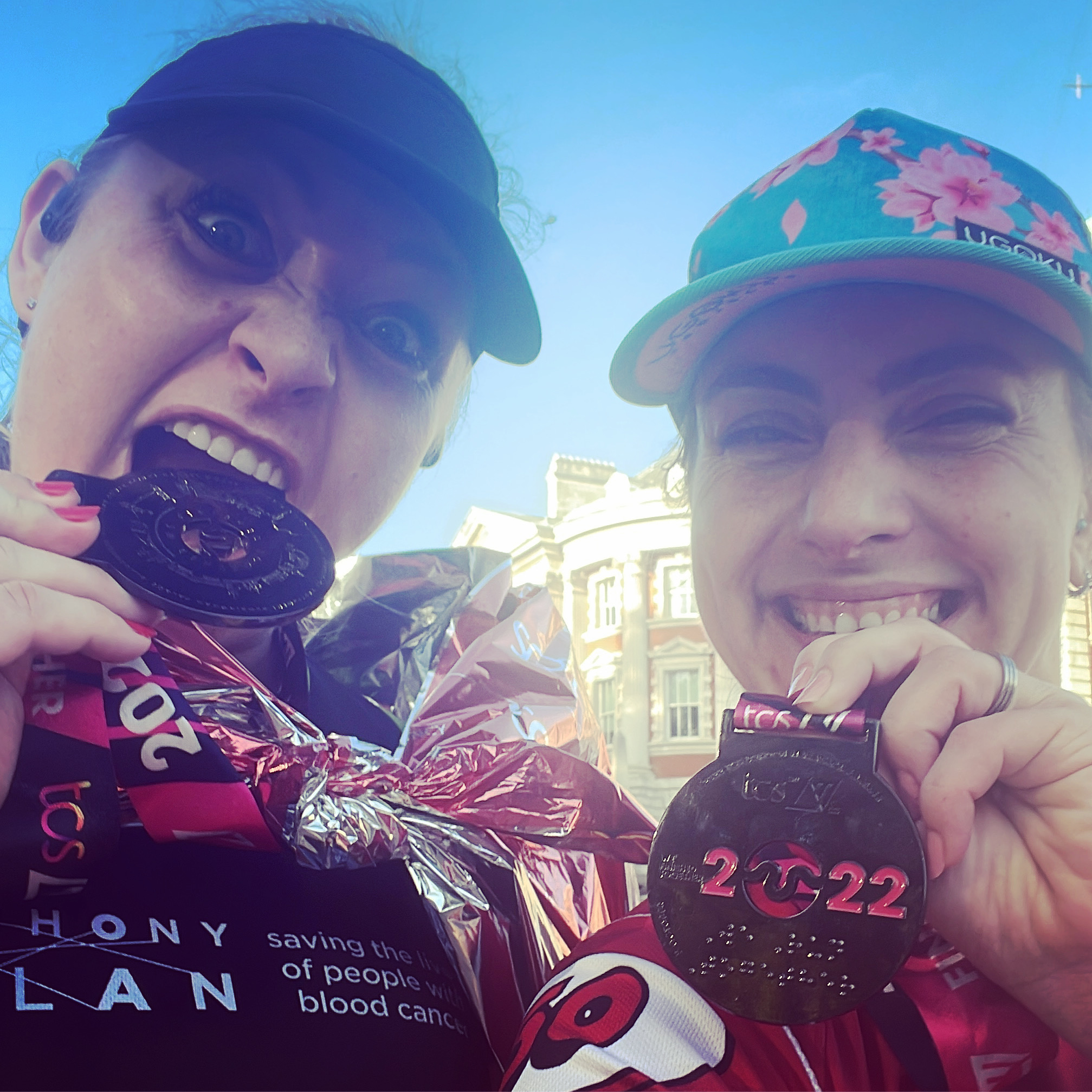

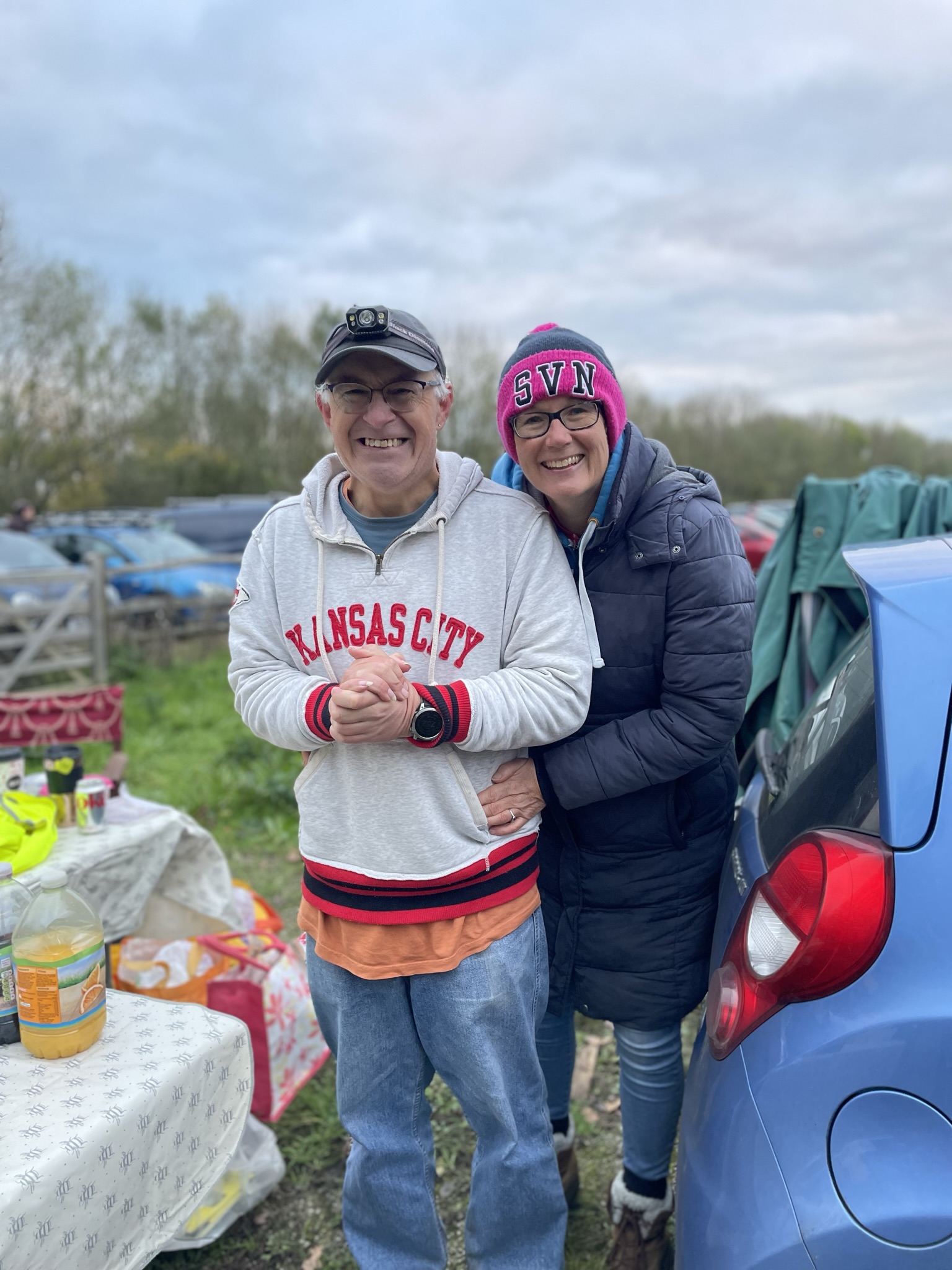

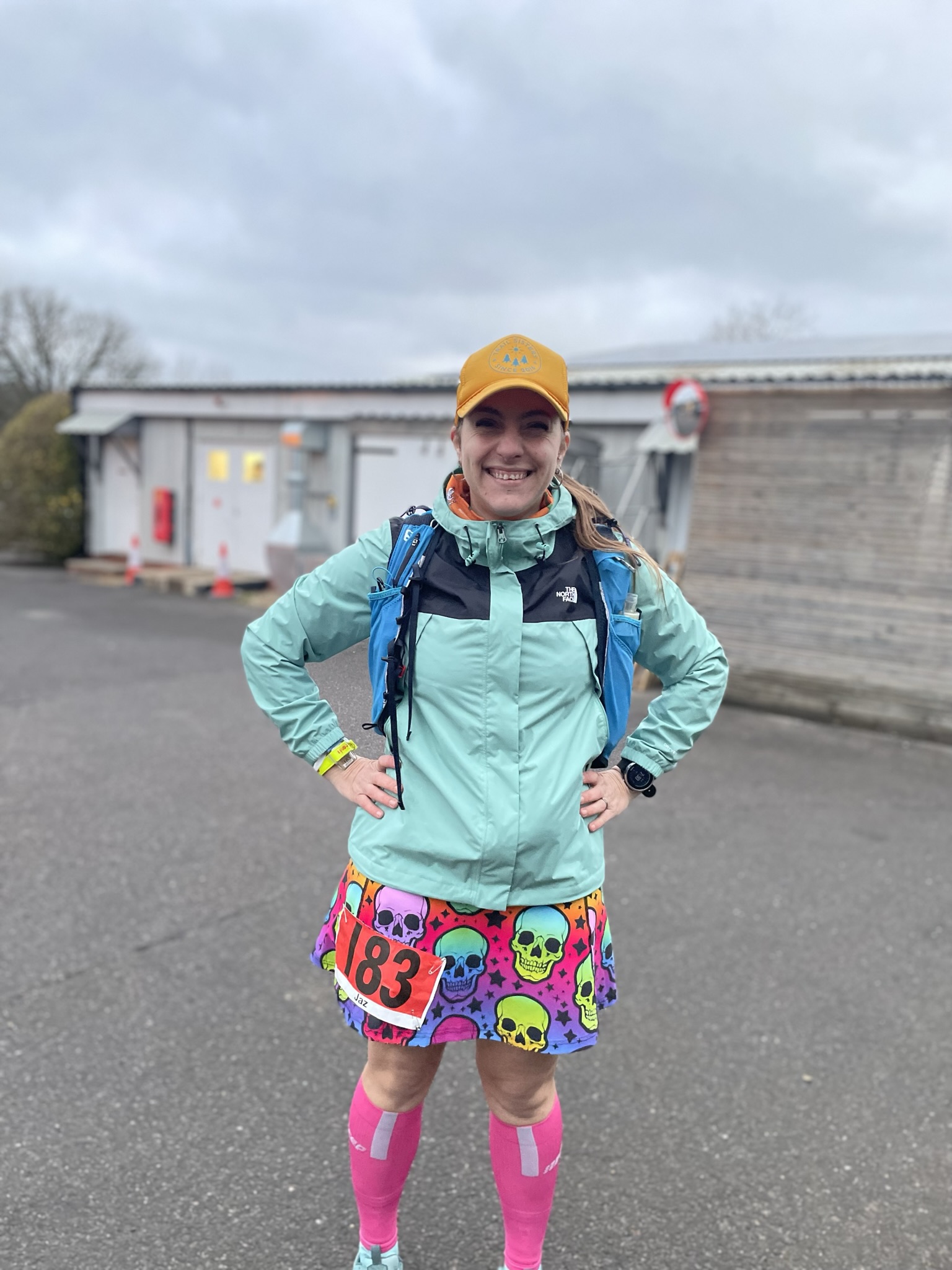





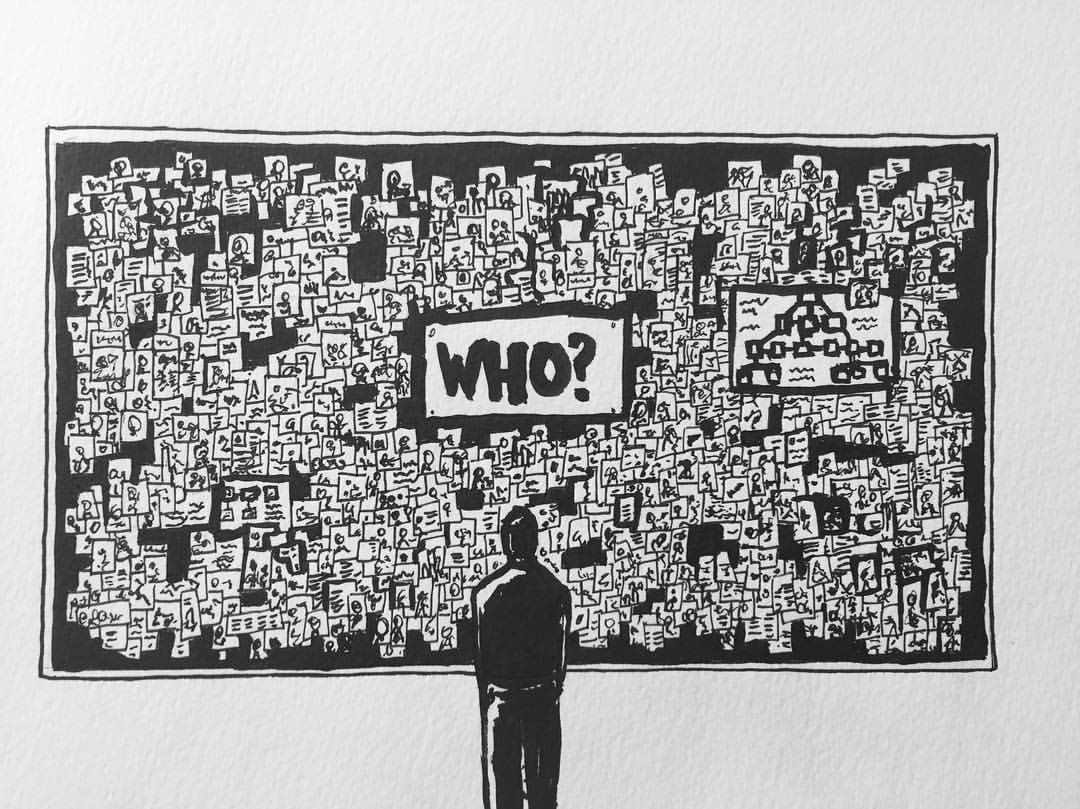



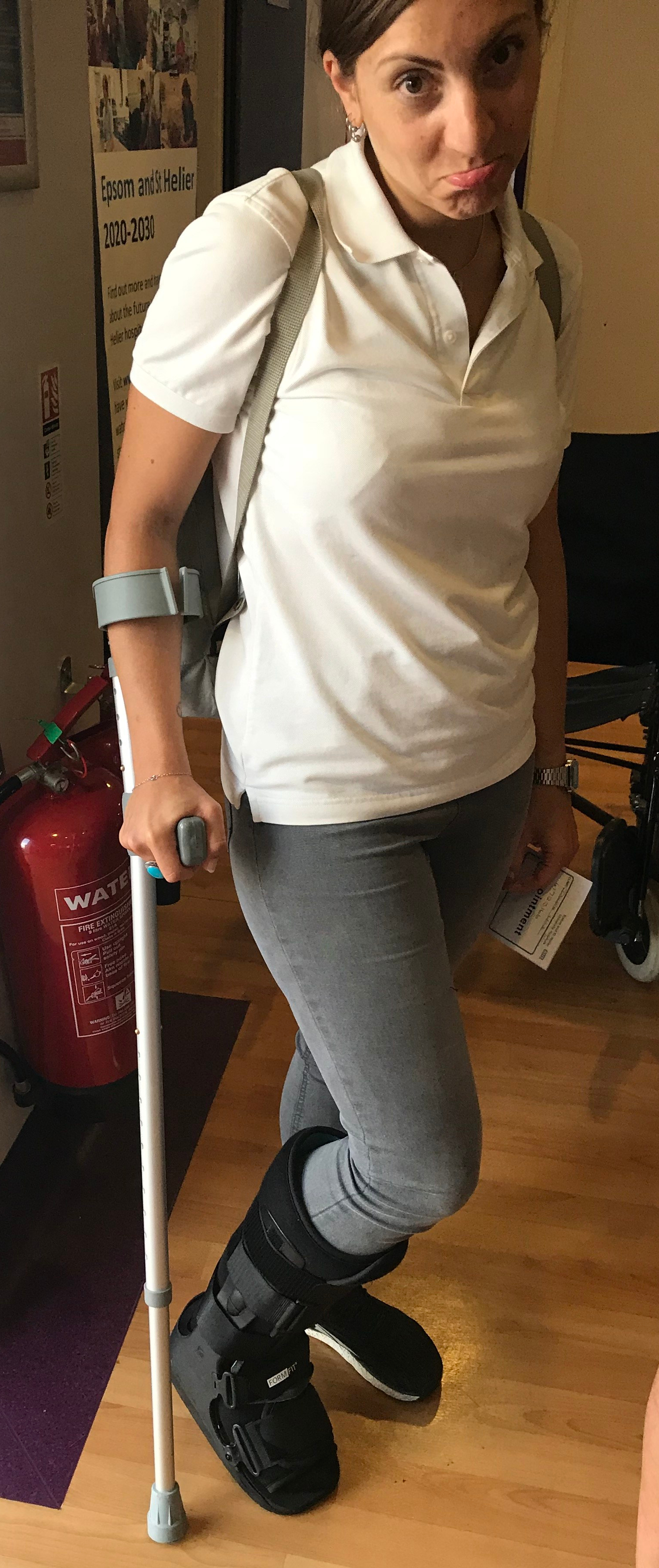
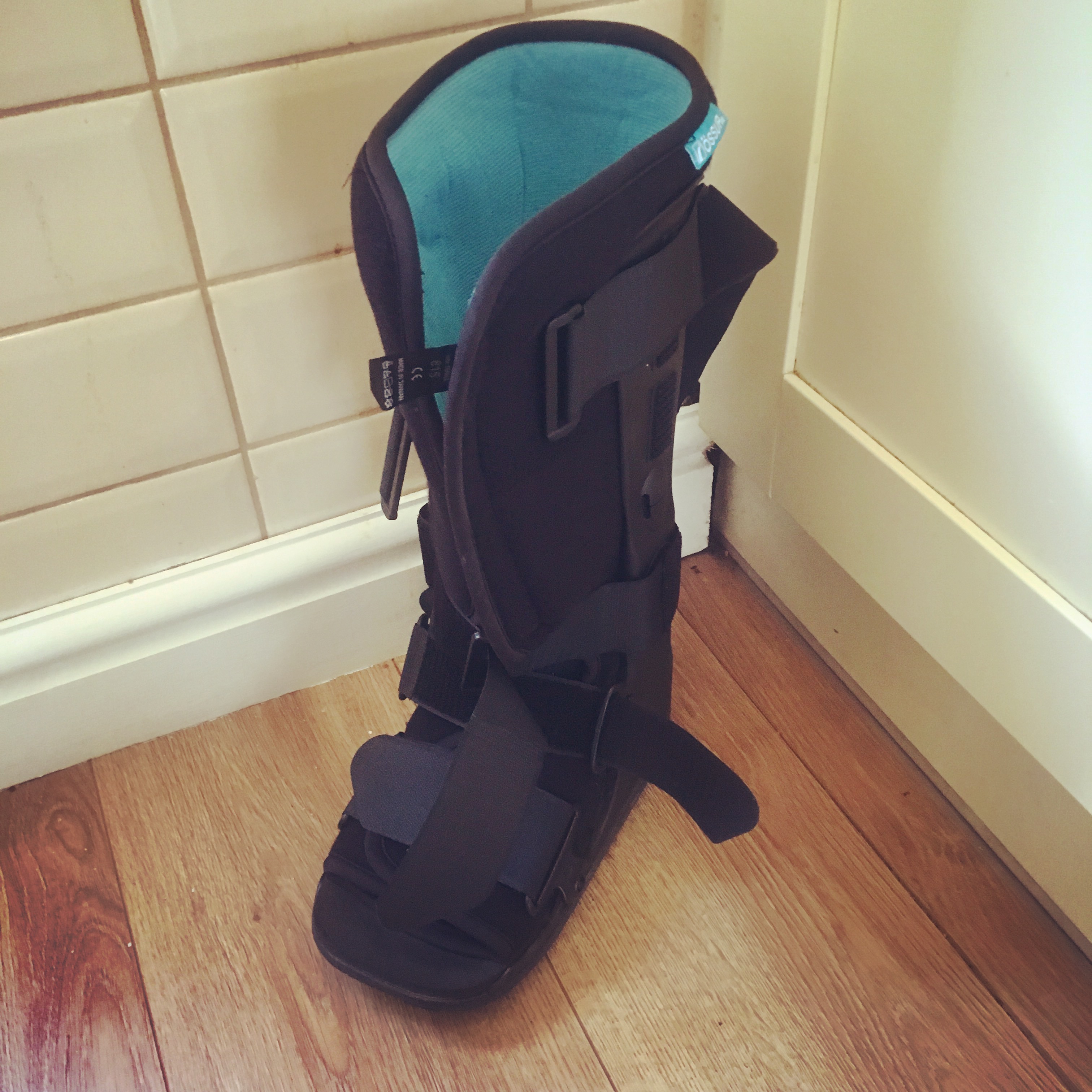
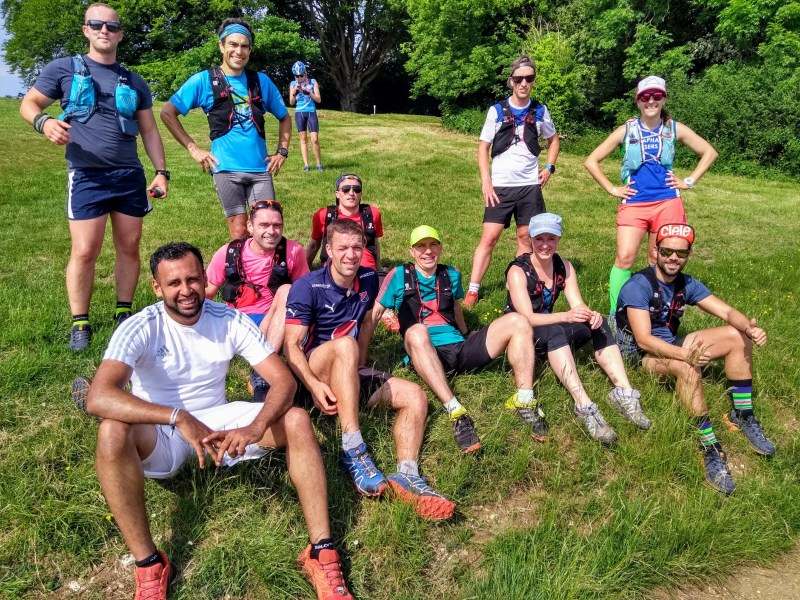
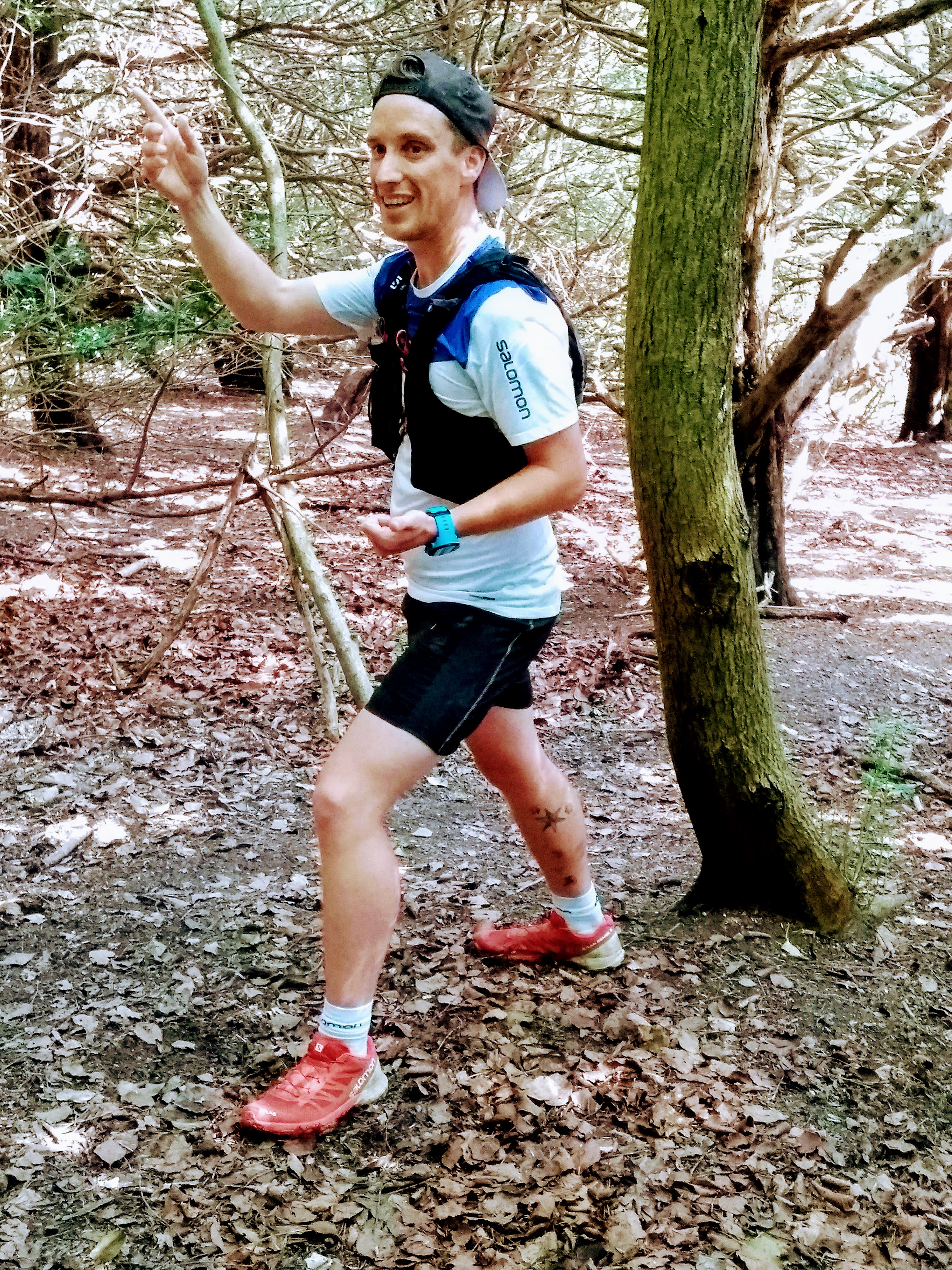
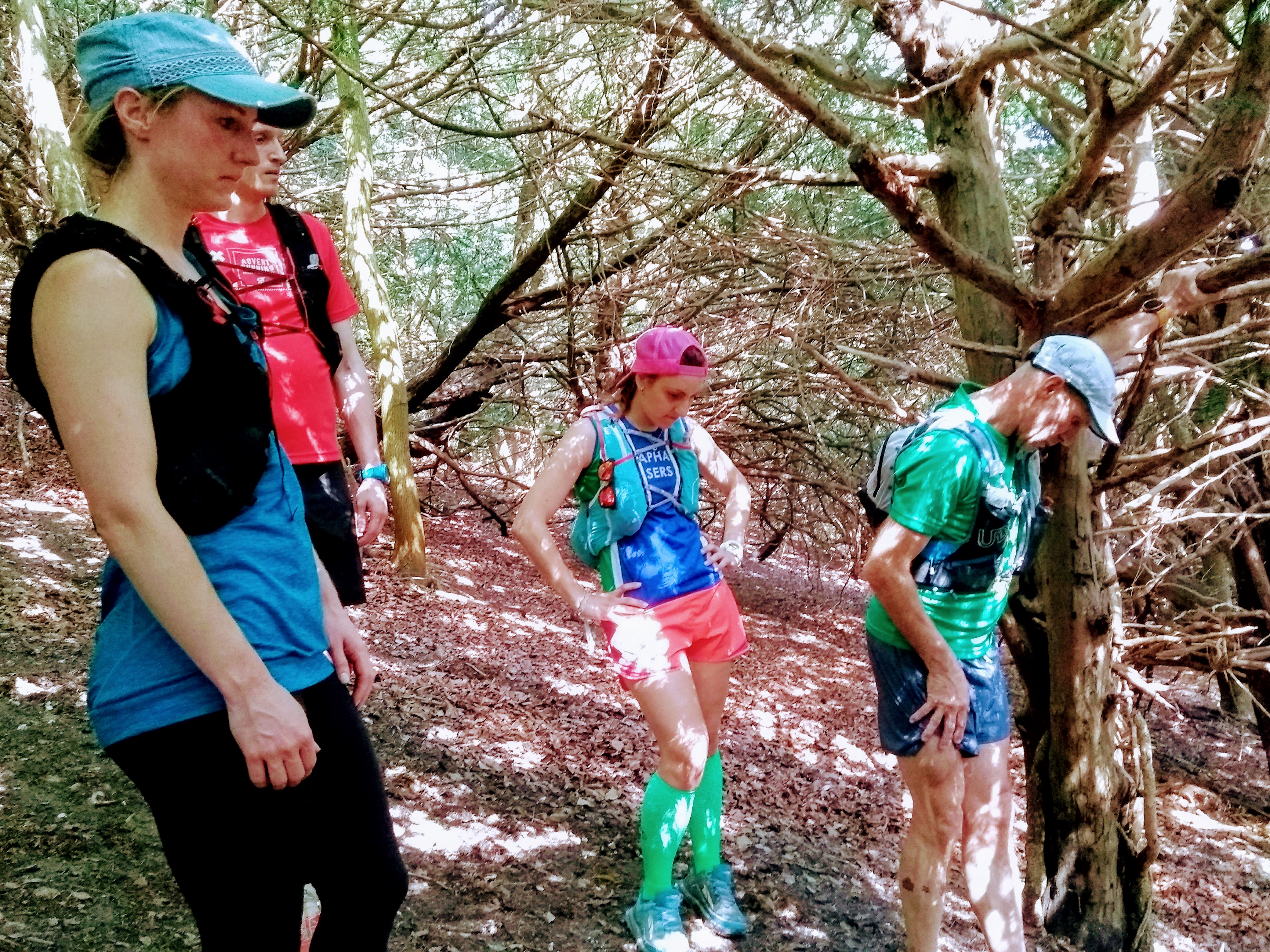
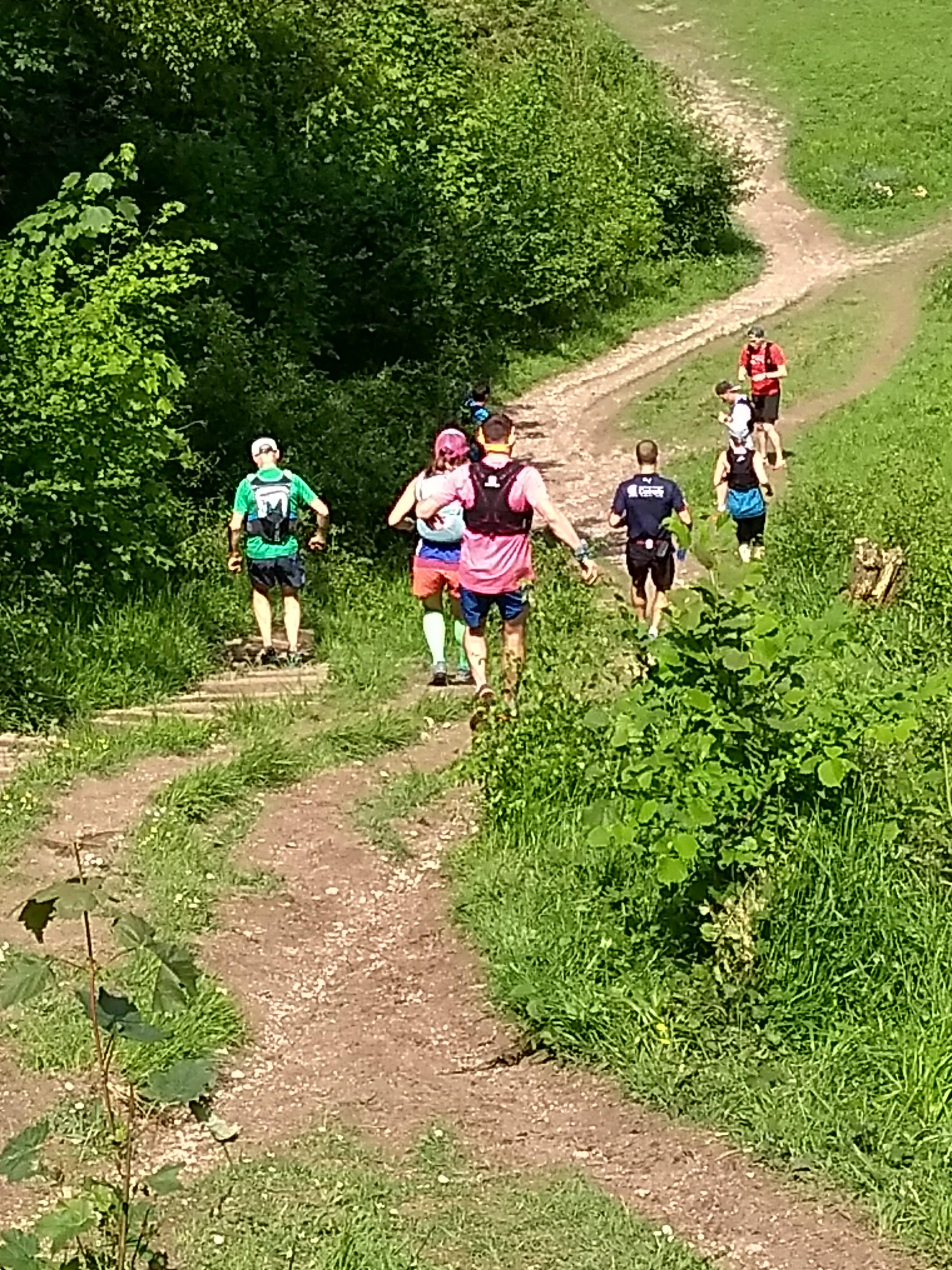
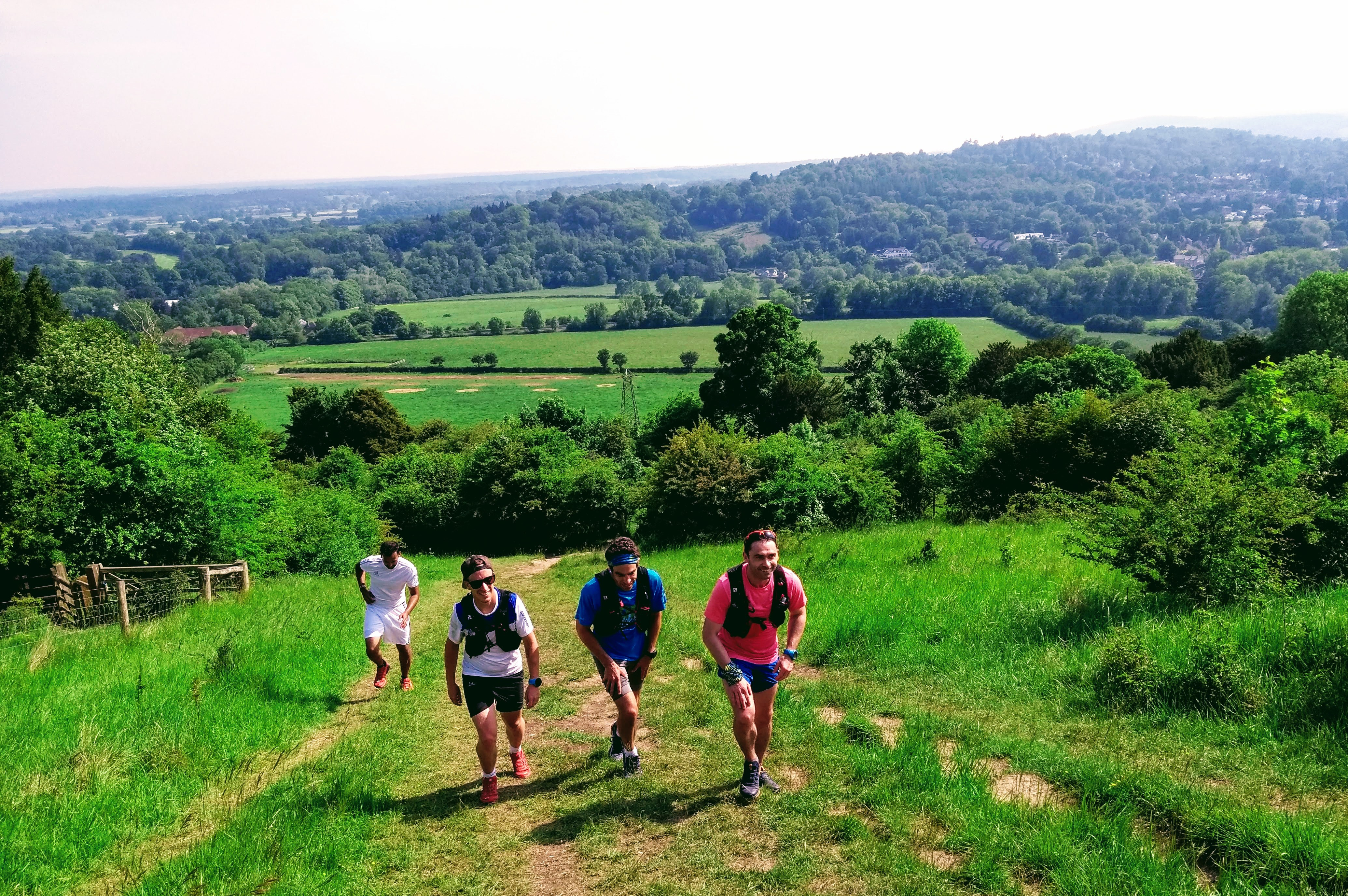

 Medal Magpie